
Categories
Featured Relationships Self Help

Unlocking Deeper Connections

Effective communication is the cornerstone of strong relationships, and love languages play a crucial role. 

The concept of the five love languages was first introduced by author and pastor Gary Chapman. He observed that couples often felt unloved, despite their partners’ well-intentioned efforts. Chapman identified recurring patterns in his clients’ desires, ultimately defining these patterns as the “5 Love Languages.” They are:

  • Words of affirmation
  • Quality time
  • Acts of service
  • Physical touch
  • Giving gifts

 It can be challenging to be in a relationship with someone whose love language is entirely different than yours. For example, what if you’re a cuddler, but your partner struggles to show any physical affection whatsoever? Don’t worry, it’s not the end of your relationship. 

Here are five practical tips to not only make your love language heard but deeply understood.

1. Clearly express your love language.

Articulate your preference. You can say something like “You know, I feel most loved when you spend quality time with me.”

2. Lead by example.

Actions carry weight. If acts of service resonate with you, do small, proactive gestures like assisting with chores unprompted. This sets a positive tone for reciprocal expressions.

3. Encourage open communication.

Engage with your partner when you both are relaxed and free from distractions. Use  a gentle prompt like, “Let’s share our love language preferences” to facilitate a meaningful and honest conversation.

4. Be patient and understanding.

Always remember that there are diverse ways of expressing love, and you do NOT need to speak the same love language to have a great and healthy relationship.

5. Express gratitude.

Acknowledge your partner’s efforts. A simple “Thank you for always being there for me; your support means the world” can serve as positive reinforcement for future interactions.

Always remember that there are diverse ways of expressing love, and you do NOT need to speak the same love language to have a great and healthy relationship.

Understanding and communicating love languages are vital for enduring relationships. To boost your communication skills and fortify relationships, schedule a session with a MindNation psychologist today. Download the MindNation app now to book a session.


Categories
Get Inspired How To Mental Health 101 Relationships Self Help

6 Simple Ways To Practice Gratitude Everyday

In the hustle and bustle of modern life, it’s easy to lose sight of the little blessings that surround us daily. But when you practice gratitude, you shift your focus from what you lack to what you have, and open your eyes to the richness of your experiences and relationships. This allows you to attract more positivity and abundance into your life. 

Here are six simple yet impactful ways to incorporate gratitude into your daily routine:

1. Keep A Gratitude Journal

Start your day by jotting down a few things you are grateful for. Reflecting on these moments can shift your focus to the positive aspects of your life.

2. Notice The Beauty In Little Things

Take a moment to appreciate the simple pleasures that often go unnoticed—a vibrant sunset, a kind gesture from a stranger, or the aroma of fresh coffee. Embracing these small moments can help foster a sense of contentment and appreciation.

3. Practice Mindfulness

Be fully present in the moment, whether it’s savoring your meals, enjoying a walk in nature, or engaging in a meaningful conversation. 

4. Use Positive Affirmations

Start your day with affirming statements that reinforce gratitude, abundance, and positivity. It can be as simple as “I am thankful for the blessings in my life.” Then keep repeating these affirmations throughout the day to reinforce the mindset.

5. Volunteer

Contributing your time and skills to a cause or community not only benefits others but also cultivates a sense of gratitude within yourself. Volunteering allows you to appreciate the impact of your actions and fosters a deeper understanding of the value of giving back.

Start your day with affirming statements that reinforce gratitude, abundance, and positivity.

6. Express Appreciation For Others

A simple “thank you” or a heartfelt note to the people in your life who make a difference can go a long way in strengthening your relationships and creating a more positive and grateful atmosphere around you.

Cultivating a practice of gratitude can significantly enhance our overall well-being and outlook on life. Start your journey toward a more grateful life today!

MindNation psychologists and WellBeing Coaches can help you adopt a gratitude mindset and incorporate gratitude practices into your daily routines. Book a session now through the MindNation app, available on Google Play and the App Store.

Categories
Employee Wellness Featured How To Mental Health 101 Self Help Sleep

Busting The Top 5 Burnout Myths

Burnout is a growing concern in today’s fast-paced world. It’s often misunderstood and can have serious consequences if left unaddressed. Let’s delve into some common myths surrounding burnout and gain a clearer understanding of this issue.

Myth #1: Burnout means you are just tired.

Burnout is being over-tired, or more than tired. It encompasses emotional exhaustion, diminished interest in activities, and a decline in motivation. If left unresolved, burnout can leave us feeling depressed, cynical, and resentful. Also, the physical effects of burnout can cause long-term changes to our body that makes us vulnerable to illnesses.

Myth #2: Certain jobs are destined to cause burnout.

Burnout can affect individuals across various fields, from healthcare professionals to students and even those in personal relationships. No occupation or role is immune to the challenges posed by burnout.

Myth #3: Burnout means you are mentally weak and are unable to handle stress.

Burnout doesn’t reflect an individual’s weakness. In fact, it often impacts individuals who are dedicated and high-achieving, highlighting the need for a balanced approach to work and life.

No occupation or role is immune to the challenges posed by burnout.

Myth #4: More sleep, a vacation, practicing yoga, or taking a day off will cure your burnout. 

While self-care practices like adequate sleep, vacations, and exercise are essential for overall well-being, they might not fully address the complexities of burnout. Deeper, sustained interventions are often necessary to manage and overcome burnout effectively.

Myth #5: If I am burnt out, I need to quit my job to get better.

While some extreme cases may warrant significant changes, in most instances, small adjustments and proactive measures can help alleviate burnout’s effects. 

Understanding the realities of burnout is the first step toward managing and preventing its detrimental effects. If it all seems too much, MindNation mental health experts are available 24/7 if you need someone to talk to. Book a session now thru the MindNation app, available on Google Play and the App Store. 

Categories
Featured How To Men's Mental Health Mental Health 101 Self Help

Build Better Men: 7 Ways To Overcome Toxic Masculinity 

Toxic masculinity refers to a narrow and rigid definition of masculinity that emphasizes traits like aggression, dominance, emotional suppression, and the objectification of women. These behaviors and attitudes can have negative consequences for both men and women, and contribute to a culture of gender-based violence and inequality, such as:

  1.  The normalization of violence as a means of asserting dominance or control
  2. The pressure on men to be “tough” and avoid showing vulnerability or emotions
  3. The expectation that men should prioritize their careers and financial success over personal relationships or emotional well-being
  4. The stigmatization of men who do not conform to traditional gender roles or who express emotions in a way that is seen as “feminine” 
  5. The objectification and dehumanization of women
  6. The reinforcement of harmful gender stereotypes

Here are some ways you can help overcome toxic masculinity:

  1. Raise awareness about the harmful effects of toxic masculinity. Call out someone who is displaying toxic masculinity, though remember to do so without making personal attacks or engaging in name-calling. Make it clear what you want them to do afterwards, i.e.  “I felt uncomfortable when you made a sexist joke at the meeting awhile ago. Next time, please don’t make jokes that belittle someone based on their gender.”
  2. Challenge harmful gender stereotypes. This can involve questioning assumptions about what it means to be a “real man” or a “real woman,” and promoting greater acceptance and understanding of diverse expressions of gender identity and sexuality. Just because a man wears pink or wears skirts does not mean he is unmasculine – color preferences and attire are just forms of gender expression. Similarly, transmen are men too. 
  3. Promote positive role models who embody healthy expressions of masculinity. Highlight individuals who prioritize empathy, kindness, and respect in their personal and professional lives, as well as promoting greater diversity and representation of men from diverse backgrounds and identities in media and popular culture.
  4. Engage in community action and advocacy. Support organizations and initiatives that promote gender equality and challenge harmful attitudes and behaviors, and advocate for policies and laws that protect the rights and well-being of all individuals, regardless of gender or identity.
  5. Encourage men to express their feelings in healthy ways. Promote greater openness and vulnerability in interpersonal relationships, as well as encourage men to seek help and support when needed.

Just because a man wears pink or wears skirts does not mean he is unmasculine – color preferences and attire are just forms of gender expression.

Always remember that it takes a village to care for a person’s mental health, especially a man’s. At the end of the day, when you think about it, men are victims of toxic masculinity as well. It places them in a vulnerable position that keeps them locked-in and unable to express themselves. The important thing to do is to get the message across that they are not alone, and it’s okay to ask for help. 

If you think a male friend or loved one is struggling, or if you yourself are struggling, MindNation mental health experts are available 24/7. Download the MindNation app to book a session now. 

Categories
Featured How To Mental Health 101 Self Help

10 Steps To Help Someone Begin Therapy

In today’s fast-paced world, recognizing the importance of well-being is more vital than ever. However, encouraging someone to start therapy can be a sensitive and challenging task. According to MindNation data, 17% of employees still feel that no one can help them with their problems. As such, you are in a good position to encourage someone to seek therapy.

Whether it’s a close friend, family member, or colleague, helping them recognize the benefits of seeking professional support is a crucial step towards their mental and emotional wellness. Here are ten practical steps to encourage and support someone in taking this important step:

1. Initiate compassionate conversations. Open non-judgmental dialogues where they feel safe discussing their feelings and concerns. Be an active listener, avoiding immediate solutions or interruptions.

2. Educate yourself about mental health. Gain a solid understanding of mental health conditions and the therapy process. Knowledge enables you to communicate more effectively and address concerns.

3. Choose the right time and place for these conversations. Opt for a quiet, private setting, free from distractions, where you both can speak openly without interruptions.

4. Express genuine concern and empathy. Share your heartfelt concern for their well-being and emphasize your care for their mental health. Use empathetic language and communicate that you’ve noticed changes in their behavior or mood, avoiding blame or judgement.

5. Avoid stigmatizing terms. Recognize that some individuals might have misconceptions or reservations about therapy. Instead, refer to it as “seeking professional support” or “getting guidance.” Reducing the stigma associated with therapy can make it more approachable.

6. Share personal or success stories. Sharing personal experiences or stories of successful journeys to emotional well-being can provide reassurance. Additionally, recounting stories of individuals who benefitted from therapy can inspire hope and reduce apprehension.

7. Offer to assist in research. Take the initiative to help research psychologists or mental health professionals in your area. Share their profiles, specialties, and patient reviews. Offering practical information can ease the process of finding the right therapist.

8. Respect their autonomy. While providing encouragement and support, remember that the decision to start therapy belongs to the individual. Respect their autonomy and choices, avoiding pressure that might lead to resistance.

9. Highlight the benefits. Discuss the potential benefits of therapy, such as improved mental health, enhanced coping strategies, and an overall higher quality of life. Emphasize that psychologists are trained to provide effective guidance and support.

Helping [colleagues] recognize the benefits of seeking professional support is a crucial step towards their mental and emotional wellness.

10. Maintain support throughout the process. If they decide to pursue therapy, offer continuous support along their journey. Accompany them to sessions if they wish, encourage adherence to treatment plans, and be a supportive listener when needed.

In conclusion, helping someone begin therapy requires patience, empathy, and understanding. By initiating compassionate conversations, offering support, and providing information, you can help your loved ones recognize the importance of seeking professional help for their well-being. 

MindNation psychologists and WellBeing Coaches are available 24/7 for teletherapy sessions. Book a session now thru the MindNation app, available on Google Play and the App Store.

Categories
Employee Wellness How To Mental Health 101 Self Help

The Weight of Waiting:  Anticipatory Stress And 5 Effective Ways To Overcome It

Are you consumed by heightened anxiety while waiting for a future event such as a work presentation, an exam, or a first-time plane ride? You might be experiencing anticipatory stress or “pre-event” stress. This happens when dread builds up and you stress out ahead of time, leading you to experience extra stress. This unhealthy amount of worrying can leave you restless, trapped, and mentally depleted.

How Is Anticipatory Stress Different From Other Forms Of Stress?

Stress, anxiety, and anticipatory stress are related but distinct experiences. Stress is the body’s physical response to current external pressures or demands, such as managing a heavy workload or dealing with a difficult colleague. Anxiety, on the other hand, refers to the general state of unease and intense worrying about things that may be absent and without clear triggers. Anticipatory stress is related to anxiety, but what sets it apart is a specific trigger: an uncertain future outcome.

In contrast with other forms of stress, anticipatory stress, on the other hand, is based on perceptions and expectations rather than the actual situation itself. It often stems from uncertainty, lack of confidence and control, and fear of the unknown. Moreover, this form of stress can  be prolonged if the waiting period takes longer.

In contrast with other forms of stress, anticipatory stress, on the other hand, is based on perceptions and expectations rather than the actual situation itself.

What Are The Signs And Symptoms Of Anticipatory Stress?

  • Feeling tense and on edge
  • Racing thoughts
  • Increased heart rate and breathing difficulties
  • Sleep problems
  • Upset stomach, diarrhea, and frequent urination
  • Irritability
  • Difficulty in concentration
  • Anticipating the worst
  • Unhealthy behaviors such as stress eating, drinking, avoidance, and procrastination
  • Low levels of self-esteem and confidence

How Can You Cope With Anticipatory Stress?

While worrying is normal, people with greater tendency to be a worrier or to overthink things may be more prone to anticipatory stress. Fortunately, there are many strategies that can help you cope with anticipatory stress and prevent it from taking over your life.

  1. Challenge and reframe your thoughts. Anticipatory stress is often based on negative or irrational thoughts, such as “I’m going to fail” or “Everyone will judge me.” Challenge these thoughts by acknowledging that the event you dread may not play out as negatively as you imagine. You may try to create facts or action steps to counter the negative thoughts. Remember the ratio 1:5. Pair 1 negative thought with 5 healthy or positive thoughts and facts about the situation.
  2. Preparing and planning ahead as much as possible may reduce anticipatory stress. You can do this by rehearsing the situation, visualizing positive outcomes, or making a checklist to help you feel more in control.
  3. Ground yourself by focusing your attention on what you can control in your day-to-day activities. You can also do this by reflecting on your routine prior to the event that causes anticipatory stress
  4. Be compassionate to yourself. Positive affirmations can help to establish strength of character. Recognize the things that you have successfully completed despite facing anticipatory stress. Remind yourself that you can take one step at a time.
  5. Seek help from a trusted friend or family member to manage and release anticipatory stress and develop effective coping strategies.

If talking to a friend doesn’t work, help can also come from a MindNation WellBeing Coach or Psychologist. They can help you manage your stress, anxiety so that you can live your best life today without constantly worrying about tomorrow. Book a session now by downloading the MindNation app at mindnation.com/app.

Categories
Employee Wellness Featured Mental Health 101 Self Help Work in the New Normal

#HavenForHer: How Home Credit Promotes Women’s Safety And Wellbeing In The Workplace

Women’s presence makes the workplace more meaningful. But do organizations create an equally nurturing environment where they can flourish? Companies should cultivate psychologically safe spaces for female employees. And that’s what Home Credit Philippines and its Chief People Officer, Alpha Omega Aquino, are doing.

Alpha was one of the many Filipinas who struggled with work-life balance when she worked abroad. Apart from long, stressful work hours, she had to be absent from important family events, felt isolated, and was constantly on the verge of burnout. Working as a woman in a non-Catholic country and male-dominated industry was challenging due to her gender. These negative experiences led to frustration and anger, feelings of inadequacy, and even depression. 

After 15 years of working overseas, Alpha decided to go back home and eventually found her way to Home Credit in 2019. 

 Home Credit provides world-class financial inclusion, lending, and other similar services to customers, mostly first-time borrowers. They take pride in being a financial ally that develops and delivers innovative financial services for financing purchases, for their clients to save for the future, and for businesses to develop closer relationships with their customers. As the company’s current Chief People Officer for four years now, Alpha takes care of over 14,000 employees, ensuring that their physical, mental, social and financial needs are met. She especially strives to make sure that the women of Home Credit won’t have to experience what she has gone through. 

Creating a #HavenForHer: What Companies Can Do To Promote Women’s Safety And Wellbeing In The Workplace

Home Credit and Alpha are at the forefront of ensuring that Home Credit’s employees, especially women, work in a safe space where they won’t have to feel excluded, stressed, and mentally depleted. “Twice a year we have our eNPS survey, [in] which more than 85% of our employees participate. It’s a very good data point for us to improve the services we provide for our employees,” Alpha tells MindNation. This way, Home Credit can stay on top of employee wellbeing, maintain their job satisfaction, and foster engagement. The data that they gather also informs how Home Credit can address their concerns, create positive mental health outcomes, reduce stress and anxiety, and help employees at risk for mental health issues by providing them with psychosocial support and resources.

Home Credit is also committed to promoting gender equality in the workplace by providing equal pay and opportunities for women to advance in their careers. They also offer hybrid work arrangements and wellness leaves to support work-life balance. In addition, they foster a culture of respect and inclusion by addressing and preventing harassment and discrimination of women and promoting diversity and inclusion.

Home Credit is also committed to promoting gender equality in the workplace by providing equal pay and opportunities for women to advance in their careers.

Supporting Companies In Creating A Gender-Inclusive Workplace Culture

The commitment of Home Credit and Alpha to building a work culture that prioritizes health and wellbeing has earned them Workbean’s Workplace Health Advocate of the Year Award. last March 2023. Read all about it here. With the initiatives mentioned, Home Credit and Alpha successfully created a positive, respectful, and supportive workplace culture that every woman can describe as a #HavenForHer.

MindNation is also committed to supporting companies in creating a gender-inclusive workplace culture that prioritizes employee wellbeing. With the help of our mental health professionals, we can guide you in building a culture of empathy and mutual support that employees will find healthy, fulfilling, and meaningful. For more information, email us at [email protected].

Categories
Self Help

6 Ways To A Successful Digital Detox

A digital detox refers to a period of time when you refrain from using digital devices such as smartphones, televisions, computers, and social media sites.

Some reasons you may need a digital detox:

  • Checking your social media accounts is the first thing you do when you have nothing to do
  • You are constantly missing sleep to stay on your devices
  • You are fixated with the like, comment, or share counts on your social media posts

A digital detox does not mean you have to give up social media and Netflix for the rest of your life. Rather, it is about taking steps to become more more mindful of gadget usage so that you reduce dependency and improve your physical, mental, and even social well-being. By going on a digital detox, you can focus on real-life social interactions without distractions, let go of the stress that comes from constant connectivity, and improve your physical health. 

Dinah Salonga, a mindfulness facilitato, wellness advocate, and co-founder of YogaPlus Inc, Manila’s premiere yoga studio, shares some ways you can successfully achieve a digital detox. 

  1.  Recognize when your digital use is becoming excessive.
    The first step to doing a digital detox is acknowledging that there is a problem,” Dinah suggests. Are your loved ones complaining that you are spending too much time online? Are the number of likes in your posts affecting your mood for the day? Is your work suffering because you are tired from staying up all night binge-watching? “These are signs that you are becoming addicted to digital devices,” she advises.
  1. Set limits. If you cannot completely disconnect (i.e. your work requires you to be on social media), set boundaries. “For example, allot only one hour a day to work on your posts or engage with your followers. Set the phone aside during mealtimes or when you are spending time with loved ones. Stop watching the tv series when it’s 30 minutes before bedtime,” Dinah suggests.   
  1. Hack the hormones. “The happiness chemical dopamine is released by our brain whenever we come across something new and pleasurable,” Dinah explains. “When we see people liking our posts on social media, discover a new, entertaining show on a streaming app, or beat our previous record in a video game, we get a dopamine rush and keep wanting more, leading to a digital dependency.”

The key to an effective digital detox, therefore, is to replace time spent on digital devices with another activity that will give the same dopamine high but is not as harmful.

Dinah Salonga, Co-founder of YogaPlus Inc

The key to an effective digital detox, therefore, is to replace time spent on digital devices with another activity that will give the same dopamine high but is not as harmful. “Anything that will give you a sense of accomplishment – such as crafting, working on a puzzle, learning a new language, or exercising – will also cause your brain to light up without any negative consequences to your health and well-being,” Dinah says.

  1. Change the pattern. Is your smartphone the first thing you pick up when you are bored? Do you decompress after a long day at work by binge-watching the latest series? If digital devices have become ingrained in your day to day behavior, try to introduce new habits to break the pattern. If you are bored, go for a walk; if you are stressed, meditate.
  2. Listen to your body’s signals. Don’t ignore warning signs that you are spending too much time on your devices, such as an aching back, blurry vision, or fatigue.  These are your body’s way of telling you that you need to take a break.
  3. Seek help. You do not have to go through a digital detox alone. Ask a friend or family member to act as an accountability partner. “Choose someone who will tell you to go to sleep when they see you chatting past your bedtime, or even be willing to take your phone away if you have been spending too much time on social media,” Dinah advises.

Help can also be in the form of a MindNation WellBeing Coach who can teach you techniques to form healthier habits; an initial 1-hour session costs only P500. Book a session now by emailing [email protected]

Doing a digital detox is challenging because smartphones and apps have become an integral part of our daily lives. Hopefully the tips above can help you reduce – if not eliminate – your dependency on these technologies and free yourself to spend more time and energy on the things that matter. 

Categories
Self Help

5 Ways To Cultivate Mental Agility

Mental agility is all about taking in change and finding the best course of action to move forward despite undesirable circumstances. It also means successfully overcoming difficulties so you can achieve what you wat out of life.

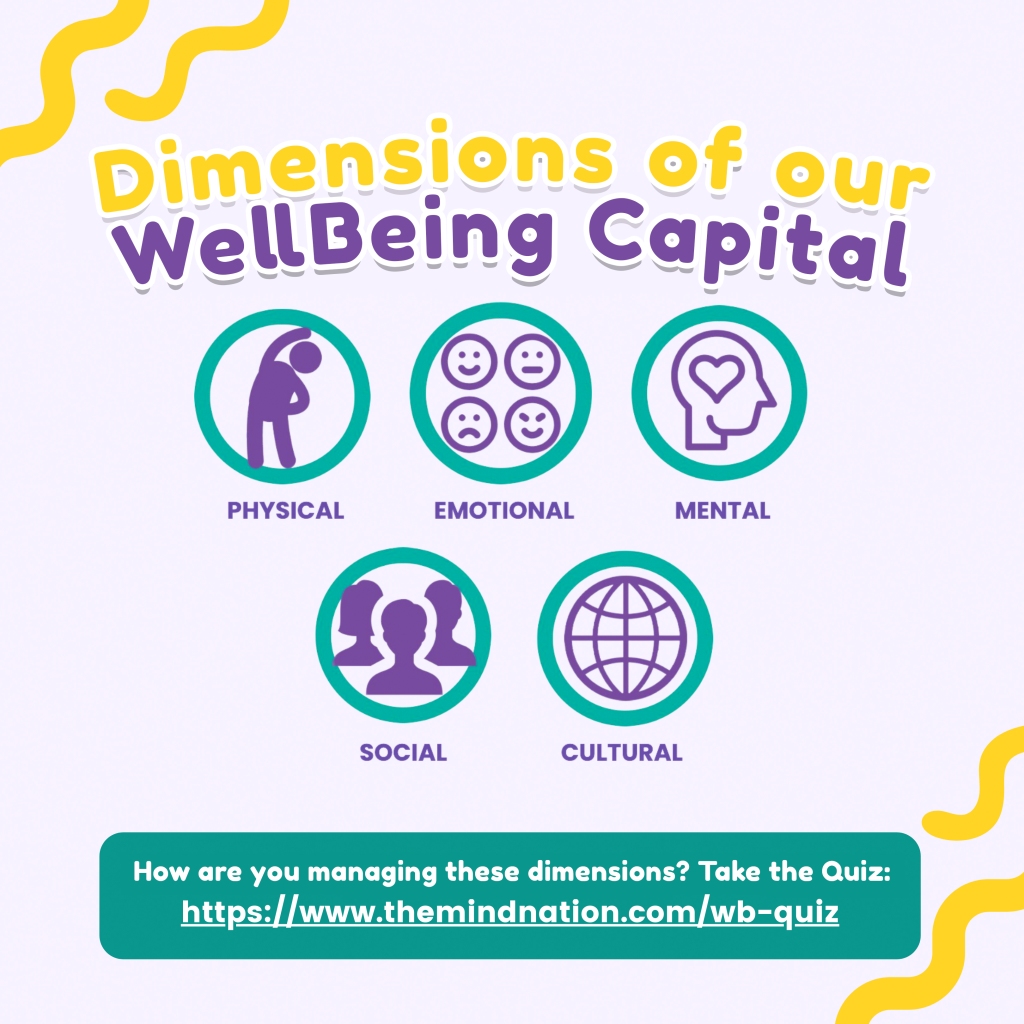
How do you improve your mental agility and achieve a thriving state of well-being? By balancing the five different dimensions of our WellBeing Capital®:

Physical Wellbeing: This is ensuring that you have a safe place to live, enough to eat, adequate clothes and access to transportation. Other aspects of the physical capital includes having good physical and financial health.

Emotional Wellbeing: This is more or less who YOU are and what you feel. It includes your values, skills, knowledge, experience, education, interpersonal skills, and problem-solving abilities.

Mental Wellbeing: To be mentally well is to create authentic happiness in our lives and tune into our feelings.

Social Wellbeing: This refers to the connection and relationship that we have with others. When you feel a sense of belonging, you increase your mental health.

Cultural Wellbeing: This is all about the support you get from your community, your happiness in it, your workplace culture, and your country. It means that what you are doing at work is aligned to your reason for being.

Self-care to boost your WellBeing Capital®

To build your mental agility and overall well-being, you have to make sure all of the above dimensions are functioning to an extent. This is where self-care comes into play. We must make self-care a habit so that the next time we’re faced with stress in any aspect of our WellBeing, we have enough self-regard to step back and work on what’s missing.

I used to think of self care as something that I had to deserve. That I can only allow myself to rest and recuperate when I’m tired or burnt out. But when you’re already burnt out, a weekend or a day off isn’t going to cut it anymore.

Instead, make self-care a daily habit through the following ways:

  1. Keep your mind and body in check. Listen to what your body needs; if that’s extra time to breathe or a little stretch in the morning, do it. But don’t overdo it; always remember that rest is productive too.
  2. Limit your news intake. We don’t need that much information, all we need is to be informed well enough for our peace of mind.
  3. Social distancing does not mean emotional distancing. Please do keep connected, and as much as possible CALL. Hearing someone else’s voice, especially someone we love, can give us instant calm and we need.
  4. Get some sun. Feeling locked up isn’t the best thing for our sanity, so only if you can and only if it’s safe, open the window and bring in that vitamin D.
  5. Meditate. Simple acts of breathing, grounding, and being aware of our surroundings can make us less anxious and bring us back to what we need to address. Prayer is one very practical way we can apply mindfulness to daily life.
  6. Cultivate an attitude of gratitude. Be grateful for anything and everything good. Starting or ending your day with a grateful mindset will only set you up to see things in a better light.

Taking good care of all aspects of your life is paramount to achieving improved mental agility. If your physical, emotional, mental, social, and cultural dimensions support one another, it will increase the likelihood that you stay healthy and face uncertainties with more resilience.  The key here is to always have that unconditional self-regard: to understand that there should be no ‘ifs’ or ‘buts’ in taking care of ourselves. Now more than ever, we have to put utmost value on our well-being.

How’s your well-being today? Take our FREE WellBeing Quiz! It’s a simple True or False test that can be completed in just 2 minutes. Visit here to get started. 

Categories
Featured Self Help

7 Solutions For Time Management Issues


If your team is struggling with productivity, MindNation has a repertoire of virtual webinars to help employees with time management, manage stress, and avoid burnout. Book these talks for your team by emailing [email protected].

When you are better at planning your day, prioritizing work tasks, and eliminating distractions, you can achieve your goals and be less impacted by stress or burnout. Whether you’re a student, stay-at-home-parent, or working in a company, time management is an essential skill to have.

Here are some things you can do to manage your time better:

“By learning the art of saying a tactful “no” to others, you’ll protect your time budget and improve your focus on your most valuable activities.”

Salma Sakr, MindNation Chief Growth Officer
  1. Avoid multitasking. Many people believe that multitasking makes them productive, but all that shifting back and forth between tasks isn’t actually that efficient because each time you do it, it takes your brain more time to refocus. So try to complete one project or task at a time before moving to the next one; your brain will thank you for it. 
  1. Merge different email accounts into one inbox. According to a 2019 report by management consulting company McKinsey & Co., the average professional spends 28% of the work day reading and email. Get this time back by making a few changes to your email settings and having all incoming email delivered to just one inbox.
  2. Treat your calendar as your time budget. Time isn’t money, but it does behave like money; it must be budgeted because when it’s gone, it’s gone. So when you schedule things into your calendar, think of it the same way you would think about withdrawing money from a bank account. Everyone has a weekly limit of 168 hours; try your best to live within this time budget and never overdraw.
  3. Avoid having back-to-back-to-back appointments. Leave space between your appointments for unexpected interruptions, to take a moment to relax, or to prepare for the next meeting.
  4. Say “No” more often than you say “Yes.” By learning the art of saying a tactful “no” to others, you’ll protect your time budget and improve your focus on your most valuable activities.
  5. Procrastinate properly. When a new idea comes into your head, ask yourself, “Do I need to do this now, or can I do it later?” Appropriate procrastination can help you, because you’re still going to complete those ideas, just at a later date. Don’t limit your calendar to what can be done today or within a week; instead, think in terms of months or even years.
  6. Identify your Most Valuable Activities (MVAs). These are the top two activities that you excel at, the ones that would cost you the most per hour to pay someone else to do. All the other activities that you do during work time other than those two MVAs are your less valuable activities, or LVAs.

In order to achieve maximum results during the limited amount of work time you have each week, prioritize your MVAs in your calendar and delegate LVAs to your team or your colleagues when possible. By leaving less room for options, you minimize the temptation to multitask and improve your overall focus. The result: more disposable time, and you reach your goals faster.

Time will always fill the space you give it, so use it wisely. 

By Salma Sakr, MindNation Chief Growth Officer