
Categories
Employee Wellness

4 Ways To Build A Compassionate Workplace

A 2020 MindNation survey pointed out that 53% of Filipino employees are currently suffering from varying degrees of mental health challenges. The top sources of their anxieties are fears about the COVID-19 virus, financial problems, and work performance pressure. It’s predicted that these numbers will continue to worsen and have a long term impact on work environments, health, and work-life balance.

“Business leaders need to be more understanding about how the pandemic is affecting their team members and provide new and different ways of supporting their employees,” says MindNation psychologist Jessa Mae Rojas. “One of the ways they can do that is to be more compassionate; that is, creating a work environment in which employees feel safe and comfortable to express their needs.”

“Business leaders need to be more understanding about how the pandemic is affecting their team members and provide new and different ways of supporting their employees.”

Jessa Mae Rojas, MindNation Psychologist

According to Monica Worline, Executive Director of the CompassionLab at the University of Michigan, a research scientist at the Center for Compassion and Altruism Research and Education at Stanford University, and co-author of Awakening Compassion at Work, organizations that operate with compassion enjoy the following benefits:

  • Increased employee retention.
    Employees who receive empathy, understanding, and help from their colleagues and superiors are likely to stay in the organization for a long period of time and direct all their efforts for the benefit of the organization.
  • Stress reduction.
    Employees in a compassionate workplace can vent out their professional troubles to each other and socialize in the office. This lets the stress dissipate and increases the likelihood of being more productive.
  • Stronger interpersonal bonds.
    Leaders and managers who follow compassionate approaches at work have employees who will want to reciprocate the goodness they receive. This will lead them to form healthy and strong professional relationships with their team members. 

Lack of compassion at work, on the other hand, results in more absenteeism (the practice of regularly staying away from work without good reason), presenteeism (showing up for work without being productive, generally because of ill-health) unhappiness, and disengagement from work. “All these lead to less productivity and increased employee turnover, both of which are bad for the company’s bottom line and image,” points out Jessa. 

As a business leader, you can express compassion in the workplace by:

  1. Initiating difficult conversations with team members on a one-on-one level if you notice they are in pain or undergoing some personal stressors. Regular check-ins are essential so that you get to know your employees on a deeper level and can spot signs that something is amiss in their work or persona lives. And when they do confide in you, communicate understanding and support so that they feel secure and comfortable enough to tell you their needs, whether it’s extra time off or even financial assistance. “Even just telling the person you care and that you’re there for them can be good,” says Jessa.
  2. Actively listening to others without judging them.
    A great place to start is to start a meeting by asking the attendees “How are you?” or other open questions related to their well-being and not saying anything until they’ve completely finished responding. And if a team member is not being forthcoming, just keep reiterating that you are always available to listen whenever they are ready.
  3. Carefully stating criticisms in a constructive manner, so that someone who is underperforming or made mistakes will not take the negative feedback personally.
    In an empathetic work environment, leaders and co-workers treat each other with respect no matter what designations they hold. Additionally, they are open to negotiations and not dictatorial, and ready to lend assistance should anybody need a hand.
  4. Offering learning opportunities such as webinars and resources that focus on mental health. Sometimes, people are not even aware of what it is they need, i.e. self-care or self-compassion until it is already too late. Additionally, leaders may not be properly equipped to conduct mental health first aid or engage in difficult conversations. So partner with a mental health and well-being company that can create a customized program for your employees, making sure that services are geared towards achieving holistic health. 

Emotions and mental well-being influence productivity at work. No person who is undergoing depression or other mental health challenges can work with the same efficiency if they are stressed, anxious, or overwhelmed. Leaders who push for a compassionate workplace culture can directly foster advancement and help distressed employees become capable again.

MindNation can help you develop a more compassionate workplace culture. We hold training programs to help team members to become more empathetic, active listeners, and build emotional resilience. Partner with us to build happier, healthier, and more productive teams. Visit www.mindnation.com or email [email protected] to know more about our services. 

Categories
Employee Wellness

Enable And Empower: 4 Ways To Make Your Company Inclusive For Persons With Disabilities

In the Asia-Pacific region alone there are 370 million persons with disabilities (PWD), with 238 million of them of working age, according to data from the United Nations Department of Economic and Social Affairs. Hiring people with disabilities increases diversity in the workplace, which has been proven to boost creative thinking, problem-solving, and team morale. 

Unfortunately, people with disabilities commonly experience at work. According to a report by the International Labour Organization, PWDs are often confronted with prejudices regarding their productivity. They also face discrimination at the hiring stage. A survey carried out in France shows that less than 2% of those having mentioned their disability in their CV were called for an interview. 

For Ed Geronia, a journalist, person with mobility impairment, and co-founder and Chief Information Officer of Sari Software Solutions making workplaces welcoming and supportive of the needs of persons with disabilities is a win-win for everyone in the organization. “Everyone benefits from an inclusive workplace, not just those with a disability,” he says. This is because when employees feel a sense of belonging and feel more connected at work, they tend to work harder and smarter, producing higher quality work. 

“PWDs should know that they can earn as much as an able-bodied team member if they are doing the same kind of work.”

Ed Geronia, journalist

Ed recommends some ways companies can make sure that their workplace is disability-inclusive:

  1. Review and refine job roles and processes. Part of this means ensuring that you hire someone based on the job qualifications, not on the basis of their disability. “There’s this notion that people with autism are good at math, so you made it a company policy that you will only hire those in the spectrum for accounting work,” Ed points out. But doing this is a disservice for both the PWD applicant and the other members of the team because you are basing your decision on a stereotype. “People should be hired solely for their capabilities, skills, and talent.”

Furthermore, don’t deny a person a training or promotion just because they are disabled. “Don’t tell someone who is mobility-impaired that you cannot make them manager because you assume they cannot travel to different work sites,” Ed says. “Instead, tell them what the position entails and let them determine if they can do it or not.”

Finally, make sure that your benefits and incentives for employees are the same for all. “PWDs should know that they can earn as much as an able-bodied team member if they are doing the same kind of work,” Ed says.


  1. Partner with community organizations that train persons with disabilities to be ready for employment. In the Philippines, these include:
  • Project Inclusion Network, a non-profit organization that matches PWDs to employers. 
  • IDEA Philippines, which offers vocational training for deaf young people 
  • Microsoft Enabler Program, provides cloud & AI training for PwDs, accessibility education for employer partners, and inclusive hiring from non-profit organizations supporting PwDs.
  1. Have disability awareness and disability sensitivity training. Start by training someone in your human resources department to be a disability advocate. “This way, you have someone in the company who is looking out for the needs of your employees who have disabilities, both visible and invisible,” Ed says. Then move on to the rest of your management team; many might be harboring unconscious biases against people with disabilities and consider these team members inferior. “You have to treat these trainings as investments, because when you know the needs of your employees who are disabled, you can take steps to make things better for them,” he adds.
  2. Adopt best practices from other companies. “In the Philippines, we have to realize that there are still gaps in PWD employment policies,” Ed points out. “Let’s look for companies who are embracing inclusivity and find out what we can copy from them.” 

For example, Philippine-based Lamoiyan Corporation, makers of Hapee Toothpaste, prioritizes hiring deaf employees for factory work. “If it’s just manual, if it’s just using the hands or the eyes, they’re as good as you and me—in fact, they’re more focused because of their handicap,” founder Cecilio Pedro said in a 2016 interview. The company is also supporting three schools for the deaf in the country, where they provide free education for the deaf through sign language.

A disability-inclusive workplace is more than just hiring people with disabilities. It offers employees with disabilities — whether visible or invisible — an equal opportunity to succeed, to learn, to be compensated fairly, and to advance. “Many organizations are already starting to adopt policies on gender equality,” Ed points out. “Why not take it a step further and also include equality for PWDs?” 

MindNation offers virtual trainings on diversity and inclusion so that your organization becomes a safe space for everyone, regardless of their age, gender, race, and physical and mental disabilities. Partner with us to build happier, healthier, and more productive teams. Visit http://www.mindnation.com to know more.

Categories
Employee Wellness

Josh Alfafara Of The Executive Centre: 5 Leadership Lessons I Learned During The Pandemic

When premium flexible workplace provider The Executive Centre launched its flagship office in Makati, Philippines last June 2021, Country Manager Josh Alfafara knew he had his work cut out for him. “Leading a new business in the middle of a pandemic was challenging, to say the least,” he recalls. “Everyone was asking why we were selling office spaces at a time when everyone is working from home. But I said ‘Why not?’ I felt that this was the best time to do so because people are now looking for flexible ways of working.” 

This mindset has helped Josh and his team ensure that TEC Philippines remains top of mind for small and medium enterprises and multinational companies looking for a truly first-class flexible workplace solution within prime locations and prestigious office addresses. “We differentiate ourselves from our competitors in the service aspect that we give to our members,” he explains. “Even when the government imposed a strict lockdown, we never stopped communicating with our members, addressing their needs, and letting them know that we are available for them all the time.” 

“I don’t tell my team ‘You do this, you do that;’ instead I ask them ‘Where can I help?’ ‘What can WE do?’ And if my team member is not delivering, it’s on me. Where did I lack in terms of giving support or in providing resources?” 

Josh Alfafara, The Executive Centre Country Manager

Here are five leadership lessons that Josh has learned as he continues to lead his company and his team through the pandemic:

  1. Be flexible in your approach. “We can no longer go around publishing pictures of office spaces because no one wants to spend any money,” Josh points out. “So instead of being salespeople, we positioned ourselves as consultants of workplace strategy. We asked clients ‘What do you need at the moment? You have 2,000 square meters of office space that no one is using? Ok, that’s something we may be able to help you with.’” By building that trust and giving their expert advice on flexible workspaces, TEC was able to build loyalty with their clientele. 
  1. Servant-leadership is the key. Josh built his team in the middle of the pandemic, and while it felt good to be able to provide people with work, he also understands that it can be demotivating for them to market something when everyone is hiding at home. “As a leader, my role is to bring out the best in my team so they can do what they need to,” he shares. “I don’t tell my team ‘You do this, you do that;’ instead I ask them ‘Where can I help?’ ‘What can WE do?’ And if my team member is not delivering, it’s on me. Where did I lack in terms of giving support or in providing resources?” 
  1. Be transparent in communications. Josh has frequent and structured one-on-one conversations with his direct reports to align on goals and expectations. “As an employee, nothing is worse than thinking you are doing great but finding out at the end of the year during the performance review that you’re terrible at your job,” he says. “So it’s important that I meet them regularly to find out what they are lacking in, or what training they require.”
  1. Employee well-being drives results. To a certain extent, Josh does not believe in keeping work life separate from personal life. “People are people, and they have feelings and mental health. You can’t expect them to have mental health for home and a separate mental health for work,” he explains. He makes sure he has an open-door policy where people can just talk to him if they are struggling, not just with work but even in their personal lives. “When I talk to my team, I ask them how things are at home without getting too personal, and I believe that showing them this genuine care has helped them perform better at their job.”

This importance to employee well-being is what pushed TEC to partner with MindNation. “I believe that all businesses should have a mental health program in place. Leaders should treat it as an investment in their people because at the end of the day when you take care of your people, they take care of the business, which drives results. It’s hitting many birds with one stone and it’s absolutely necessary,” Josh says. 

He recalls that during the early days of his career, mental health was not a priority; people had to pretend to be sick to take time off. “But for me, if a team member is struggling today, I’d rather they let me know right away so that they can take whatever break they need and come back stronger tomorrow, instead of dragging their feet and dragging the rest of the business down,” he says. 

  1. Self-care is not selfish. Leading a business during a pandemic can be physically and emotionally draining. As someone who admittedly experiences anxiety, Josh makes sure he prioritizes his mental health as well. “I make sure I set limits as to when I check my phone and my work email. One of my favorite things to do is listening to a guided meditation app,” he shares. “I also make sure I have people can talk to, including a coach that I consult with on a regular basis, where I become the most vulnerable and let it all out.” 

Lastly, Josh makes sure his team members know all about his self-care habits so that they follow suit and take care of themselves as well.

Josh’s professional goals for the year include seeing TEC Philippines finally take off, perhaps even expanding to another site within the country. “Business is doing very well although it’s not where we want it to be because of the pandemic and the new spate of lockdowns,” he admits. “But we are doing what we can and I always encourage my team to have patience; we’ve done it before, we’ll get through this again.”

However, he is mindful that the company’s success should never come at the expense of the team’s well-being. “Now more than ever, leaders have to be available for the team and not leave them out in the dark,” he says. “If you are present with your team, they can help you make the business succeed.” 

Happier and healthier employees are productive employees. Partner with MindNation to provide your team with a well-being that is holistic, data-driven, and customized for your needs. Visit www.mindnation.com or email [email protected] to know more. 

Categories
Work in the New Normal

6 Ways To A Greener Home Office

There are lots of reasons to encourage your team to implement earth-friendly practices in the way they work from home. Not only is it good for the environment, but it can reduce their expenses as well as improve their health and job satisfaction. A 2018 Gallup study showed that employees who feel that they contribute to “the present and future conditions of the environment” feel more engaged at work. In addition, the 2015 Cone Communications Millennial CSR Study reports that  as many as 91% of millennials would switch to use a company or brand based on its commitment to social good and investment in things like environmentally-sound and sustainable practices. So if you want to attract and retain top talent, it pays to make the environment a priority in your business.

Here are some changes you can ask your staff to implement to make their home office more environmentally friendly.

  1. Make the most of natural light. If your team members have the opportunity to choose the room where they will set up their office, opt for space with plenty of natural light. This move will allow them to reduce their energy usage, thus saving money on electricity.

On the other hand, if their home office is located in the basement or some other part of the house that gets no natural light, gently suggest that they use LED bulbs to mimic sunlight.

  1. Be energy-efficient. Remind them to switch off and unplug TVs, lights, and equipment when they’re not being used. A 2019 study by Duke Energy, an American power company, states that electric power is consumed by many devices when they are switched off but are still plugged in, which can account for as much as 20% of the electricity bill.
  2. Go paperless. Digital documents are easier and more affordable to store and retrieve. They reduce clutter in the office and if your business is in the cloud, the documents can be accessed from anywhere.
  3. Implement sustainable printing techniques. But if cutting out paper completely is not an option, remind your team to implement sustainable printing practices. Before they even start printing, they should ask themselves if the page they are about to print is really necessary. If the answer is yes, then use recycled paper and print on both sides of the page. Moreover, their choice of printer, ink, and toner is also important so tell them to look for environmentally-friendly options such as refillable printer cartridges.
  4. Add plants. Adding some greenery to the home office can do more than brighten up the interior design. Psychologists at Exeter University found that employees are happier and perform better when living plants are added to the workplace, with a 15% increase in productivity and significant improvements in memory retention and other basic tests. Plants also emit oxygen and reduce air pollution, making the air in the workplace cleaner and healthier to breathe. If you have the budget to spare, send over some low-maintenance succulents to the team so that even those without a green thumb can benefit from them.
  5. Start a conversation. If you set a good example, then your employees will follow suit. Promote your environmental values and the little things you’re doing in such a manner that it will motivate others to join you. Work with your HR department to hold awareness training sessions so that the staff becomes aware of the benefits of creating a more sustainable working environment. 

Being environmentally-conscious in business isn’t just good for the environment or society at large — it’s also good for the business itself. A green and healthy workplace produces happier and motivated workers, and increases employee productivity.

 MindNation is a mental health and wellbeing company that works with like-minded, innovative, and empathic organizations to make happier, healthier, and more productive employees. Our program is based on a person’s holistic wellness (physical, emotional, mental, social, and cultural). We partner closely with companies using a data-based approach, creating customized solutions, and leveraging the expertise of our scientific board of advisors. For more information, visit www.mindnation.com or email [email protected]

Categories
Employee Wellness

4 Effective Onboarding Tips

Research by workplace thought leader Society for Human Resource Management reveals that it costs businesses up to 9 months’ salary (on average) to recruit and train a new employee. On top of this, it may take new employees up to two years to achieve the productivity level of an existing employee.

One way you can keep employee turnover low is to make sure that new hires go through a proper onboarding process. “The first few weeks a new team member is on the job are some of the most crucial because you’re setting expectations and building their personal investment in your organization,”says Kana Takahashi, MindNation’s Chief Executive Officer. “When you have an effective onboarding program, new employees feel right from the start that they are part of the team, will work harder to achieve the company’s goals, and will stay for a longer period of time.” 

Onboarding begins as soon as an offer is accepted and typically lasts through the first year of employment, at a minimum. If you already have an onboarding process in place, here are some things you can add to the activity to make it more engaging — and possibly even fun — for the new team member:

“One of the purposes of onboarding is to acclimate the employee to the organization, to make them see how their role fits into the organization, understand the mission and vision of the company, and what the work culture is.”

Kana Takahashi, MindNation CEO
  1. Get everyone in the company involved. The onboarding program used to be solely the purview of the Human Resources department, but for Kana, it’s important that all departments — and their heads — take time to welcome and talk to the new hire. “One of the purposes of onboarding is to acclimate the employee to the organization, to make them see how their role fits into the organization, understand the mission and vision of the company, and what the work culture is,” she explains. “This is achieved by having them interact and socialize with as many people as possible.”

At MindNation, Kana starts the onboarding process by taking the new hire through the necessary paperwork. The person is then introduced to the leadership team, where they receive information about the company’s values, goals, and culture. Afterwards, an announcement formally welcoming them to the company is posted on the company’s Slack channel. 

“Then for the next few weeks, they go through the different departments, talking to the heads and members so that they get a grasp of the working dynamics and understand everyone’s role more,” Kana explains.

  1. Have a get-together to welcome the new member. Colleagues can also participate in onboarding. Before the pandemic, it was customary to take new employees out to lunch or dinner to help break the ice and allow them to get to know their new colleagues in a relaxed environment. Today, these teambuilding sessions can be done in a virtual set-up and are no less effective. “When an employee feels valued by their team on both a personal and professional level, they are more likely to stick around for the long haul and be happier,” says Kana. 
  2. Provide consistent and clear communication. New hires will want to jump into their role quickly, but make sure their enthusiasm is tempered by clear expectations and parameters during onboarding. Otherwise you might end up receiving output that does not meet your needs, while the employee will feel disappointed that they failed you. So assign projects and set goals, and be sure to guide them to the resources they need and the people they can turn to for help. 
  1. Then create avenues for giving (and receiving feedback). This is another crucial part of onboarding because it ensures that the new hires are settled in and have everything they need to be successful in their work. “All departments in MindNation have weekly alignment meetings to determine that all tasks are delivered and to ensure that the employee’s workload is enough and does not burn them out,” Kana shares. “If they are struggling, we adjust timelines or give more guidance — anything that they need to make their working experience better.”

Additionally, new hires at MindNation have weekly or bimonthly one-on-ones with their line managers; these are not for project updates, but informal conversations centered around the employee’s mental health and well-being. 

First impressions matter, and you can start off your relationship with your new employee on the right foot by treating the onboarding process as a part of your business’ success.

Taking care of a new  team member’s well-being is part of an effective onboarding process. MindNation’s holistic well-being program ensures that everyone from new hires to veteran executives become happier, healthier, and more productive. Our services include 24/7 teletherapy sessions with psychologists and WellBeing Coaches, Group Sessions, virtual webinars, and surveys and analytics. For more information, visit www.mindnation.com or email [email protected]

Categories
Employee Wellness Work in the New Normal

3 Tips To Boost Trust Between Remote Team Members

In the book “New Insights On Trust In Business-To-Business Relationships,” authors Sandra Simas Garca and James Barry state that when buyers and suppliers enjoy high levels of cognitive trust among themselves — that is, they are confident in the other person’s ability to do the job — it leads to better communication, easier conflict resolution, and more collaboration. 

The same benefits can extend to members of your remote team so as a leader, it’s important you ensure that everyone is working hand in hand to achieve company goals. “Trust is the only way teamwork can happen because if teammates don’t trust one another, there will be conflict and resentment,” advises Darlyn Ty-Nilo, President and Managing Director of Viviamo, Inc., a custom publishing and marketing company that creates various paper products for specific target markets. “Conflict will lead to lack of commitment, avoidance of accountability, and, finally, inattention to results.” 

“If someone in your junior’s family got hospitalized, for example, or if a peer’s home got flooded after heavy rains — these will affect their mental health and productivity. By knowing where they are coming from, you can make the necessary adjustments and support.”

Darlyn Ty-Nilo, Viviamo Inc. President

Darlyn shares three tips for building trust and boosting teamwork among team members:

  1. Create avenues for deliberate communication and work visibility.
    These are the first two principles of the “Visible Teamwork” framework created by podcast host, author, and career coach Pilar Orti. “It means creating structures where team members are continuously talking to and aligning with each other,” says Darlyn.  “When people are constantly updating each other about their work, it’s easier to find out who needs help or how ideas can be further refined.” 

In this time of remote working, this means making attendance to virtual check-ins and alignments mandatory. At Viviamo, Inc., for example, Monday mornings are sacred because this is when they hold their town hall meeting  — all of their 17 employees gather virtually and spend up to two hours aligning on priorities of the week and other matters. On top of these, departments are expected to hold their own regular meetings every week. 

It also means utilizing dashboards, collaboration tools, and chat groups to keep track of deliverables and project status in real time. “So if you see, for example, that the target was not met today, you can act on it right away and do better tomorrow, instead of waiting to act on it at the end of the month. By then, everyone is already stressed and anxious,” she points out.


2. Know your team member’s context and mood. Part of creating deliberate communication is making an effort to get to know your team members on a personal level. This is because an employee’s mood, emotion, and overall disposition can impact their job performance, decision making, creativity, turnover, teamwork, negotiations, and leadership. “If someone in your junior’s family got hospitalized, for example, or if a peer’s home got flooded after heavy rains — these will affect their mental health and productivity. By knowing where they are coming from, you can make the necessary adjustments and support,” Darlyn explains.

To encourage team members to open up, Darlyn has instituted a buddy system among Viviamo’s employees. Each group is composed of three to four members and they must follow one rule — no shop talk allowed. “They are just supposed to check-in on each other’s mental and emotional state,” she relates. Groupings are changed every quarter so that there is enough time for members to build relationships but also have opportunities to get to know others in the organization. 

3. Make time for planned spontaneity. This is the third and final piece of the Visible Teamwork framework. “Building trust cannot be all related to work,” suggests Darlyn. Virtual coffee hangouts, drinking sessions, and other virtual teambuilding activities increase trust  in the workplace because they allow  team members to relate better to their colleagues. Encourage everyone to participate in these bonding sessions, but don’t force attendance on those who beg off; instead, explore other options for establishing interpersonal relationships such as casual one-on-ones or more frequent chats with their buddies. 

Teamwork brings numerous benefits to companies. It fosters cooperation, broadens different perspectives and ideas which might end up bringing much better results, and increases productivity. 

MindNation conducts bi-annual Pulse Surveys so that managers can understand employee struggles, how they feel about the company, and flag possible sources of stress. Those who are struggling can avail of 24/7 teletherapy session with psychologists and WellBeing Coaches or participate in Group Sessions. For more information about our services, visit www.mindnation.com or email [email protected]

Categories
Employee Wellness

Ways To Reduce Unconscious Bias In The Workplace

In a previous article, we shared some general ways you can build a more supportive, accepting, and respectful workplace. Today, we dive deeper into how you can address unconscious bias in your business and foster a more diverse and inclusive company.

There are many types of unconscious bias (over 19), but here are the four key ones and how you can avoid them:

  1. Gender bias. This is the tendency to prefer one gender over another. Examples include:
  1.  Providing more resources and opportunities to one gender (typically men) over another;
  2. Reviewing an employee of one gender differently from another gender — even when the evaluations are purely merit-based; and 
  3. Rewarding an employee of one gender differently from another gender in the form of promotions, raises or other merit-based rewards.

“Communication is key. Avoid sweeping generalisations and do your research on different cultures. A gesture or custom that you’re indifferent to might offend someone from a different cultural background, and vice versa.”

Salma Sakr, MindNation Chief Growth Officer

A major result of gender bias is the creation of the “glass ceiling,” a metaphor for the evident but intangible hierarchical impediment that prevents women (and even minorities) from achieving elevated professional success. If you want to break this glass ceiling, here are some ways you can avoid gender bias at work: 

  • Set gender-neutral recruitment standards. Do this by defining the ideal candidate profile ahead of time and evaluating all candidates against those standards. 
  • Create diversity goals. Set qualitative gender diversity goals to create a more gender-balanced team. Support and provide resources for women to take on leadership roles. 

2. Ageism. This is seterotyping or discrimination  against individuals or groups on the basis of their age. This can also include ignoring a junior’s ideas because they are considered “too young,” or assuming someone should behave in certain ways because of their age. 

Preventing ageism involves combatting age-related stereotypes as well as engaging older team members in the workplace. Here are some ways to do that:

  • Don’t make assumptions based on age: For example, don’t automatically presume that older workers don’t know how to use technology or aren’t open to learning new skills. Provide equal learning opportunities for everyone. 
  • Foster cross-generational collaboration: Create two-way mentorship programs where a senior team member is paired with a new hire. This kind of collaboration facilitates communication between team members of different stages, which can help break down misconceptions about age. 

3. Cultural bias.  Cultural biases are assumptions, stereotypes, and belief systems about a different culture, based on our own limited experience of that world. In the workplace can create misunderstandings, biased treatment and barriers to career advancement; if you are manager who believes that all South Asians are good in software programming but who like to make a fuss over nothing, for example, you might never give your team members from India the opportunity to speak their mind, causing them to eventually leave the company due to lack of opportunities.

Here are some ways you can be sensitive to individual backgrounds and beliefs when in a professional environment:

  • Notice the little things. Someone from a different cultural background might behave in a way that you interpret as rude, shy, or standoffish, but that could simply be the way you interpret it. You need to think deeper, and really acknowledge that what you call ‘truth’ is actually just accumulated information from your own cultural background.
  • Communication is key. Avoid sweeping generalisations and do your research on different cultures. A gesture or custom that you’re indifferent to might offend someone from a different cultural background, and vice versa.
  • Be flexible. We all operate in different ways and have different views of life – even within the same sub-cultures. In a professional environment, always respect others’ customs, such as national holidays, dietary requirements and political attitudes. If in doubt, talk about something else!
  • Be yourself! We’re all human at the end of the day, and you’ll often find that smiling and offering a friendly face are universally recognised behaviours, wherever you’re from!

4. Race/ethnicity bias. This is any discrimination against any individual on the basis of their skin color, or racial or ethnic origin. It can take many forms, such as:

  1. Direct discrimination: not hiring or promoting someone based solely on their race
  2. Indirect discrimination: happens when a rule or policy set by an employer places people from certain racial, ethnic or national groups at a disadvantage.
  3. Racial harassment: includes any unwanted conduct related to an employee’s race, especially when it violates their dignity or creates an offensive environment.
  4. Victimization. when someone is treated badsly because they complained about discrimination or helped someone who has been the victim of discrimination.

Leaders can put a stop racial discrimination at work by:

  • Creating channels where employees feel safe speaking up about racial issues. It’s important for managers to seek input from missing voices to help obtain different ideas for a diverse point of view.
  • Actively communicating their stance on racial discrimination and what won’t be tolerated along with the consequences for violation. Racism, in any form, should never be overlooked, excused or tolerated, regardless of someone’s rank or title.
  • Spreading awareness by providing resources to educate individuals about the culture of racism and the history of different races. Most individuals are unaware of racial injustice and the comments they unconsciously make towards their BIPOC (Black, Indigenous, and People of Color) colleagues.

Companies can actively reduce bias through training along with embedding processes, policies, and expectations that help create a culture rooted in diversity and inclusion. Ultimately, it’s management’s responsibility to demonstrate their commitment to diversity and inclusion and the value it brings to the company as well as holding others accountable. 

MindNation holds webinars to help organizations reduce unconscious bias in the workplace so that team members become happier, healthier, and more productive. Email [email protected] to schedule a session now!

Categories
Employee Wellness

Everyone At The Table: 3 Ways To A More Diverse And Inclusive Workplace

Promoting and improving diversity and inclusion (D&I) in the workplace no longer just means hiring more women in the company or allocating a prayer room for your Muslim team members. These are good first steps but much more needs to be done if you want to create a workplace that respects the unique needs, perspectives, and potential of everyone. 

D&I explained

Simply put, diversity in the workplace means that the company hires a wide range of diverse individuals — people of various race, ethnicity, gender, gender identity, sexual orientation, age, social class, physical ability or attributes, religious or ethical values system, national origin, and political beliefs.

Inclusion, on the other hand, is the practice or policy of providing equal access to opportunities and resources for people who might otherwise be excluded or marginalized. Inclusion is about putting diversity into action.

“Unconscious bias in the workplace impacts our recruitment decisions, employee development, impairing diversity and retention rates, as well as promoting a disconnected culture.”

Salma Sakr, MindNation Chief Growth Officer


Benefits of a diverse and inclusive workplace

Equitable employers benefit in the following ways:

  1. They gain deeper trust and more commitment from their employees.
  2. Diversity and inclusion can enhance the problem-solving necessary to rethink businesses and reimagine industries in the face of unprecedented disruption.
  3. More diverse teams are better at anticipating changes in consumer needs and buying patterns, which can lead to more rapid product and service innovation.
  4. All of the above positively contribute to the company’s bottom line.

Putting it into practice

D&I has become a buzz word that many companies use for good PR, but genuine D&I requires effort, dedication, and consistency. Here are 3 ways you can make it happen in your company:

  1. Be aware of unconscious bias.
    Unconscious bias (or implicit bias) is often defined as prejudice or unsupported judgments in favor of or against one thing, person, or group as compared to another, in a way that is usually considered unfair.

Unconscious bias in the workplace impacts our recruitment decisions, employee development, impairing diversity and retention rates, as well as promoting a disconnected culture. 

Organizations who make an effort to address unconscious bias in order to develop and maintain an inclusive workforce enjoy the following benefits:

  1. Increasing company profitability: Teams that have solid problem-solving and decision-making skills can bring a competitive advantage to a company. For example, a McKinsey study found that gender-diverse companies were 21% more likely to gain above-average profitability.
  2. They are more attractive to top talent: By implementing inclusive recruitment strategies, companies are able to reach out to a wider talent pool. Job seekers would also be more likely to apply to companies that prioritize diversity.
  3. Increasing innovation: Diverse teams can bring a variety of fresh ideas to the table, allowing teams to come up with creative solutions that can drive sales. For example, a 2018 study by the Boston Consulting Group found that companies with diverse management teams bring 19% higher innovation revenue.
  4. Higher productivity: University research found that tech firms with diverse management teams have 1.32 times higher levels of productivity. Increased productivity can lead to more efficient project management and implementation.
  5. Higher employee engagement: This can lead to higher job satisfaction, which in turn, can lower the turnover rate.
  6. Making fair and more efficient business decisions: Inclusive teams can make better business decisions up to 87% of the time. These business decisions can help improve a company’s performance and revenue. 

2. Be an ally. This is a critical next step and involves the participation of everyone at work regardless of their title, i.e. whether you are a manager or not. Here are three things you can do if you see an injustice at work, a bias being played out, or a team member in an uncomfortable or even scarring situation: 

Step 1: Point it out using language such as 

“I noticed that…”
“It seems like…”

“It feels to me like…”

Step 2: Avoid making assumptions. Instead, clarify it with the person involved, such as by asking “Did I read that right?”

Then validate it by using language such as“I want to acknowledge how challenging this is…”

Step 3: Work it out together by sharing your intention to help and to develop a plan to problem solve together. 


3. Encourage team identification. High team identification is when members identify themselves as part of a group and feel proud to be a part of it, when they feel that they are not working against each other, but for the same team, and they have the same future, goals, and vision. The higher the collective team identification, the more likely team members feel positively about diversity and are therefore more collaborative and successful. To do this, you need to make sure that people are not merely members of different social categories such as gender or race, but to emphasise the distinctiveness of each individual. 

By following these relatively simple steps you can really make a difference to your employees’ lives and shape the effect of diversity for the greater.

MindNation offers webinars to train your managers on how to foster more diversity and inclusion in the workplace so that you build happier, healthier, and more productive teams. Email [email protected] to schedule a session now!

Categories
Employee Wellness Get Inspired

Seeing Success: 7 Steps To Developing a Growth Mindset At Work

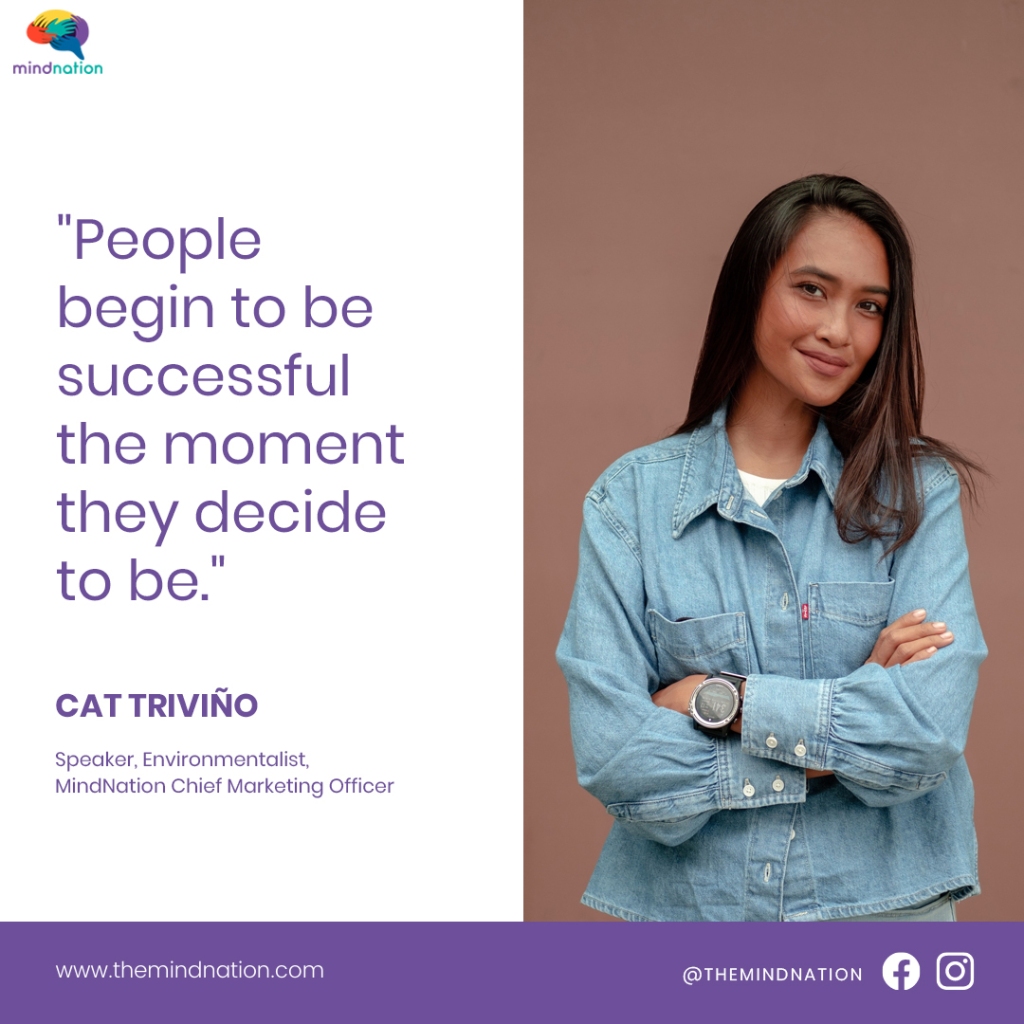
A growth mindset is the belief that a person can continue to learn and become more intelligent with effort, and that failure is an opportunity to grow. People begin to be successful the moment they decide to be. 

In contrast, someone who has a fixed mindset believes that they are born with a certain amount of talent and intelligence that cannot be improved no matter how much effort they put forth, and that failure is the limit of their abilities. 

In addition, someone with a growth mindset sees mistakes as a learning opportunity and openly accepts criticism because they believe it will help them grow. Someone with a fixed mindset often gives up and takes criticism personally. 

Out of these two mindsets that we manifest at a very young age springs a great deal of our behavior, how we see setbacks, and how we see our relationship with success and failure, from both a personal and professional context. Ultimately, it sets the stage for our capacity to be happy — do we ascribe to a fixed mindset where we think that we are born this way and there’s nothing that we can change? Or do we want to have a growth mindset where we feel that we are capable and worthy of success if we put our heart to it?

“Many people assume that there are only two possibilities when you do something — you either succeed or fail. What they don’t understand is that failure and success are on the same track; not only that, the road to success is paved with many failures.”

Cat Triviño, MindNation Head of Communications and Content

Here are some ways we can cultivate a growth mindset:

  1. Build transportable skills. This is defined as a specific set of skills that don’t belong to a particular niche, industry or job; rather, they are general skills that can be transported between jobs, departments, and industries (hence the name). Examples include learning how to solve problems, your ability to be mentally resilient, learning how to communicate in times of difficulty, getting things done within the timelines, and also your capacity to take risks. Building these skills early and keeping them sharp and fresh constantly keeps you grounded and builds your overall ability to keep going and exploring new things.
  2. Cultivate meaningful experiences. These are situations that take us out of our comfort zone and force us to adapt. Think of them as vitamins or antibodies that boost our immune system and help us withstand career change and adversity. Being able to be resilient in times of crisis is an example of  a  meaningful experience; when we see our hardships and things beyond our control as something we can learn from, they take out that fear of failure.
  3. Invest in enduring relationships. Great relationships can make you stronger and your impact bigger. Surround yourself with people who are good influences so that you will be motivated to become someone unique and indispensable. That being said, when it comes to relationships in the workplace, you will need one of each of the following:
  1. Community of experts — These are people you look up to, who can help you come up with better answers. After all, you can’t always be the smartest person in the room.
  2. Critical colleagues — These are people who constantly give you feedback not because they just want to criticize, but because they want you to be better.
  3.  Champions — Find mentors and truth-sayers who are on your side. They will tell you when you’re wrong, so you grow as a person.
  1. Anchor on your “why.” Inspiring ourselves to move forward and motivating others starts with us being clear on where we’re heading. So think about your purpose in life. What is your cause? What do you believe in? Do you want to challenge the status quo? Do things differently? Then from your “why,” allow yourself to create the structure, the “how.” How do you make your “whys” realized, what specific actions will you take? The result of knowing the “why” and the “how” is the “what” — what is your purpose? What can you get out of this?
  2. Reframe success and failure. Many people assume that there are only two possibilities when you do something — you either succeed or fail. What they don’t understand is that failure and success are on the same track; not only that, the road to success is paved with many failures. So it is important to understand that challenges or setbacks are assets. Failure forces us to learn and grow. Everytime we hit rock bottom, we should recognize it, honor it, respect it, and understand that this will only make us more skilled and better
  3. Trust time and the process. When we fail, it’s not because we didn’t try hard enough; sometimes it’s because the  universe is telling us that it may not yet be the proper time.
  4. Make self-care a habit. Self-care is what makes us feel good about ourselves and what we do. When we constantly reward ourselves with adequate self-care, we will develop a healthier growth mindset as well, because we will want to be able to give the world the best of us, not what’s left of us. 

A lot of what influences and fuels our careers and our lives are our purpose and mindset. Being able to know our whys and having enough motivation to be able to constantly see failures as growth creates not only so much bigger opportunities for ourselves, it also creates inspiration for others.

MindNation has a repertoire of webinars to train your team on how to build a growth mindset, have a purposeful career, and have happier, healthier, and more productive lives. Message us at [email protected] to know more!

Categories
Employee Wellness

Stop Idolizing Overwork: 7 Things You Can Do To Overcome Hustle Culture

Are you constantly on the go? Do you devote 110% of yourself towards your work or other responsibilities? Do you feel guilty for putting your feet up, taking a day off, or even taking a nap? Is your mantra “I’ll rest when I’m dead?”

If you answered “Yes” (or even a firm “Maybe”), you are part of the hustle culture, also known as “Burnout Culture,” “Toxic Productivity,” or “Workaholism.” “Hustle culture is this mindset that we have to work hard to be considered productive and exemplary, and that if we don’t, we are useless and worthless,” explains yoga and mindfulness facilitator, educator, and licensed psychologist Ria Tirazona

While working hard is important, the hustle culture practice takes it to another level. “Working hard means you devote your time and energy to something that’s important to you, but you’re still able to take care of yourself,” Ria points out. “On the other hand, hustle culture is telling yourself ‘I’ll rest when I’m dead.’”

“Rest is not the enemy, and slowing down is not wrong. You need to change the attitude that not producing any output means we are not worthy. Hustle culture can be changed, and the change has to start with you.” 

Ria Tirazona, Psychologist and Mindfulness Facilitator


Who is impacted 


Hustle culture is not just practiced by executives and employees; students are branded “mediocre” or “lazy” when they do not pull all-nighters, while stay-at-home parents are shamed for everything from not preparing Instagram-worthy food to raising paragons. 

Even worse, we are oftentimes our own worst judges. “As a teacher, I constantly feel the need to study more, to take another course, to get another certificate,” Risa shares. “Before, I did it as part of continuing my education to improve my skills; but now it’s like I need to collect more proof that I am competent.”

“We have become consumed by this need to have more, to produce more, to be more. And if we choose to do the opposite, which is taking it slow or easy, we are negatively judged,” she adds.

How it came about

The rise of hustle culture can be attributed to advances in technology — everything is so accessible now that the line between yourself and your job has blurred. “Before the advent of email and instant messaging, we had to wait until the next day to get the memo for the tasks that needed to be done. Now, we get emails at two o’ clock in the morning,” Ria points out.

Ironically, while the COVID-19 pandemic has amplified hustle culture, it has also shed light on its negative effects.

“On one hand, because the lines between work and home are blurred, companies expect that employees can produce more output because they’re ‘just at home,’” Ria explains. “And if you’re an employee in a company that’s struggling to make it, of course you’re going to hustle to keep your job.”

But to some degree, the lockdowns have also caused people to start becoming more aware of the negative effects of hustle culture — burnout, stress, anxiety, and poor physical health. “Because life is harder now, there is a growing number of people who are starting to say ‘No, I can’t do this,’” Ria shares. “More and more groups now are also highlighting the importance of mental health and well-being, which was not really talked about pre-pandemic.”

How to cancel hustle culture

If you want to stop toxic productivity and take care of yourself better, here are some things you can do:

  1. Ask yourself — “What is my ‘rest narrative?’” “If your mindset towards rest is that it’s bad and it’s laziness, then you will continue to overwork because you don’t want to be called ‘bad’ or ‘lazy,’” Ria says. “But if you believe that rest is a healthy way for you to care for your well-being and a space to connect with what is important, then your attitude will change.”
  2. The second question to ask yourself — “Is hustling really worth it?” Refusing to hustle when everyone else in your organization is doing it can be scary — it can cost you goodwill with team members, a promotion, or even your job. “But as much as we want to go with the flow, there’s also a lot of value in going against the flow,” Ria advises. “You cannot keep going with a system that will cost you your physical and mental health, your relationships with loved ones, or even your life. So maybe it’s time you stand up for what’s important to you — money, prestige, or your health?”
  3. Set and enforce boundaries. France recently passed a law making it illegal to send work messages after office hours. If you live in a country that does not have this law, take it upon yourself to decide when to stop working, and don’t be afraid to communicate this to others. “We also have to give people the benefit of the doubt — sometimes they’re not even aware that they are causing you to overwork,” Ria explains. “So we need to take it upon ourselves to advocate for change.”

A tactful way would be to reply to an after-work email with “Thank you for this email, I’ll respond to it in the morning/on Monday.” After a few times, your colleagues will know not to do it again. 

However, do know that not everything you ask for will be granted. There will be times when you will need to work longer or harder — to meet a deadline or take care of a work emergency, for example — so you should also be flexible when needed. Just be sure these are exceptions, and not the norm. 

  1. Make rest and self-care a lifestyle. “Rest should be a part of your everyday experience, not a special occasion,” Ria says. “So don’t wait until you’re sick or burned out to rest, which is what the hustle culture emphasizes. Slowing down is good because in that little place of pause, you actually become more productive because you’ve cleared the clutter from your mind.”
  2. Specifically, take a nap. If there is one thing that Ria advises people who want to stop overworking, it’s to take an afternoon snooze. “Naps have been proven to boost brain health, reduce fatigue, and improve our well-being,” she says.
  1. Know your “flow.” Note that resting is not the same as being unwilling to push yourself further. “We all want to be the best versions of ourselves; but part of that is knowing our capacities and when we’re starting to lose that capacity,” Ria explains. 

Psychologists call this the “flow,” a state of mind in which you become fully immersed in an activity, your whole being is involved, and you’re using your skills to the utmost. It is also a dynamic and ever-changing state. “Sometimes you’re at your peak and you’re challenged, other times you need to recover,” she says.  “So go ahead and challenge yourself, but be aware of signs when you need to take a break.”

  1. Follow the rhythms of nature. “Two forces exist in the universe. Yin is a passive, negative force, while yang is an active, positive force,” Ria teaches. “And these forces exist everywhere in the world, even inside us. So there will be times when we are more active, which is yang; and there will also be times when we need to slow down, which is yin.” Both need to be balanced so we achieve better well-being. 

Another way to look at our energy is to compare it to the cycles of the moon. “You can be at a phase when you’re creating something new, when you’re working hard, and you’re producing a lot,” she says. “But there’s also that phase of emptying out and recovering, so that you have something to draw from again.”

“Rest is not the enemy, and slowing down is not wrong,” Ria concludes. “You need to change the attitude that not producing any output means we are not worthy. Hustle culture can be changed, and the change has to start with you.” 

If you are experiencing burnout, stress, or anxiety as a result of hustle culture, MindNation’s psychologists and WellBeing Coaches are available 24/7 for teletherapy sessions. Book a session now https://bit.ly/mn-chat

Do you feel that your organization exhibits toxic productivity? Partner with us to build happier, healthier, and more productive teams. Message us at [email protected] to know more about our services.