
Categories
Featured

Kana Takahashi Of MindNation: Building A World Where Mental Health Is Valued, Accepted, And Supported

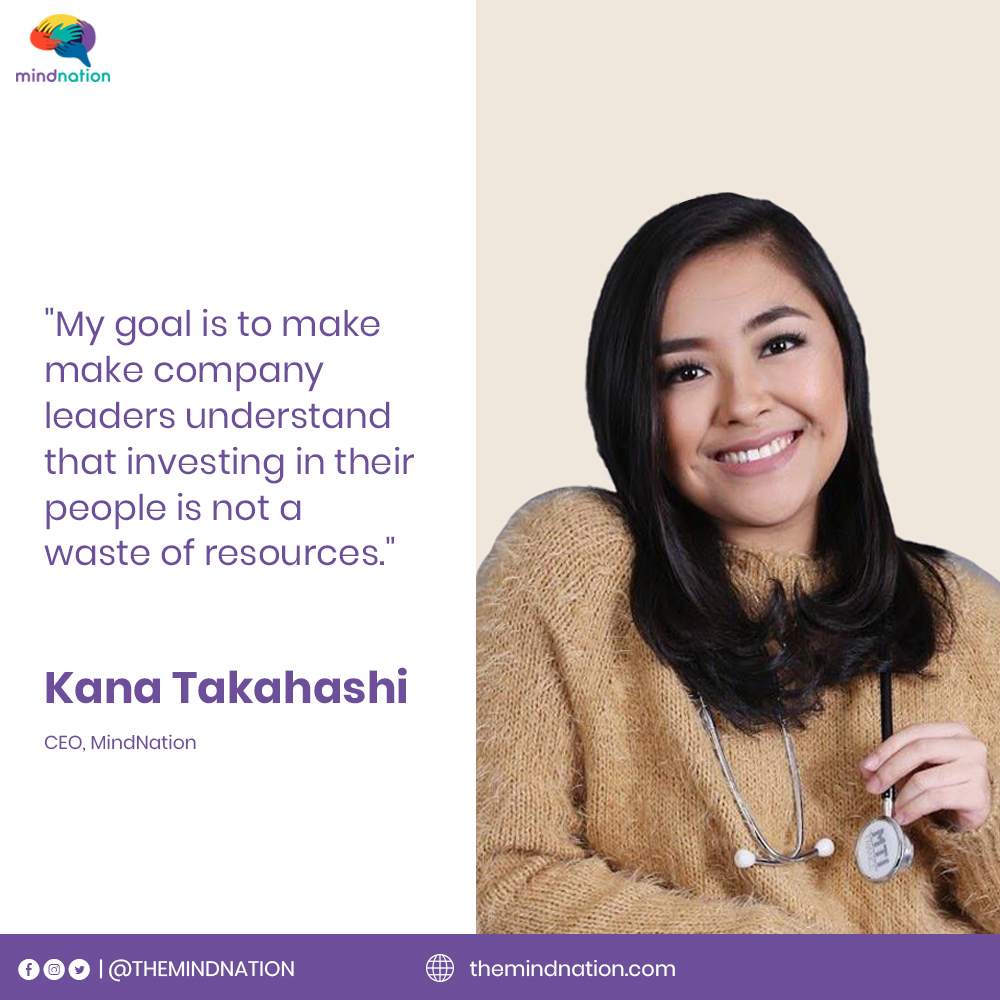
In 2014, Kana Takahashi was a bright-eyed pre-med student taking up Psychology at one of the Philippines’ top universities when one of her professors started talking to the class about mental health. “Back then, I didn’t know much about mental health,” she explains. “So when I heard my teacher talking about it, I got really curious.”

This curiosity led her to join the Youth For Mental Health Coalition — the only mental health organization in the Philippines at that time — and it was here that Kana became aware about the state of mental health in the country and the stigma faced by people with mental health concerns. Up until 2018, she immersed herself in advocacy work, learning not only about mental health but also about other causes like feminism and human rights.  From attending seminars, she was soon conducting them herself; additionally, she became involved in groups that pushed for laws like the Safe Spaces Act (which increases protection against sexual harassment, among others), the bill legalizing divorce (which is still currently being deliberated in Congress), and the Philippine Comprehensive Mental Health Law (which was signed into law last June 2018).

Along the way,  Kana started to reconsider her plans of becoming a doctor. “I started to ask myself why I wanted to become a doctor, and the answer I came up with was that I wanted to help people. And I realized that what I wanted was to help people now, not after four to five years of medical school.” With that in mind, Kana decided to just look for work that could sustain her financially and at the same time continue her advocacy work with the organizations she was currently affiliated with.

“I started to ask myself why I wanted to become a doctor, and the answer I came up with was that I wanted to help people. And I realized that what I wanted was to help people now, not after four to five years of medical school.”

Kana Takahashi, MindNation Co-Founder and CEO

The birth of MindNation

Along with some friends, Kana co-founded MindNation in January 2020, with the initial goal of providing mental health services for organizations, as mandated by the Philippine Mental Health Law. The company started with just four people (including Kana) and one psychologist.

But in March 2020, just three months after the company launched, the World Health Organization declared COVID-19 a pandemic. Many businesses coped with lockdown measures by cutting down on expenses — including putting all talks with MindNation on the back burner.

A CEO of any other start-up would have wrung their hands and panicked, but Kana was unfazed. “I didn’t get worried because I knew that what we were doing had value,” she says. “It was just a matter of making companies understand that — especially with the pandemic — investing in people is not a waste of resources.  Before the pandemic, all that companies wanted to see were numbers — ‘How can the mental health program that you are offering me boost my revenue?’ ‘What’s the ROI?’  But because of the pandemic, we were able to shift their mindset from ‘How can this benefit my business?’ to ‘How are my employees doing?’

Going above and beyond

And while other companies looked for ways to tighten their belts during the pandemic, MindNation did the opposite — they started offering their teletherapy services for FREE to the sectors most affected by COVID-19, from Philippine-based employees and students, to retrenched employees, medical frontliners, and even to members of lesbian, gay, bisexual, transgender, and queer (LGBTQ+ community). 

“We partnered with amazing mental health advocates like Senator Risa Hontiveros, as well as LGBTQ+ organizations, and women’s organizations to offer these pro bono services,” Kana points out.  “The fact that many non-government organizations were willing to work with a business like us — which is very rare — is proof that they saw the value in what we were doing,” Kana says.
Growing strong

Today, MindNation has a team of 50 employees and 20 psychologists, some of whom are located in other parts of the world. The company is now partners with over 40 organizations across industries, has expanded into Middle East North Africa (MENA), and is currently looking to grow more in other parts of the world.  In addition, they have gone beyond offering their services solely to organizations; individuals with mental health and well-being struggles can now also avail of the company’s 24/7 teletherapy sessions.

“MindNation’s vision is to build a world where mental health is valued, accepted, and supported,” Kana explains. “And we can only do that by making mental health care accessible to all.”

Best assets

Kana attributes the company’s growth and success to its team. “Every successful company has great people, people who go to work not just to work but to actually make a positive impact,” she says. “That’s what I‘m really proud of. In MindNation, we don’t work to feed the pockets of certain people, we do it because we’re working on life changing things.”

When it comes to supporting mental health in the workplace, the company walks the talk and has made the mental health programs that it offers to its client-partners available to employees as well. MindNation team members have access to 24/7 teletherapy sessions with psychologists and WellBeing Coaches and mental health leaves with pay. “The culture inside is also great, we can talk to each other about work and personal matters while maintaining a good working dynamic,” Kana shares. 

Looking ahead

Kana is looking forward to taking up post-graduate studies related to mental health so that she can grow the company more and support more employees. “Personally, I want to be able to help as many people as possible, even in little ways, whatever help looks like for them,” she affirms. 

Partner with MindNation to build happier, healthier, and more productive employees. Message us on https://bit.ly/mn-chat or email [email protected].

Categories
Featured Self Help

7 Solutions For Time Management Issues


If your team is struggling with productivity, MindNation has a repertoire of virtual webinars to help employees with time management, manage stress, and avoid burnout. Book these talks for your team by emailing [email protected].

When you are better at planning your day, prioritizing work tasks, and eliminating distractions, you can achieve your goals and be less impacted by stress or burnout. Whether you’re a student, stay-at-home-parent, or working in a company, time management is an essential skill to have.

Here are some things you can do to manage your time better:

“By learning the art of saying a tactful “no” to others, you’ll protect your time budget and improve your focus on your most valuable activities.”

Salma Sakr, MindNation Chief Growth Officer
  1. Avoid multitasking. Many people believe that multitasking makes them productive, but all that shifting back and forth between tasks isn’t actually that efficient because each time you do it, it takes your brain more time to refocus. So try to complete one project or task at a time before moving to the next one; your brain will thank you for it. 
  1. Merge different email accounts into one inbox. According to a 2019 report by management consulting company McKinsey & Co., the average professional spends 28% of the work day reading and email. Get this time back by making a few changes to your email settings and having all incoming email delivered to just one inbox.
  2. Treat your calendar as your time budget. Time isn’t money, but it does behave like money; it must be budgeted because when it’s gone, it’s gone. So when you schedule things into your calendar, think of it the same way you would think about withdrawing money from a bank account. Everyone has a weekly limit of 168 hours; try your best to live within this time budget and never overdraw.
  3. Avoid having back-to-back-to-back appointments. Leave space between your appointments for unexpected interruptions, to take a moment to relax, or to prepare for the next meeting.
  4. Say “No” more often than you say “Yes.” By learning the art of saying a tactful “no” to others, you’ll protect your time budget and improve your focus on your most valuable activities.
  5. Procrastinate properly. When a new idea comes into your head, ask yourself, “Do I need to do this now, or can I do it later?” Appropriate procrastination can help you, because you’re still going to complete those ideas, just at a later date. Don’t limit your calendar to what can be done today or within a week; instead, think in terms of months or even years.
  6. Identify your Most Valuable Activities (MVAs). These are the top two activities that you excel at, the ones that would cost you the most per hour to pay someone else to do. All the other activities that you do during work time other than those two MVAs are your less valuable activities, or LVAs.

In order to achieve maximum results during the limited amount of work time you have each week, prioritize your MVAs in your calendar and delegate LVAs to your team or your colleagues when possible. By leaving less room for options, you minimize the temptation to multitask and improve your overall focus. The result: more disposable time, and you reach your goals faster.

Time will always fill the space you give it, so use it wisely. 

By Salma Sakr, MindNation Chief Growth Officer

Categories
Featured

10 Takeaways From #LeadershipDuringCrisis: Tackling Mental Health During COVID-19 Virtual Roundtable

During Mental Health Awareness Month 2021, MindNation held its first ever virtual roundtable for business leaders to learn and discuss how the COVID-19 pandemic has affected mental health and well-being in the workplace. 

“Traditionally, topics like substance abuse, anxiety, and depression used to be considered personal matters and not addressed in the workplace,” explains MindNation Chief Marketing Officer Cat Triviño. “But the lines are now blurred and we can longer deny the effects of mental health concerns on an organization’s bottomline and overall success.

Philippine Vice President Leni Robredo kicked off the event by delivering the Welcoming Remarks, sharing that “Building a better normal means constantly recognizing that no single area of human health is more important than another.”

In addition, data experts and mental health advocates Ajay Bangia of global market research firm Ipsos and MindNation Chief Insights Officer Piril Yagli discussed how creating a culture that values psychological safety affects a company’s growth and success during these trying times. 

Finally, top industry leaders Merlee Jayme, Global President of advertising agency Dentsu Mcgarrybowen, Mark Lyndsell, CEO for the Global English Region of business process outsourcing company Transcom Worldwide, and Kevin Williams, Country General Head of cloud solutions provider RingCentral, offered insights and new ideas on the implementation of mental health programs. 

Here are some of the key points shared by the speakers:

“We must open more spaces to talk about mental health, create avenues where people can share their struggles comfortably without feeling ashamed, and foster an environment of love, care, and support.”

Vice President Leni Robredo
  1. Mental health and well-being issues are a growing problem in the workplace.

When Filipino employees were asked to rate their mental wellness pre- and post-pandemic on a scale of 0 to 10 (where 0 is “depressed” and 10 is “feeling my best self”), they felt an 8 before the pandemic versus a declining 6.5 after the pandemic.
 

According to Ajay Bangia, the depression, stress, and anxiety felt by people are due to job insecurity, work pressure, and difficulty handling work-life balance. 

Additionally, people are feeling a high degree of isolation. “Loneliness is one of the key sources of mental health and well-being challenges during this pandemic,” Piril Yagli of MindNation says. 

  1. No one is exempt from mental health challenges, but some are more affected than others.

In the Philippines, employees who are 18-30 years old, working the night shift, and who indicated their gender as LGBTQ (or would prefer not to say) are the ones most likely to be struggling with COVID-related fears, financial pressures, personal matters, work performance pressures, and juggling work and family life. 

  1. Women with children are also facing greater amounts of stress levels.

Because of the pandemic, working mothers have to juggle being full-time mothers as well as breadwinners. “Their whole day turns into a roller coaster of work, then kids, then house chores, then preparing meals,” Piril shares. 

“Home used to be a place for rest, now it has merged into our work life,” Merlee Jayme of Dentsu Mcgarrybowen adds. “Work has eaten into all of our personal space.”

  1. All these mental health and well-being challenges significantly impact the company– to the tune of PHP7 million per year (for every 1,000 employees). 

This amount is lost due to:

  • Absenteeism. 13% of employees said they would take a sick leave due to mental health and well-being challenges
  • Presenteeism. 35% of employees revealed they are unproductive at work for up to two hours a day — equivalent to losing one day in a week or up to two months in a year. 
  • Talent loss. 5% of employees in a company stated that they would quit their jobs due to mental health and well-being challenges. 
  1. Unfortunately, not everyone is open about their struggles.

Only 10% of employees would tell their superiors that they are taking a sick leave due to mental health challenges. This is because there is still a stigma surrounding mental health especially in the workplace. Employees fear that talking about depression, anxiety, or other mental health concerns will negatively affect how managers view them and their job performance.

  1. Three things that companies can do to address the mental health crisis in the workplace:
  • Create a Mental Health company policy. While the Philippines’ Department of Labor and Employment requires workplaces in the formal sector to implement Mental Health Workplace Policies and Programs, many companies still have not created such.
  • Stop the stigma by talking about mental health openly. “Leverage mid-level managers to talk with their teams, understand their challenges, and make them aware what help is available,” Piril suggests.
  • Lastly, partner with a mental health and well-being provider who cares. While many corporations do have Employee Assistance Programs, research has shown that the usage rate of these support systems are lower than 10% because most of them are not accessible 24/7 all year round. “It is important to partner with a mental healthcare provider that has psychologists and WellBeing Coaches who are available all day, everyday, so that employees can get help the moment they need it, rather than waiting until it is too late,” she adds.
  1. To create a workplace culture that values and supports mental health and well-being, managers need to be more empathetic and employee-centric. 
  • “Show empathy. Let your colleagues know you feel the same way they do, that you can talk about real things, not just revenues and client budgets,” Merlee suggests. 
  • “Mental health needs to be overcommunicated,” Kevin Williams of RingCentral shares. “When people come to you, ask the easy yet hard question, ‘How are you doing?’ ‘Are you happy?’”
  • “What we need today are leaders and organizations with a high degree of Emotional Intelligence,” Mark Lyndsell of Transcom Worldwide adds. “As a leader I’m willing to sacrifice IQ provided I have leaders who are grounded, transparent, authentic, and flexible.”
  1. Listen and understand the needs of the organization. 

47% of employees think they have too much work,” Piril shares. “So please make it a priority to talk to your teams, try to understand what they’re working on, is there anything that can be simplified, automated, or outsourced?”

  • “In our office, we have Wellness Wednesdays,” Merlee says. “These are no-meeting days that employees can use to catch up on work or just zone out.”
  • “At RingCentral, we have a quarterly company CaRING Day — adding a paid holiday and an extended weekend to every quarter to encourage our teams to disconnect from work and recharge,” Kevin adds
  • Employees of Transcom are encouraged to communicate openly with their leaders. “Every single day we poll our employees on how they are feeling; and if they are feeling down, to tell us why,” says Mark.
  1. It takes action and collaboration from all sectors to create happier and healthier spaces for all. 

“We must treat mental health as an important aspect of our healthcare agenda,” says Vice President Leni Robredo. “We must open more spaces to talk about mental health, create avenues where people can share their struggles comfortably without feeling ashamed, and foster an environment of love, care, and support.”

  1. There is no health without mental health. 

“The last 15 months of the pandemic has shone a spotlight on the mental health of organizations and many have been found wanting,” Mark adds. “I believe that there is so much more we can and should be doing, and as a leader it starts with me.”

According to Piril, the top 5 things that employees want to overcome their mental health and well-being challenges are psychologist services, WellBeing Coach consultations, training on mental health and well-being, fitness coaches, and sick leaves for mental health concerns. “For a mental health and well-being program in the workplace to be effective, the provider needs to listen to the voices of the employees, understand their challenges, and provide solutions specific to their needs,” she says. 

MindNation uses a data-based approach to create proactive, customized, holistic health programs for your employees. Partner with us to build happier, healthier, and more productive teams. Email [email protected] now!

Categories
Featured

7 Important Things Every Dad Should Teach His Kids

Fathers, like mothers, are pillars in the development of a child’s emotional well-being. Studies have shown that when fathers are involved, affectionate, and supportive, it positively impacts a child’s overall sense of well-being and self confidence. 

We asked Filipino journalist and father-of-three TJ Manotoc to share some things that  he wants his children — and every child — to grow up knowing so that they become healthy and happy individuals:

“My kids always ask me what my definition of success is, and I tell them it’s not how much money I earn or what kind of car I’m able to buy — it’s to raise them to become happy and healthy human beings.”

TJ Manotoc, Journalist and father of three
  1. For his sons, to always respect women. “There’s so much misogyny and disrespect for women nowadays that I want my sons to know that such behavior is not cool or funny and can really be hurtful,” he shares. “I always tell them that before they say or do anything to another girl or woman, they should first think about their own sister and mother, and how they would feel if they were the recipient of such disrespectful words or actions.”
  2. To know how to cook, clean, and do the laundry. “If you enter the adult world knowing how to do household chores, you will have a much easier time being loved,” TJ laughs. “And if you really can’t do chores or have the time — at least be neat and clean when you are living with someone else!”
  3. For his daughter, to be brave. “I believe it’s especially important to encourage girls to speak up for what they believe in, to use their platform for good and not just for aesthetics,” he says.
  4. And to learn self-defense! “The world is a scary place, and she should be able to protect herself and not wait for a man to come to her rescue,” he points out.
  5. For all his children, regardless of gender — that it’s okay to feel your emotions. “This is a bigger issue for sons because their feelings are stifled a lot. We should do away with toxic statements like ‘Be a big boy’ or ‘Be a man’ and allow our little boys to be human beings,” he opines. “If something bothers them, hurts them, or physically pains them, they should know that it’s okay to cry.
  6. Financial literacy. This includes how to take care of money, how to budget, what to buy and when to buy them, or how to invest. “I wish these were things my parents taught me back then and I hope that more parents teach it now, because finances are really something that a lot of people struggle with when they get into adulthood,” he says.
  7. To go ahead and dream. “Don’t stifle your child’s dreams by saying ‘No, you have to be a doctor,’ or ‘No, you have to do this, not that,’”
    TJ expresses. “Doing this puts a boundary on their dreams and tells them that they cannot be who they were destined to be. So allow them to spread their wings and expose them to as many things as possible so that they can discover their meaning in the universe.”

He adds: “My kids always ask me what my definition of success is, and I tell them it’s not how much money I earn or what kind of car I’m able to buy — it’s to raise them to become happy and healthy human beings.”

For TJ, the best way fathers can cultivate healthy and loving relationships with their children is to create opportunities where they can bond and spend time together in a very natural and relaxed manner. “One thing I struggle with is when I see families sitting down at the dinner table and the kids are “supposed” to bond with the parents, they are “expected” to share what went on during their way even if they are tired or in a bad mood. Instead of forcing the kids, parents need to find ways to pique their child’s interest and open them up to conversation,” he suggests. “Everyone has different moods — when they feel chatty or when they just want to be alone — so my advice to parents is to give their kids the space and time they need to be themselves. Trust and respect are essential to a positive parent-child relationship.”

Want to build a healthier relationship with your child? Our WellBeing Coaches are available 24/7 for teletherapy sessions to help you improve your communications skills and become a more empathetic parent. Book a session now through FB Messenger http://mn-chat or email [email protected]

Categories
Featured Men's Mental Health

6 Strategies To Get Men To See A Doctor

A 2019 study from leading medical and research center Cleveland Clinic found that 72% of men would rather do housework (such as cleaning the bathroom) than go to the doctor. 

Additionally, only half (50%) of men surveyed said that they consider getting their annual check-up a regular part of taking care of themselves.

So what makes men so hesitant to walk into a doctor’s office? According to the same Cleveland Clinic survey, the top reasons include:

  • They were embarrassed (46%).
  • They didn’t want to hear that they needed to change their diet/lifestyle (36%).
  • They knew something was wrong but weren’t ready to face the diagnosis and/or would rather not know if they have any health issues (37%).
  • They were told as children that men don’t complain about health issues (41%).

“More often than not, men don’t like seeing a doctor because they have a ‘macho ego complex’ and do not want to be perceived as sick or weak.”

Dr. Rainier Lutanco, a general, head and neck, cancer, and minimally invasive surgeon

“More often than not, men don’t like seeing a doctor because they have a ‘macho ego complex’ and do not want to be perceived as sick or weak,” says Dr. Rainier Lutanco, a general, head and neck, cancer, and minimally invasive surgeon based in Manila. “On the other hand, others view health care as a waste of time and money.”

If a man is unwilling to go to the doctor, it puts him at risk for missing preventive screenings — check-ups, immunizations, teletherapy, and other tests — which can help prevent physical or mental problems or detect them before they become major. This is especially important now as the Cleveland Clinic survey also showed that 77% percent of men reported an increase in stress levels as a result of COVID-19, 59% have felt isolated during the pandemic, and nearly half (45%) say their emotional/mental health has worsened during the pandemic.


How to motivate men to get medical attention

If you know someone that needs some convincing to put his health first, here are six approaches you can try:

  1. Don’t nag. Nagging is defined as the interaction in which one person repeatedly makes a request, and the other person repeatedly ignores it, and both become increasingly annoyed. Constant nagging can make the other party feel resentful, personally attacked, and inadequate.
  2. Don’t guilt-trip. Guilt-tripping is making someone feel guilty in order to induce them to do something. An example would be telling your husband or father “Who will take care of us if you get sick?” But this statement will only further shame the man and perpetuate the culture of toxic masculinity that says men should be the ones taking care of the family.
  3. Instead, come from a place of caring. Instead of positioning the doctor’s visit as another thing that he is expected to do, tell him that you want him to get checked because you truly care about his health and you want him to be around for a long time because you love him (and not because of other expectations).
  4. Gather as many examples as you can. This tactic works best if you know of a friend or relative who caught a serious medical condition early, i.e. someone found a lump that turned out to be cancer but he is now, thankfully, okay. Stories like these might motivate a man to get his health checked as well.
  5. Use a common-sense approach. Let him know that putting off a doctor’s visit until he is in pain or at an advanced stage of a disease may make treating his condition more difficult or costly.
  6. Make it easy. This approach works well for someone who always claims he’s too busy. Be the one to set the appointment (make sure it’s at a time that’s convenient for him) and offer to go with him. For teletherapy sessions, assure him that all conversations will be kept secure and confidential and that even you will not be privy to what was discussed. 

It is common for men to avoid going to the doctor, but patience, understanding, and talking about it rationally will increase his chances of getting himself the check-up that he needs.  MindNation’s psychologists and WellBeing Coaches are available 24/7 for teletherapy sessions if you know someone who needs to talk to a mental health expert. Book a session now through FB Messenger http://mn-chat or email [email protected].

Categories
Featured

LGBTQ+ Facts vs. Myths

Even though there is now increased awareness about sexual orientation, gender identity, expression, and sex characteristics (SOGIESC), many myths and misconceptions, about lesbians, gays, bisexuals, transgenders, and queers (LGBTQ+) still abound. This misinformation cause members of the LGBTQ+ community to face stigmatization, discrimination, and harassment, leading them to experience mental health concerns like depression and anxiety at higher rates than their heterosexual and cisgender counterparts. 

We asked Amber Gonzales Quiban, Director for Policy and Campaigns of the Philippine Anti-Discrimination Alliance of Youth Leaders (PANTAY) to provide the straight facts to the 8 most common myths and misconceptions applied to our LGBTQ brothers and sisters.

“Conversion therapies cause more harm than good because the trauma that the person experiences can lead to the development of mental illnesses like anxiety and post-traumatic stress disorders.”

Amber Gonzales Quiban, Director for Policy and Campaigns of the Philippine Anti-Discrimination Alliance of Youth Leaders (PANTAY)

Myth #1: LGBTQ+ people are just going through a phase/experimenting/confused.

Fact: This misconception is especially prescribed to adolescents, as they are labeled as “misguided” and “confused” for feeling and/or experiencing a sexual attraction to someone of the same sex, both sexes, or for identifying with a gender different than the one assigned to them at birth.  But decades of research have shown that being an LGBTQ+ individual is an identity; it is a part of who they are and not a choice, lifestyle, or phase that someone grows out of. 

“If it were a phase or we were just experimenting, then it would have been an easier choice to just choose to be straight and not have to face the stigma and discrimination that comes with being a member of the LGBTQ+ community,” Amber explains. “But being gay, bixesual, or transgender is who we are, it is our reality.”

Myth #2: LGBTQ+ people are mentally ill; if they receive therapy, they will be cured.

Fact: Although homosexuality and transgenderism were once thought to be mental illnesses or diseases, both the World Health Organization and the American Psychiatric and Psychological Associations have declassified them as such. The WHO even went on to emphasize that homosexuality is a natural and non-pathological variation of human sexuality.

Furthermore, studies have proven that psychiatric attempts to “cure” lesbians and gay men are not only unethical and inhumane, they have failed to change the sexual orientation of the patient. “Conversion therapies cause more harm than good because the trauma that the person experiences can lead to the development of mental illnesses like anxiety and post-traumatic stress disorders,” Amber points out.  

Myth #3: They became LGBTQ+ because they were brought up the wrong way.

Fact: There are no studies that show that children from dysfunctional families are more likely to grow up to gay, bisexual, or transgender any more than children who were raised in loving homes. 

Additionally, many scientists and researchers have studied a variety of reasons that may contribute to a specific sexual orientation or gender identity, including genetics and environmental influences. To this day, there is no consensus that sexual orientation or transgenderism is determined by any single factor or even a combination of factors.

“No one is raised to become gay,” Amber reiterates. This is why when LGBTQ+ members are asked  “When did you choose to be gay/lesbian/bi/trans?” most of them would say that there was no sense of choice regarding their sexual orientation and gender identity; that is just the way they feel. “It’s like asking a heterosexual person ‘When did you choose to be straight?’ There’s no answer to that,” she adds.

Myth #4: I should not expose myself or my loved ones to LGBTQ+ peers/relatives or watch shows with LGBTQ+ themes to prevent them from becoming gay, bisexual, or transgender. 

Fact: Learning about or spending time with people who are LGBTQ+ does not influence the sexual orientation or gender identity of a person or harm the well-being of minors. What it can do is help build empathy and respect towards others, potentially reducing homophobia, biphobia, and transphobia for years to come. 

Myth #5: There is no such thing as trangenders. Transwomen are gays, and transmen are lesbians. 

Fact: Transgender is an umbrella term for persons whose gender identity, gender expression, or behavior does not conform to that typically associated with the sex to which they were assigned at birth. Transpersons have been documented in many indigenous, Western, and Eastern cultures and societies from antiquity until the present day.

“Gender is a social construct, it varies from society to society and can change over time. This means you can break it,” Amber stresses. “And we should not stop people from breaking gender norms because at the end of the day, these gender roles are just imposed upon us.” 

Myth #6: Letting transgenders use the bathroom matching their gender identity is dangerous.

Fact: One of the main arguments against trans-inclusive bathrooms is the perception that sexual predators can gain access to female-only bathrooms. “If people are worried about men who would disguise themselves as transwomen to enter female bathrooms to sexually harass women, then transwomen are not the problem,” Amber stresses. 

Amber also stresses that having a bathroom exclusively for transgenders is counterproductive. “Creating a separate bathroom is just a form of exclusion,” she explains. “We should not be made to feel bad using the restrooms of the gender that we identify with. Creating gender-neutral restrooms would be more inclusive and affirmative.”

Myth #7: Letting my son play with dolls or my daughter play with cars will affect their gender identity.

Fact: Research has shown that behaviors such as playing with feminine toys or wearing feminine-colored clothes do not cause a boy to become gay or transgender, just as those same activities do not cause a girl to become heterosexual or cisgender. 

Myth #8: If someone comes out to me, it means they are attracted to me. 

Fact: “We don’t come out to people because we are attracted to them; we do because we trust them and they are a safe space for us,” Amber emphasizes. “Coming out entails so much fear and burden so when someone comes out to you, be thankful and proud of yourself because someone believes in you and they are willing to risk their lives just to come out to you.”

As an ally and a friend, it’s important that you take a stand for LGBTQ+ rights and join in the fight for equality. By educating yourself about what it means to be LGBTQ+, normalizing conversations related to LGBTQ+ matters with loved ones, and calling out myths and microaggressions, you can play an active role in helping build a kinder and more inclusive community. 

To our LGBTQ+ brothers and sisters and allies in the Philippines, you are not alone. MindNation’s psychologists and WellBeing Coaches are available 24/7 for teletherapy sessions if you need someone to talk to. Book a session now through FB Messenger http://mn-chat or email [email protected]

Categories
Featured

8 Things To Do When Someone Comes Out To You

Coming out is defined as the process by which someone accepts and identifies their gender identity and/or sexual orientation, and shares their identity willingly with others. It is sometimes one of the hardest things a member of the lesbian, gay, bisexual, transgender, or queer (LGBTQ+) community can do.

“While coming out is a big thing for the LGBTQ+ member because it means they are finally speaking their truth, it is also scary and difficult because of the stigma that is associated with being homosexual, bisexual, or transgender,” says Anton Paderanga, MindNation Marketing Officer and a gender equality advocate. “So when someone comes out to you, it means they trust you and consider you a safe space where they can be free to be themselves.”

“Choosing to come out to you means that they have a great deal of respect and trust for you.”

Anton Paderanga, MindNation Marketing Officer

If you are on the receiving end of a coming out confession, it’s important to make the other person feel seen, heard, and respected. Below are some things you can do:

  1. Thank your friend for having the courage to tell you. Choosing to come out to you means that they have a great deal of respect and trust for you. Anton says that the best immediate reply to give is “Thank you for telling me.” “Saying this also honors the bravery of your loved one and reassures them that nothing will change in your relationship,” he adds.

Do not say things like “Are you sure?” “I knew it!” or “Duh, it’s so obvious” because even if your intention is to lighten the atmosphere, it invalidates the gravity of the coming out process and inadvertently offends the one coming out. 

2. Respect your friend’s confidentiality. A person’s sexual orientation and gender identity should never be the subject of gossip, so don’t go around telling other people in your circle that so-and-so is gay, bisexual, or transgender even if your intentions are good. Every person’s coming out process always involves private and personal information that deserves to be treated with respect. 

Now, if someone else asks you point blank, “Is your friend X gay/transgender?” Anton advises that you respond with a non-committal response like “Why do you want to know?” or “Is it an issue?” This gently lets the other person know that it is inappropriate to engage in idle talk about a person’s sexual orientation or gender identity. You can also reply with “Sorry, it’s not my place to say.”

  1. Be the friend you have always been. “Immediately assure them that nothing will change,” suggests Anton. The main fear for people coming out is that their friends and family will reject them, so tell your friend that you still care about them, no matter what. Then continue to do what you have always done together, whether it’s playing sports or catching up online on weekends.
  2. Feel free to ask questions that you may have.
    Anton says that some good follow-up questions include:
  • “Who else knows?” (because they may need you to keep their sexual orientation or gender identity a secret)
  • “What can I do to help?” (because they may need it down the road)
  • “What pronouns do you want me to use?” (important if your loved one is coming out as transgender)
  1. But refrain from asking about the following:

— Anything about their sex life (just as you would not ask a straight person)
— If you can set them up with another LGBTQ+ person that you know (because for all you know they are already in a committed relationship with someone else) 

— Your gay friend if he can help you with shopping, make-up, fashion, etc. (because this is propagating the stereotype that all gay men express themselves in a feminine manner, when in truth they can also be masculine)

  1. Offer and be available to support your friend as they come out to others. “Your role is to be a stage parent — to give them support and confidence they need when their anxiety makes them forget what to say,” Anton points out. However, this does not mean that you should pressure your friend to come out to other people when they are not ready.
  2. If possible, connect your friend with the LGBTQ+ community. If you know of other LGBTQ+ individuals or organizations, tell your loved one about it without giving specific names (because, again, it is not your place to out other people). “You can just say ‘Oh, I have a friend who has gone through the same experience as you if you want to talk to them about it’ or ‘I know of this group if you want to hang out with other LGBTQ+ members,’” Anton advises. Then seek the permission of the other person or organization before introducing your friend to them. 
  1. Learn about the LGBTQ+ community. Doing this will allow you to better support your friend, and knowing about their world will help prevent you from drifting apart. “When a loved one comes out to you, you automatically become an ally — a heterosexual and cisgender person who supports gender equality,” says Anton. “This means you take on the responsibility to help educate other people and amplify the voices of the LGBGTQ+ community.”

By being a supportive friend to someone who comes out to you, you help establish more safe spaces for those in the LGBTQ+ community and help them take one step closer to attaining the rights that they deserve.

If you need someone to talk to, MindNation psychologists and WellBeing Coaches are available 24/7 for teletherapy sessions. Book a session now through http://mn-chat or email [email protected]

Categories
Featured

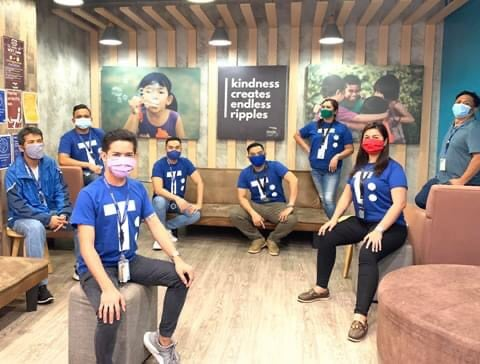
Transcom Partners With MindNation for Happier, Healthier Employees

Transcom Worldwide Philippines, Inc. is a global customer experience specialist  providing customer care, sales, technical support, and credit management services. 

MindNation sat down with Aldrin Carlos, Transcom Asia Director of Employee Engagement and Communication, to talk about how a personalized, holistic mental health program has benefited Transcom’s 9,000+ employees and how they plan to do more in the future.

Q: Why is mental health important to Transcom? 

ALDRIN: Even before the pandemic, our CEO, Mark Lyndsell, recognized the need to set up a program that would cater to our people’s mental health. Mental health is an essential part of a person’s overall well-being and we simply cannot expect people to compartmentalize themselves when they are at work and bring with them their joys, tears, hopes, and fears for themselves and the people dearest to them. 

We also recognize that mental health is a taboo subject, especially in the Philippines, and people didn’t want to talk about.  The company felt that we should provide an environment where people’s concerns can be addressed.

Q: What were the factors that influenced your decision to make it a priority, or was there something specific that triggered it?

ALDRIN: We stepped up our mental health program when a lot of our folks started showing signs of anxiety due to the [COVID-19] pandemic. At the onset of the lockdown, there were people whose jobs were affected due to the reduced working capacity onsite.  There were also concerns about job security, coping with transitions, worries for their families, etc. True to our core value of Malasakit (“concern”), the company started looking for a reliable partner to help develop a robust mental health program.

Q: How did upper management react to this plan? 

ALDRIN: Our senior leadership team actively led the implementation of this initiative. Mental health was a subject in every sitrep meeting, and the members never ceased to ask if HR had already chosen a partner or what alternatives were available to ensure that people’s mental health are supported.

“A mental health program, more than just a good people investment, is a concrete manifestation of genuine care to employees and their overall well-being.”

Aldrin Carlos, Transcom’s Director of Employee Engagement and Communication

Q: What were the primary objectives and the initial steps to building a mental health program within the company?

ALDRIN: The primary objective was to provide help to anyone in the company. Similar to how we offer financial assistance through our Transcom Cares program or 24/7 medical assistance through our HMO partner, we also sought to make mental health assistance readily available for our employees. We started with simple, free hotline numbers that employees may contact, but we thought that a better way to do this meaningfully was through a partner who can offer an array of services.

Q: How did you find out about MindNation? How were they able to help?

ALDRIN: We were receiving different offers from various mental health program providers and chanced upon a meeting with Daph Bajas [of MindNation]. We expressed our needs in terms of the assistance we wanted to give to our employees and Daph came back to us with proposals on how these can be addressed. He crafted a package that gave us a free webinar for every 30 psychologists booked each month, although I believe he owes me 2 webinars per month now because we are currently booking 60 or more sessions per month. Right, Daph? 

These monthly webinars, the ‘unlimited’ social conversations, and the psychologist bookings were all that we needed initially. Eventually, we reached out for more services like small group sessions, psychological first aid sessions for leaders, Monday Energy Boosters, and wind-down sessions.

Q: How did your employees react?

ALDRIN: The response from our employees was generally positive, and this can be attested by the number of attendees of the mental health webinars we initially conducted, the questions that they asked during these webinars, and the volume of people as well who reached out for 24/7 social conversations and psychological consultation bookings.

Inevitably, there were those who are still not receptive or comfortable with the idea of opening up to accompaniment. The partnership with MindNation, however, allows for different avenues to reach out to people – if not through the one-on-one interventions, at least through the virtual group activities or webinars. We’ve also explored ways to orient leaders about psychological first aid so they can extend basic accompaniment to their team members.

Q: What challenges have you encountered and how are you working to resolve them?

ALDRIN: The issue now is really more on how the webinars can reach our agents, most of whom just rely on free data to be able to connect to the internet. That is why we cannot simply broadcast through Zoom and have to use Facebook Live. But the challenge with FB Live is we cannot really determine how many of our employees tune in since it is open to the public.

It is also difficult to gather so many people in a common time slot, thus, the broadcast has to be recorded and replayed either through our official FB page itself or through our onsite plasma screens.

Q: In terms of the employees’ well-being: what differences have you seen since you brought in MindNation? Anything significant that you would like to share? 

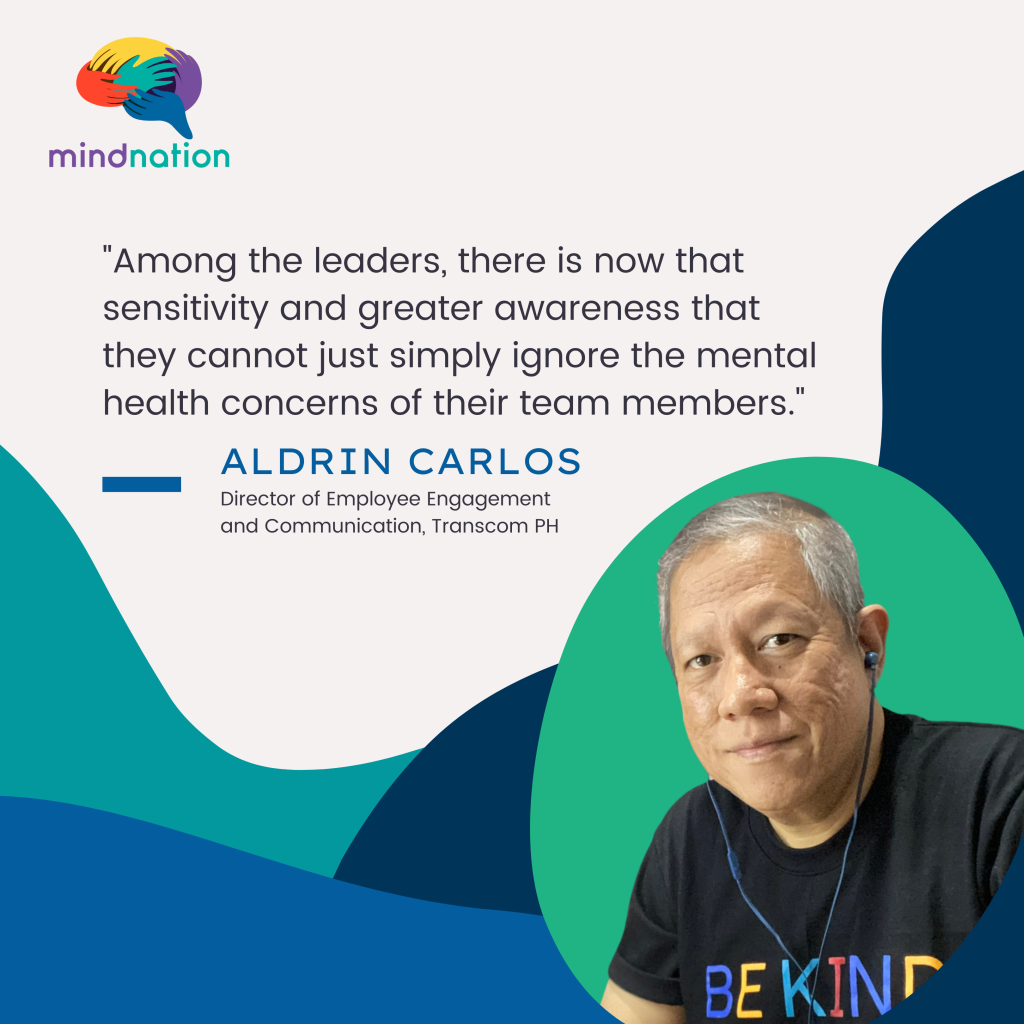
ALDRIN: Among the leaders, there is now that sensitivity and greater awareness that they cannot just simply ignore the mental health concerns of their team members. Additionally, there is a clamor from them on how they can be of assistance as far as mental well-being is concerned.

We were expecting the number of bookings for psychologist consultations to go down but recent months are actually showing spikes. This could either be a sign of a real concern, especially since the pandemic is far from over, or it could be because there is now more awareness among the employees that help is available and they might as well avail of it.  It was also observed that there are new hires who are availing of the services.

MindNation runs Weekly Energizer boosts through the Transcom Asia Facebook Page for employees that want to kick-start their week

Q: On a personal note, what have YOU been doing to take care of your mental well-being? 

ALDRIN: I am able to draw mental fortitude and resilience so far from my faith, from being grateful for the blessings and gifts I have received despite the ongoing situation, from my family, friends, and my team. There’ve been a lot of stressors but so far I have managed to not allow myself to succumb to them. I am very conscious not to allow myself to be affected by negative thoughts.

I do have projects at home that are stress-relievers and give me some sense of fulfillment – minor repairs that require some creativity, construction of an additional nook in the house, etc. I am also lucky that my work allows me to be creative and use my talents.

There are good movies via online subscription – old and new – that I watch and enjoy with my wife and kid and there are, once in a while, books published by my own friends which bring a sense of pride, joy, and inspiration.

Gratitude also allows me to help others and helping others is so rewarding and beneficial to mental health.

Q: What is the one mental health advice or practice that you take to heart, and why? 

ALDRIN: To never let myself be overpowered by a concern or a problem because I am bigger than my problem, and if the problem proves to be much bigger, I have a loving family and supportive friends who will back me up. And if the problem is so huge, there is a Bigger Being that takes care of me and loves me unconditionally. Help is always available in ways human and divine.

Q: What is your advice to colleagues in the industry who are also considering mental health programs in the workforce? 

ALDRIN: A mental health program, more than just a good people investment, is a concrete manifestation of genuine care to employees and their overall well-being. Go for it.

Q: What is the company looking forward to with regards to mental health and well-being this 2021?

As we continue to support our employees in any way we can, we are also looking for ways to extend our program to their loved ones. We are grateful to our employees’ families and whenever possible, we want to integrate them in the benefits we offer.

If you want to create a mental health program for your organization, you can partner with MindNation and email [email protected].

Categories
Featured

Beyond Fasting: 5 Lessons We Can All Learn From Ramadan

Today marks the end of Ramadan, the holiest month in the Islamic calendar. One of the key obligations of Ramadan –and the one most familiar to non-Muslims — is fasting. For 29 to 30 days (depending on the lunar cycle), Muslims abstain from eating and drinking during daylight hours. They begin their fast at dawn – usually by eating a light meal known as Suhur – and end it once the sun has set with a meal known as Iftar. Not everyone has to fast — children, the elderly with medical conditions, those who are sick, and pregnant and breastfeeding women are exempted from fasting. Women can also break their fast during Ramadan if they are menstruating; they and any others who miss a few days of fasting for whatever reason can then “make up” for the missed days when the month is over. 

But the fasting is not limited to food and drinks. “We also fast from unhealthy habits and bad behavior,” explains Neiveen Essam, MindNation’s Marketing Manager for the Middle East and North Africa. “These include smoking, swearing, gossipping, arguing, bullying, fighting, or being disrespectful, cruel or selfish.”

This just goes to show that the month of Ramadan is more than just depriving oneself of physical indulgences. Below is what Ramadan is actually about, and what we — regardless of our religious views — can learn from it.

“We use the time to reflect and improve ourselves… By doing this, we realize where we are and where we want to be.” 

Neiveen Essam, MindNation’s Marketing Manager for the Middle East and North Africa
  1. It is a time of introspection.
    Ramadan essentially pushes people to slow down from their fast-paced lives and recalibrate. “We use the time to reflect and improve ourselves,” says Neiveen. “We ask ourselves questions like ‘Do I like where I am in my life? What’s gone well over this past year? What more can I do? And what can I do less?’ By doing this, we realize where we are and where we want to be.” 

What non-Muslims can do: Every so often, take a break from your regular routine and reflect on your life. Think about where you are now, what you’re doing, and your habits. Are you happy and content? If not, what can you do about it?

  1. It teaches empathy.
    By going without food and water for an extended period of time, Mulims realize what it must be like for many people all over the world who experience hunger and thirst on a daily basis. “We learn to be more compassionate towards the less fortunate,” says Neiveen. 

What non-Muslims can do: Develop a habit of gratitude. Take a few moments each day to consider at least three things you are grateful for. You can record them in a journal, or just allow them to absorb your thoughts.

  1. It reminds us to be generous.
    Iftar before the COVID-19 pandemic was a festive time of day.  Communities and organizations would prepare tables laden with food and set up chairs in public places so that anyone and everyone — most especially the needy — can eat for free. This year, such gatherings are banned because of social distancing measures, although most people continue the tradition on their own by ordering small Iftar meals from restaurants and distributing them to poor neighborhoods.

    What non-Muslims can do: There are many ways to safely do charity work during the pandemic. If you want to serve in person, speak with your local churches or community groups to find out what opportunities are available; if you prefer to stay at home, gather and/or donate much-needed supplies to organizations in need.
  2. It brings people closer together.
    “Traditionally, people take Ramadan as an opportunity to meet and socialize, especially if they do not meet a lot throughout the year,” explains Neiveen. Families and friends share Iftar or Suhur in each other’s homes, with some even going to more than one home in the span of an evening. But because social gatherings are banned this year, many are connecting with their loved ones through digital platforms instead. 

What non-Muslims can do: Video chatting is great, but if you want to make your weekly calls with family and friends more special, try hosting a game night just to spice things up. There are many options available online, from simple trivia games to classic board games that got virtual makeovers. 

  1. It boosts your spiritual well-being.
    Fasting from bad behavior, reflecting, and being charitable are all ways we can find meaning in our lives and become more motivated to become better people. “It is very easy for God to just tell us to donate to the poor,” Neiveen says. “But by telling us to fast, He lets us really feel what the less fortunate are feeling so that when we DO donate, it is more sincere and impactful.”  

    What non-Muslims can do: Find your Ikigai —  what is your reason for getting out of bed each morning? Answering this question will lead you down a road where you will think more in-depth about yourself and allow you to notice things about yourself that will help you achieve fulfillment.  Read more about Ikigai here

Even though Ramadan only lasts a month, it is possible to carry its lessons throughout the year. “Once you learn the lessons, be consistent,” Neiveen advises. “Always remind yourself that not only can you be a good person, you can be a better person by continually practicing good habits and abstaining from  bad ones.”

24/7 teletherapy sessions with psychologists and WellBeing Coaches are available for those living in the United Arab Emirates. Message bit.ly/mn-chat to book a session now. Sessions for the rest of the Middle East and North Africa coming soon!

Categories
Employee Wellness Featured Self Help Sleep

6 Secrets To A Good Night’s Sleep

If you’re tired of feeling tired, here are some simple tips to help you achieve better sleep

We all have trouble sleeping from time to time, but when restless nights persist, it can become a real problem. Studies have shown that inadequate sleep can have serious effects on our physical, mental, and emotional health, like increasing our propensity for obesity, heart disease, and Type 2 diabetes, as well as making us tired, moody, and unable to concentrate on daily tasks. “Think of your body as a computer,” says Dr. Rhalf Jayson Guanco, a psychologist and faculty member of the psychology department of the Adventist University of the Philippines. “Walking around in a sleep-deprived state is like working on a computer with a fragmented hard drive. You are not getting all the performance from that computer that you could.” 

Experts say adults need to sleep between seven to nine hours per stretch so that the body can repair and recharge itself for the next day. And when we are fully rested, we enjoy benefits such as improved memory and concentration, enhanced creativity, better decision-making skills, a more positive mood and mindset, and a healthier immune system.

If you have trouble settling down to sleep, Dr. Guanco shares some tips below that you can follow:

  1. Maintain a regular sleep-wake schedule, even on the weekends. “Doing so maintains your body’s circadian rhythm (also known as our “inner clock”), which can help you fall asleep and wake up more easily,” says Dr. Guanco.
  2. Establish a regular, relaxing bedtime routine such as soaking in a hot bath, reading a book, or listening to soothing music. Don’t eat, do moderate to intense exercises, or drink alcohol or caffeine, or smoke three hours before bedtime since these arouse the senses instead of sending you into a relaxed state. “Also avoid doing activities that excite or stress you out, such as working, playing video games, or paying bills,” he adds.
  1. Create a sleep-conducive environment that is dark, quiet, comfortable and cool. Dr. Guanco advises using blackout curtains to cover your windows, and wearing eye shades or ear plugs.
  2. Sleep on a firm, comfortable mattress. “The average lifespan for a good quality mattress is about 9 -10 years.,” he points out. 
  1. Use your bedroom only for sleep and sex. “This strengthens the association between your bed and sleep.  Take work materials, computers, and the television out of the bedroom,” he shares.
  2. Exercise regularly (but not too close to bedtime). Even just short bouts of exercise can lead to improvements in total sleep time, sleep quality, and time spent falling asleep. Exercise may also help reduce the symptoms of sleep disorders such as sleep apnea or sleep-related movement disorders. Just make sure to do it at least 3 hours before bedtime. 

If you need help fine-tuning your sleep habits, our WellBeing Coaches are available for online sessions  24/7, all year round. Book your slot now at bit.ly/mn-chat or email [email protected].