
Categories
Featured Get Inspired Mental Health 101 Self Help

Top 10 Mental Health Myths Debunked (Part 1 of 2)

We compiled five widespread mental health myths and asked our expert to address them one by one.

Are people with mental health concerns crazy or dangerous? Can friends who are depressed or anxious “snap out of it” if they try hard enough? Are teenagers immune to mental health concerns? Prof. Jhon Carandang, a registered psychologist and behavioral therapist with the Love Institute, helps us answer these questions.

  1. Mental illness is rare. All my friends and family members are fine, and so am I!
    Prof. Carandang: “It only SEEMS rare, and there are two reasons for that:

One — there is still not much awareness yet about the signs and symptoms of mental health concerns. Because of this, people don’t know that they or their loved ones are already suffering from depression, anxiety, or other mental disorders.

The second reason is the stigma surrounding mental health concerns. Even if people know they need to seek treatment or help, they are afraid to let others know or even talk about it because they will be labelled negatively.” (see #2)

  1. People with mental health concerns are crazy/unpredictable/unfun to be with so I should not hire them, get into a romantic relationship with them, or even be friends with them.
    Prof. Carandang: “It’s true that some mental health issues can be difficult to deal with, but only a small subset of people with mental health concerns display aggressiveness towards the general population. And if they do, the behavior stems from complex, multiple, overlapping factors (such as family history, personal stressors, and socioeconomic factors) and not because of the mental health concern itself. Many people with mental health concerns are responsible employees, great friends, and reliable romantic partners.  

Also, it’s not that they do not want to do fun activities with you, it’s because they are struggling with something inside that only they can understand, and this struggle can be very tiring and even debilitating, leaving no room for zoom parties, exercising, or eating out.
Instead of shunning people with mental health concerns, we should do our best to understand their struggles, empathize with them, and be patient. 

  1. Mental health concerns are caused by parental neglect or being scolded or spanked too often. It’s all the parents’ fault!

Prof. Carandang: “Mental health concerns are caused by many factors, and traumatic childhood experiences are only one of them. It is not right to blame a person’s por mental health on a bad childhood. There are people who grew up in loving families who end up having mental health concerns, just as there are children with turbulent family histories who grow up being able to cope with stress and negative emotions very well.”

  1. People affected can snap out of it if they try hard enough.

Prof. Carandang: “We are not in a position to know how much a person can handle, because we can never know the full story behind what he or she is going through. They could already be tired from fighting an inner battle that we cannot see. To say that someone can just ‘snap out of it if they try hard enough’ is a sign of apathy when what we should be communicating is empathy.”

  1. Adolescents don’t have mental health problems — their ups and downs are a part of puberty.

Prof. Carandang: “No one is exempted from mental issues — not by age, race, gender, wealth, or profession. Everyone is vulnerable, even young people if they have been subjected to harmful, neglectful, or stressful situations.” 

Stay tuned for Part 2 of “Top 10 Mental Health Myths  Debunked,” coming next Wednesday, January 13, 2021. What other questions or myths about mental health would you like us to talk about? Let us know in the comments below!

If you or a loved one is struggling with a mental health concern and you need to ease your anxieties, you can always reach out to MindNation psychologists thru bit.ly/mn-chat. Teletherapy sessions are available 24/7 and rest assured that all conversations are absolutely confidential.   

— Written by Jaclyn Lutanco-Chua of MindNation

Categories
Employee Wellness Get Inspired Mental Health 101 Work in the New Normal

5 Ways Managers Can Care For Their Mental Health

Take care of your wellbeing first so that you can provide care and support for your team members and subordinates

Work is inherently stressful, but working in the midst of the COVID-19 pandemic has brought on unprecedented pressures in the workplace. 

Uncertainty breeds anxiety, and we are living in uncertain times. Between rising numbers of Covid-19 cases, questions about whether or not to reopen economies and businesses, unprecedented months-long lockdown measures, and the economic fallout of the pandemic, we don’t know what will come next. And that’s taking a toll on our mental health, including at work. 

It’s not just the rank-and-file who are feeling the strain; even workplace leaders are bearing the brunt of isolation, loss of work-home boundaries, and work overload that leads to mental health concerns like depression and anxiety. This is concerning because according to a 2015 article by Canadian Business, “even sub-clinical levels of depression are enough to detract from transformational leadership.” The article adds: “The negative effects on leadership go further: Both sub-clinical levels of depression and anxiety are linked with higher levels of abusive supervision.” 

If you are an executive or manager, it’s important that you take care of your mental health first, not just because it affects your leadership but also because it sets the tone for the rest of the team’s wellbeing. It’s much like the rule in an airplane about putting in your own oxygen mask first before assisting others; you have to take care of yourself so you can do the same for everyone else. 

Here are some ways you can improve your mental health: 

  1. Know the difference between the things you can control and those that you cannot. When you focus too much on what you can’t control (i.e. difficult co-workers or the neverending piles of paperwork) you take energy and attention away from the things that you CAN control (i.e. how you respond to the co-worker or how you manage your time). This makes us less effective and potentially leads to the outcomes we fear the most, such as arguments with the colleague or not achieving work-life balance.

So the next time you find yourself worrying or feeling uncertain about a particular area of your life, try using the questions below to clarify where you have control, where you don’t, and how to focus on what matters: 

  1. Think of an ongoing unresolved situation in your life. Write a brief outline of the facts and why it feels unresolved for you.
  2.  What can you control in this situation? Make a list.
  3. What can’t you control in this situation? Make a list.
  4. Be honest with yourself — on which of the above things are you spending most of your energy and attention right now?
  5. How can you focus more on the things you can control? What would that look like?

Once you know that you are doing as much as you reasonably can to create a healthy happy space in your mind, the more at peace you will feel about all the variables outside of your control. This does not mean that you are free from nerves or anxiety, but that input and effort can give you deeper self-trust and veer away from feelings of hopelessness and anxiety.

2. Reframe your thinking. This means identifying your negative and unhelpful thoughts and replacing them with more positive or adaptive ones.Examples of negative thoughts include:

  1. Limiting beliefs, i.e. “I am not good enough to head this project”
  2. When you wish that something acceptable were better a.k.a the fear of missing out “

The next time a negative thought enters your head, replace them with positive ones by:

  1. Using milder wording. “I hate that guy” will only make your anger worsen; “I’m not a fan of that guy” sounds better.
  2. Ask yourself ‘What can I learn from this?’” This way, every obstacle becomes a learning opportunity.

3. Practice self-compassion. This means being understanding towards yourself during times that you feel inadequate, unsuccessful, or are suffering. Instead of beating yourself up with self-criticism, treat yourself gently and recognize that you are only human. Nobody is perfect; all humans suffer and make mistakes, so self-compassion means recognizing that problems and trials are things that everyone in the world goes through and not just you alone.

4. Prioritize self-care. Focus on yourself and do activities that nurture your physical, mental, and emotional health. It seems easy and simple, but it’s the first thing that people forget about when they become busy,” reminds Minique. Practicing proper self-care habits will keep you from reaching the point of exhaustion, helping you function normally under stress, and refocus to help you perform better.

5. Seek help. The truth is we’re all going to struggle at some point. We’re going to have moments when we can’t find the strength to stand, or when we just can’t do it alone. And in those moments are when we have to know that it’s okay to lean on others. It’s okay to seek assistance and love outside of ourselves. Strength does not always have to come from your body. It can come from surrounding yourself with people who love you, and from people and resources outside of your expertise. If you are feeling anxious and overwhelmed, a good place to start to get help from MindNation psychologists. Book a teletherapy session thru the MindNation app.

Stay Afloat!

By taking care of our own mental health, we become a more effective, empathetic, and perceptive leader and by extension create happier, healthier, and more productive teams. 

Fore more information about MindNation’s products and services, visit www.mindnation.com

Categories
Employee Wellness Get Inspired Mental Health 101 Self Help Work in the New Normal

7 Ways To Be a Leader (Not Just A Manager)

While leadership and management go hand in hand, they are not the same thing

“Leaders” and “managers” are often used interchangeably, and while there is some overlap between the work that they do, there are also important differences. 

In his seminal 1989 book “On Becoming a Leader,”  Warren Bennis — American scholar, organizational consultant, and widely regarded as a pioneer in the field of leadership studies — compiled a list of these differences: 

— A manager administers, a leader innovates

— A manager maintains, a leader is an original

— A manager focuses on systems and structure, a leader focuses on people

— A manager relies on control, a leader inspires trust

— A manager has a short-range view, a leader has a long-range perspective

— A manager asks “how” and “when,” a leader asks “how” and “why”

— A manager has his or her eye always on the bottom line, a leader’s eye is on the horizon

— A manager imitates, a leader originates

— A manager accepts the status quo, a leader challenges it

— A manager does things right, a leader does the right thing

The best managers are leaders, but you do not necessarily have to be in a managerial position to be a leader. Any time you act in a way that inspires, encourages, or engages others, you are a leader. 

That said, whether you are a veteran or aspiring manager, possessing strong leadership skills is important because not only will it lead to better job performance, you also gain the knowledge and opportunity to influence the context and environment in which decisions get made. We’ve outlined below seven steps to help you get started on how to be  a leader at work:

  1. Work on your mental and emotional health

As a leader, you will be expected to set the tone during stressful and uncertain times, of which the workplace has many. This does not mean you should have the answers to all the problems; rather, it means you need to have the conviction and resilience to move forward. So not only should you be ready for anything, you also need to bring creativity, humor, and curiosity to stressful situations so that others can rely on you when things become difficult. 

  1. Practice self-awareness

Companies are not the only ones that have a brand identity — people do, too. A person’s work brand is based on his or her strengths, weaknesses, and what they contribute to the organization? As a leader, you need to be aware of your work brand so that you can develop yourself and, as a result, your leadership. So always seek feedback about your performance, whether it’s from a peer, someone more senior, and even from more junior staff — and take these seriously and professionally. 

  1. Adopt a growth mindset. 

Find ways to constantly improve yourself and your situation, whether it’s by honing your existing skills or developing new ones. 

  1. Be supportive. 

A true leader is a great facilitator. So encourage others to speak up instead of constantly offering only your opinions. Publicly recognize them when they do an excellent job, and resolve differences constructively. Create a safe space for people to open up to you if something is bothering them. Doing these builds trust in the workplace, creates rapport, develops positive mental well-being, and gives others the opportunity to improve themselves as well.

  1.  Think strategically.

A good leader is always goal-oriented — he or she has a plan on how to achieve those goals and the determination to act on them. When dealing with team members, it means you recognize the potential in everyone and know how to delegate to make the best of their strengths. 

  1. Be innovative.

Constantly think of ways to set your business apart from competitors. When you contribute creative ideas that are out of the box but benefit your company’s bottom line, you are exemplifying true leadership.

  1. Take the initiative. 

When you have done all of the above, it means you have led your team to working at maximum efficiency. This means you now have some time to learn new things or take on more responsibility. Don’t be afraid to ask management for more responsibility so you can further level up your game. When it comes to developing your leadership skills, the sky is the limit. 

As with other traits, leadership is a quality that needs to be shaped. By practicing empathy, openness, and self-awareness, professionals of all levels can develop leadership skills and find out how to bring out the best in themselves and others.

— Written by Jaclyn Lutanco-Chua of MindNation
Categories
Employee Wellness Financial Wellness Get Inspired Work in the New Normal

8 Ways to Improve Employee Loyalty

These days business success is no longer achieved by just hiring the best employees — you need to be able to retain them as well.

Employees are considered loyal if they are devoted to the success of their organization and believe that being an employee of this organization is in their best interest. Not only do they plan to remain with the organization, but they do not actively seek for alternative employment opportunities.

Loyalty benefits a business because a low employee turnover rate positively impacts morale, productivity, and even company revenue. This is because everytime you lose an employee, you need to spend time and money replacing and training someone else. According to the Society for Human Resource Management, a professional human resources membership association based in the United States, the average replacement cost of a salaried employee is equivalent to six to nine months’ salary. So for an employee earning USD60,000 per year, for example, that totals approximately USD30,000 to USD45,000 in recruiting and training expenses, including but not limited to:

  • Hiring costs: advertising, interviewing, screening, and hiring
  • On-boarding costs: training and management time
  • Lost productivity: new employees may take one to two years to achieve the productivity level of the exiting employee
  • Customer service and errors: new employees are often slower in their work completion and less adept at solving problems in the initial stages of employment

Clearly, instilling loyalty in your employees is worth it. So how can you make sure that your top talent stays happy, motivated, and devoted to your company? Here are some ways:

  1. Keep communication lines open. Never assume how your employees are feeling. Create a high feedback environment in which employees feel that their opinions are valued. 
  2. Invest in professional development. Provide staff with training, education, and meaningful work, as well as an opportunity for advancement within the organization in terms of pay, recognition, and responsibility.
  3. Give employees more control. When employees are micromanaged, they feel distrusted and have low self-esteem. On the other hand, companies that have employees who are engaged — meaning they make decisions rather than simply follow orders, experience lower turnover rate. The easiest way to increase employee engagement is to have them set their own working hours and decide whether and when to work remotely.   
  4. Clearly communicate policies. Expectations should be communicated through an employee handbook, and policies should be consistently enforced.
  5. Do not tolerate abuse or infractions committed by staff. Do not expect employees to feel happy or loyal to the company if management tolerates co-workers who make the workplace miserable to everyone else. These team members greatly increase stress (and therefore turnover) even among those who aren’t immediate victims. So have policies in place to discipline errant staff, and immediately  transfer or terminate those who display unwillingness to change their behavior.  
  6. Understand why employees leave. Conduct exit interviews and consult online reviews to learn what former and current employees are saying about the company, as information an employee shares online may be information they did not feel comfortable addressing during their employment or in the context of an exit interview.
  7. Provide competitive compensation and benefits. Offer competitive pay, meaning the salaries are “at market” or above. If you can’t provide that, make up for it by being generous in other categories, such as healthcare benefits (physical and mental), paid time off, and retirement savings plans.
  8. Improve company culture. This is defined as the interaction between management and employees and the personal interaction between employees — in short, how well everyone in the company gets along. As a manager, it is your responsibility to keep your finger on the pulse of the company’s culture by constantly going through the strategies listed above and finding ways to create an environment that is free from discrimination and stigma and supportive of one’s overall well-being. 

You don’t have to implement all the above practices art once. Start with small good behaviors and work up from there. Loyalty is not built overnight — rather, employees gradually respond to changes in behavior, management style, and company performance. Every little positive action, every improvement, every appropriate response to a challenge adds up.  So take stock of where you’re at, where you want to be, and how you plan to get there, then act. 

For more information on how to build happier, healthier, and more productive teams, visit www.mindnation.com

— Written by Jaclyn Lutanco-Chua of MindNation

Categories
Featured Get Inspired Mental Health 101 Self Help

6 Ways To Succeed In Keeping Your New Year’s Resolutions

Here are some psychological strategies to help you stick to your goals.

The holidays are officially over and it’s time to spend today doing what most of us often do on the very first weekend of the year — making our New Year’s resolutions. 

But writing goals is one thing; making sure you are able to keep them throughout the year is another matter. Studies have shown that 80% of New Year’s resolutions fizzle out by mid-February, with the reasons ranging from loss of motivation to lack of social support. If you want to belong to the 20% who are able to successfully turn their resolutions into a lifelong habit, below are some things you can try:

  1. Rephrase your resolutions. In a study published last December 9 in the American scientific journal PLOS ONE, scientists discovered that those who phrased their resolutions as an “approach goal,” or where they tried to adopt a new habit or introduce something new to their lives, were the ones that had the highest rate of success. On other hand, resolutions about avoiding or quitting something, or “avoidance goals,” proved to be less successful. This is because it’s easier to introduce a new behavior than to erase a bad habit. 

So for example, if your goal is to stop eating sweets in order to lose weight, you will most likely be more successful if you say ‘I will eat fruit several times a day’ instead. You then replace sweets with something healthier, which probably means you will lose weight and also keep your resolution,” says Professor Per Carlbring at the Department of Psychology, Stockholm University, one of the collaborators of the above study. 

  1. Tell someone about it. Don’t keep your resolution a secret. Tell friends and family members so that they will support your goals and remind you when you start to forget about them. An even better thing to do would be to find a friend who has the same New Year’s resolution as you so that you can motivate each other.
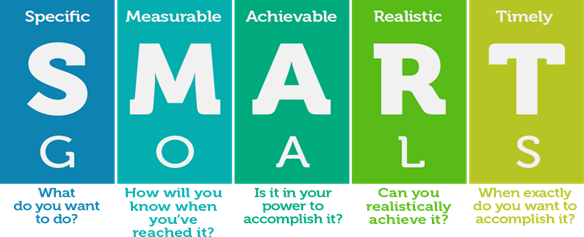
  1. Set SMART goals. The SMART acronym was first coined by corporate consultant George T. Doran in 1981 and has since become the benchmark for making an effective goal, whether professional or personal. For your resolution to stick, it has to be:  
  • Specific. When you have a concrete idea of what you want to accomplish, you become more motivated. “I will eat healthier” is admirable but vague; “I will eat more fruits and vegetables every meal” is more defined and gives you a blueprint to follow.
  • Measurable. When you can track your progress (see #4), you will feel more confident to carry on or make tweaks when needed. 
  • Achievable. Don’t resolve to “Climb Mt. Everest by the end of the year” if you have a sedentary lifestyle. Amending your resolution to “Go hiking with friends every month” is more realistic.
  • Relevant. Your goals need to be significant to you, and suitable to your existing skills and resources, otherwise it can easily be discarded. For example, if you feel you have been doing a good job at work, aiming for a promotion is a logical and relevant next step. On the other hand, aiming to learn skills that are better suited in another department, while admirable, is not an efficient way to make use of your strengths. 
  • Time-bound. This helps you track your progress. “I want to be able to do 10 full-body push-ups in two months” gives you something to work towards than if you just leave it as “I want to be able to do 10 full-body push-ups, period.”
  1. Aim for progress not perfection. Celebrate every step in the right direction, no matter how small. Being able to do two push-ups out of 10 is better than zero; “small wins” can also reinforce the belief that you have the ability to change, and that your goals are within your reach.
  1. Learn and adapt. Encountering a setback is one of the most common reasons why people give up on their New Year’s resolutions. So if you suddenly relapse into a bad habit, don’t view it as a failure; instead, use it as a learning opportunity. One way to keep track is to maintain a resolution journal, where you can write down important information about when the relapse occurred, what might have triggered it, and what you might do differently next time. By understanding the challenges you face, you will be better prepared to deal with them in the future.
  1. Be patient. Change is a process. Those unhealthy or undesired habits that you are trying to change probably took years to develop, so don’t expect to change them in just a matter of days, weeks, or months. 

It may take longer than you would like to achieve your goals, but remember that working toward your resolution is a marathon, not a sprint to the finish line. Once you have made the commitment to changing a behavior, it may be something that you have to continue to work on for the rest of your life. 

If in the process you feel you are losing motivation, become overwhelmed by self-doubt, or need to ease your anxieties, you can always reach out to MindNation psychologists or WellBeing Coaches for teletherapy sessions. Book a session thru bit.ly/mn-chat.

— Written by Jaclyn Lutanco-Chua of MindNation

Categories
Employee Wellness Get Inspired Mental Health 101 Self Help Work in the New Normal

6 Ways To Be More Resilient At Work

Learn ways to cultivate your mental strength so that you can cope with stress better

Job stress poses a huge mental health challenge to the 21st century workforce. According to a recent survey by The Regus Group, as many as  60% of workers worldwide experience stress, with the number reaching as high as 86% in China! These figures do not even take into account the COVID-19 pandemic, which has unequivocally triggered or aggravated tensions in the workplace. 

If left untreated, stress can lead to increased levels of anxiety and burnout, which in turn will translate to chronic absences, low productivity, and low morale.

While you may not be able to eliminate the daily pressures that come with holding down a job, you can respond to the stressors better by becoming more mentally resilient. Mental resilience is defined as the ability to mentally or emotionally cope with a crisis or return to pre-crisis status quickly.

“Resilience is not tenacity,” clarifies Cat Trivino, Chief Marketing Office of MindNation. “More importantly, resilience is not about bouncing back and going back to our normal selves. It is about moving forward and becoming better versions of who we are.”

Resilience can make you more motivated, better equipped to cope with setbacks, and become less susceptible to burnout. 

Here are some ways you can build better mental resilience at work:  

  1. Try to establish good work-life balance. Self-care is an essential strategy for building resilience and helps to keep the mind and body healthy enough to deal with difficult situations as they arise. So pay attention to their own needs and feelings, and to  engage in activities that bring you joy and relaxation. Examples include: 
  1. “Listening to what your body needs, whether that’s extra time to breathe or a little stretch in the mornings,” advises Cat. 
  2. Making time for fun and relaxation outside of work. If physical distancing is an issue, remember to at least get some sunlight periodically instead of staying cooped up in the home office all day. “If you can, and only if it’s safe, open the window and bring in that vitamin D,” Cat adds. 
  1. Meditating. “No need to stress if you don’t do it right the first few times,” Cat assures. “The simple act of breathing, grounding, and of being aware of their surroundings can make them less anxious and bring them back to what they need to address.”

2. Maintain connections. Having friendships outside of work can provide you with a safe space to express pent-up frustrations and anxieties. “Social distancing does not mean emotional distancing,” Cat reminds. “Please do keep connected, and as much as possible, call. Hearing someone else’s voice, especially someone we love, can give us the instant calm that we need.”

3. Be thankful. When something bad happens, always remember that things could be worse. “Be grateful for anything and everything good. Starting or ending your day with a grateful mindset will only set us up to see things in a better light,” cays Cat. 

5. Ask — even if you won’t receive. Many of us are afraid to ask –for help, questions, or anything — because we fear hearing the word “No,” looking inadequate, or coming across as unintelligent. “But constantly avoiding rejection will not make us resilient,” counters Cat. Instead of staying away from the “No’s,” get your mind used to the feeling of being rebuffed to build your resilience threshold. Start with small things like asking for an officemate to help with a task, or requesting a manager to repeat a point raised at a meeting. “You may get rejected or rebuffed for various and legitimate reasons, but the point is to get used to hearing no!” she advises. “Once you realize that rejection is not debilitating, you build inner strength and become confident enough to ask for bigger things.”

6. Cultivate positive self-talk. “The next time you face challenges or adversities, identify how you’re describing them and see if you can reframe the words in a more positive way,” instructs Cat.

A. Instead of: “ I feel like a failure for not being able to lead my team through this pandemic.”

Say: “Being a leader during this pandemic is an obstacle, but not one I will face alone.” 


B. Instead of: “Working from home is horrible.”

Say: “Working from home is challenging.”

C. Instead of: “I asked for a promotion, and got rejected.”

Say: “I asked for a promotion, and got redirected.”

Just like other traits, resilience is something that can be learned and developed. All it takes is an awareness of the bad thoughts and actions that you may be doing, learning about the good ones, and having the discipline to enact them when the need arises.

But if the situation continues to be difficult for you and you are finding it hard to cope, always seek the help of a professional. A good place to start will be MindNation’s chat helpline on FB Messenger, available 24/7. The service is free, completely confidential, and the staff is trained to ease your anxieties.

— Written by Jaclyn Lutanco-Chua of MindNation

Categories
Featured Get Inspired Mental Health 101 Self Help

8 Ways To Raise Grateful Kids

Help kids develop an attitude of gratitude so that they will grow up to be happier, more positive, and more content with their lives.

As 2020 comes to an end, it’s time to start thinking about our goals and intentions for 2021 — not just for ourselves but also for our family. One resolution in particular that we would like to suggest — teach kids to be more grateful and less entitled. 

“Children become entitled when they always get what they ask for, when parents say ‘yes’ more than they say ‘no,’” says Maribel Dionisio, a parenting and relationship expert, author, and founder of the Love Institute, a pioneering company equipping couples, parents, and individuals with skills on how to have fulfilling relationships with those dearest to them. “When children are raised with everything handed to them, they grow up to become demanding, high-maintenance adults who are not equipped to handle life when things don’t go their way,” she adds.  

On the other hand, when children learn to be appreciative, responsible, and not take things for granted, they have better relationships with other people, can empathize more, are easier to please, and become generally happier in their later years. 

Below are some ways you can reinforce the importance of gratitude:

  1. Be mindful of your words and actions. You may be feeling proud that you are not entitling your children because you do not buy them every toy that they ask for; but an entitlement mentality can be shaped in other ways, some of which you may not even be aware of, such as: 
    • Attributing other people’s actions to their character and not because of outside forces. When your kids complain that someone took the last cookie without asking, don’t immediately say “Yes, he’s a bad boy, don’t be like him.” This teaches children to be judgemental and quickly blame others for their misfortunes.

      A better way to manage such situations would be to ask your children to think about what the other person may be going through or how they might be feeling, i.e. “Maybe he took the cookie because he didn’t get to eat lunch and is really hungry.” This act of empathizing makes kids stop immediately seeing others as bad, and makes them more grateful for their circumstances (i.e. at least they are not THAT hungry).
    • Overprotecting and overpraising them. The first will make them dependent on you, the second will make them feel that they can do no wrong. 
    • Jumping through hoops to make sure their path to success is paved for them, so they never have to work hard to get what they want. 

2. Set a good example. Kids learn a lot from watching their parents. So model gratitude every chance you get, such as offering a sincere “Thank you” to the person who delivers your packages or making it a point to share little things that you are grateful for during casual conversations. 

3. Be encouraging and positive. “When you catch your children doing good or beyond what is expected, praise them for it; don’t always focus on the things they did not do,” says Maribel. For example, if your toddler packed away four out of his seven toys, don’t scold him for not doing a perfect job; instead, tell him thank you for doing that, then remind or offer to help him pack the remaining items away. This reinforces the positive behavior and lets them know that what they do (no matter how small) is appreciated. 

4. Put things in perspective. Talk to your kids about those who are less fortunate, like the owner of their favorite restaurant who had to close shop because of the pandemic, or the people who lost their homes because of natural disasters. Understanding that not everyone has the same advantages will help them develop compassion for others and gratitude for their own privileges.

5. Let them do chores. Part of feeling gratitude is being aware of the effort someone else went through to give us something. One way to let your child experience this effort is to involve them in household tasks, such as making the bed, folding the laundry, or helping prepare meals.  “Chores reduce entitlement because it helps children see the value of work,” Maribel points out. “In addition, children learn to be responsible, feel more confident, discover their strengths, and see the value in their work.” 

6. Show them how to find the money. It can be hard for children to understand why they can’t just buy everything they want if they have never paid for anything. “Give your children opportunities to manage money, whether it’s giving them an allowance, helping them start their own business, or even paying them for doing extra chores,” says Mariblel. “When they see the time and effort it takes to be able to buy a new item of clothing or new gadget, they won’t feel entitled about money.”

7. Establish boundaries. “Do not let your children get away with everything,” Maribel instructs. “Have rules, and explain the importance of these rules so that your children cooperate. And if they deviate from rules, counter with logical and natural consequences, not with screaming, shouting, or spanking because these will only make them resent you.”

8. Cultivate a good relationship with your child. All of the above tips require you to be able to talk to your children openly, honestly, and without judgement. To achieve this, Maribel suggests the following ways:

  • Set aside one-on-one time for each child, at least 20 minutes a day. Make the conversation light and easy-going so that he or she opens up to you about what’s on their minds, and you in turn can share stories that impart the values of empathy, gratitude, and kindness. 
  • Set aside one-on-one time for each child, at least 20 minutes a day. Make the conversation light and easy-going so that he or she opens up to you about what’s on their minds, and you in turn can share stories that impart the values of empathy, gratitude, and kindness. 
  • Set aside one-on-one time for each child, at least 20 minutes a day. Make the conversation light and easy-going so that he or she opens up to you about what’s on their minds, and you in turn can share stories that impart the values of empathy, gratitude, and kindness. 

The only way children will learn gratitude (along with other positive values) is by having a relationship with them that is open, honest, and managed by boundaries. “When we do away with limitations and give our children everything they want because we want their lives to be easy, it is OUR lives that become complicated,” says Maribel. “On the other hand, when children feel loved, respected, and secure, they will not misbehave or feel entitled. They will want to return those loving feelings to you, absorb the values you impart,  and do everything to make you happy.”

If your children are struggling with strong emotions or if you need advice on how to manage their wellbeing and happiness, feel free to message MindNation psychologists on bit.ly/mn-chat. Teletherapy sessions are available 24/7. 

For more information about the Love Institute, visit their Facebook page https://www.facebook.com/theloveinstituteph/

— Written by Jaclyn Lutanco-Chua of MindNation

Categories
Employee Wellness Get Inspired Mental Health 101 Work in the New Normal

Do’s And Don’ts For Supporting A Colleague With a Mental Health Concern

There are many ways to help someone going through a tough time, just make sure you do it properly

What should you do if you think that a team meamber is exhibiting signs of a mental health concern? What if you want to help but can’t find the right words to say? How can we be more present to those in need?

 The good news is more often than not, you don’t even need to say anything. “What’s more important is you respond sensitively to their needs and show that you care,” says Riyan Portuguez,  RPsy RPm (also known as Your Millennial Psychologist). “Your mere presence already has a powerful effect,” she assures.

Below are some ways:

Do:

  1. Dedicate enough time. If you want to get to the bottom of their issues, staying behind for an extra 30-minutes after an online meeting will not cut it. “An honest-to-goodness conversation will take hours, so be sure you won’t be distracted by other matters,” points out Riyan. 
  1. Let them lead the discussion. Allow them to share as much or as little as they want to. Don’t pressure them to tell you anything that they are not ready to talk about. Talking takes a lot of trust and courage; you might even be the first person they have been able to talk to about this issue. 
  1. Validate their feelings. “Listen actively and empathize as much as you can,” advises Riyan. Remember, you don’t have to agree with someone’s feelings or choices to acknowledge that their emotions are valid.
  1. Offer to accompany them to a mental health professional to prevent further harm. They may be hesitant to take this next step because of the stigma associated with seeking professional treatment for mental health concerns, but assure them that it is a good way for them to receive proper care. Another option you can suggest is MindNation’s 24/7 chat helpline on FB Messenger. Assure your friend that the service is free, completely confidential, and that the staff are trained to ease their anxieties. 
  1. Know your limitations. “Make sure YOU are mentally and emotionally prepared to offer help,” Riyan reminds. Self-care is critical when you are supporting someone who is in crisis. When someone unburdens themselves to you, you might end up absorbing all the strong emotions, so make sure you set boundaries and take steps to protect yourself by doing activities before and after the conversation that leave you feeling rested, relaxed, and recharged. And if you feel you have reached your limit, don’t feel bad about stepping back, but do it properly.

Don’t

  1. Diagnose. Do not make assumptions about what is wrong with the person. “When you initiate the conversation, avoid blurting inappropriate things like ‘I notice that you seem down lately, are you depressed?’” Riyan instructs. “A better way to phrase it would be ‘You seem down lately, are you okay?’ or ‘Is there anything I can do?’” 
  1. Start with “How are you?” Riyan says this is because it would be easy for the person to just say “I’m fine” even though he or she is really not. She suggests that if you want the other person to open up, a better way would be to phrase the question in such a way that it compels the responder to do an action, such as “Hey, are you free later? Let’s talk.” 
  1. Break their trust. Do not gossip about your friend’s problems to other people; neither should you report his or her mental health concerns to their boss even if your intentions are good (i.e. you want to alert them that their team member has mental health struggles). “This will cause your friend to resent you, when what you want is to maintain his or her trust in you,” Riyan points out. If you really feel that you need to get others involved, ask for permission first, i.e. “Is it okay to open this up to your team leader?” Then follow up with “I think it would be nice to mention what you told me to them, so that they can also help you.” Lastly, offer to accompany the person when he or she has that conversation as a form of moral support. 
  1. Invalidate their feelings. According to Riyan some of the things you should not say to someone struggling with a mental health concern include: 
  • “It’s all in your head” 
  • “Things could get worse” 
  • “Have you tried chamomile tea/lavender lotion/praying/going out more/etc” 
  • “Shake it off.” 
  1. Ghost, ignore, or avoid them. If you become too overwhelmed to engage with them, don’t just disappear without a world. Step back, but do so respectfully and thoughtfully. Be honest about your reasons for stepping back, and do not blame the person (in the same way that you would not blame a cancer patient for the stress that results from their struggles). Set a date on when you will next touch base with him or her so that they feel assured that you still care for them and that the timeout is only temporary. Lastly, reach out to other members of your friend’s support network and make sure they can commit to helping out if there is an emergency. 

The best thing you can do for someone struggling with a mental health concern is to instill hope. “Saying ‘We will get through this together’ assures the person that he or she is not alone,” says Riyan.

— Written by Jaclyn Lutanco-Chua of MindNation

Categories
Self Help

8 (Other) Effective Ways Parents Can Practice Self-Care

If you’ve been taking breaks throughout your work-from-home-day, no longer need to remind your kids to be quiet when you are napping, and manage to squeeze in some exercise in-between doing household chores — congratulations! You have made self-care a part of your life and are on the right track to experiencing reduced stress, more energy, and increased resilience. 

How about trying a few other ways to destress, decompress, and reward yourself? We’ve compiled some suggestions for you: 

  1. Watch a different genre on TV. We all love our Hollywood movies and sitcoms, but how about trying out some new categories for a change? If your goal is to temporarily escape reality, Korean dramas, cooking shows, and home improvement shows will surely take you there. 

What we recommend: “Start-Up” if you are a K-drama newbie, “Nailed It,” if you want a comedic baking show (yes, there is such a thing!)  “Tiny House Nation” if you want tips on how to live simply.

  1. Engage in light reading. Reading is good for your brain but that doesn’t mean your bedside table has to be stacked with Pulitzer-Prize winning works or other serious tones. Romance novels, comic books, and other forms of light reading do not tax a brain that’s already tired from a full day and provide much-needed stress relief.  

What we recommend: Dilbert and Calvin & Hobbes comic books for humor; anything by Julia Quinn for romance; the Trese comic series for action and a fresh take on Philippine mythology.

  1. Build something. When you work with your hands to create something from scratch, you trigger your brain’s reward centers and experience pleasure, which leads to reduced stress, anxiety, and depression. 

What we recommend: Lego and other construction blocks if you are a beginner and need step-by step guidance; jigsaw puzzles if you’ve had more experience; plastic model kits (i.e. Tamiya, Bandai) if you are up for a challenge. 

  1. Dress up, just because. Holiday parties may be put on hold because of the pandemic, but there’s no law against jazzing up your looks in the comfort of your home. Nothing will make you feel better faster than the sight of you in the mirror looking well-groomed and stylish. 

What we recommend: Set aside one day of the week (i.e. Fancy Fridays) where you and your partner will both swap the loungewear for dressier choices, complete with styled hair and makeup for the ladies. 

  1. Pop some bubble wrap. Odds are you’ve amassed quite a bit from all the orders that have arrived from your online shopping. Instead of putting them straight into the recycling bin, spend a few minutes popping the row of bubbles. What makes it so pleasurable is the instant gratification you receive from pressing out all the air; studies have even shown that popping bubble wrap for 60 seconds relieves as much stress as a 33-minute massage!

What we recommend: Another way bubble wrap can bring relief — cut up big sheets into the shape of your shoes and use them as shoe inserts the next time you have to go out to purchase essential items. Instant foot massage! 

  1. Cook or bake something simple. Both activities can help improve mood by providing small tasks to focus on in a manner similar to meditation. Let’s also not discount the sense of accomplishment you get when you smell or taste the end result of your kitchen experiment. If you find the prepping or cleaning to be a chore, round up the partner and kids to help out — instant family bonding time!

What we recommend: If you’re a beginner in the kitchen, start with store bought cake mixes that only need a few additional ingredients to yield the finished product (less mess to clean up too!) If you want to try your hand at cooking, we love Laura Vitale’s Youtube videos (laurainthekitchen.com) because the recipes are beginner-friendly but no less yummy.

  1. Keep physically close to your partner. According to Hans Delos Reyes, a MindNation wellness coach, positive physical contact with a partner can increase your mood and decrease your stress levels. 

What we recommend: If privacy is hard to come by because the kids are home ALL day, you and your partner need to get creative and even go easy on some of the household rules. Put them to bed earlier than usual, or wake them up later in the mornings (because 1-on-1 time does not only have to happen at night). If you can only spare an hour in the middle of the day, let them play with their gadgets or watch tv longer, then find other spots at home where you can have privacy.   

  1. Take care of plants. There’s a reason more people are buying plants during the pandemic. “It’s not just a trend, it is also a good way to take care of yourself,” says Hans. When you expose yourself to nature, you help the body increase melatonin, which is responsible for regulating sleep and lowering stress labels. “In addition, watching your plants to grow provides you with a sense of accomplishment and satisfaction,” he adds.

What we recommend: Don’t have a green thumb? Try puttering with succulents first, which are inexpensive, don’t take up a lot of space, and are low-maintenance. 

Always remember that self-care isn’t just important, it’s crucial. Practicing self-care doesn’t make you weak; it helps you stay strong and recharges you so that you can care for your family and do your work better. 

Written by Jac of MindNation

Categories
Featured Get Inspired Self Help

5 Books That Teach Empathy And Kindness

We’ve got a mix of world literature, Pulitzer-Prize winning novels, a non-fiction recommendation, and even something for kids. Take your pick! 

  1. Wonder by R.J. Palacio

What it’s about: 10-year-old Auggie Pullman has a facial disfigurement that makes him the target of bullying when he attends school for the first time.

Why we recommend it: “Wonder” is packaged as a children’s book but the situations presented are things that even grown-ups can relate to, such as the  anxieties that come with trying to fit in and the desire to be accepted for our differences.

Quotable quote: “We carry with us, as human beings, not just the capacity to be kind, but the very choice of kindness.”

  1. To Kill a Mockingbird by Harper Lee

What it’s about: An African-American man is wrongly accused of a crime, and his Caucasian neighbor steps up to defend him despite opposition from all fronts

Why we recommend it: The themes and lessons of this book are as important today as they were when the story was first published in 1960. We need to be reminded that despite increasing awareness and belonging to a “woke” generation, racial and class discrimination continue to affect many people around the world today.  

Quotable quote: “You never really understand a person until you consider things from his point of view.”

  1. The Road by Cormac McCarthy

What it’s about: A father and son travel on foot across a post-apocalyptic land and in the process encounter a variety of people — some good, many bad. 

Why we recommend it: At first glance, killing, stealing, and committing acts of unspeakable cruelty seem to be the only ways one can survive in a cruel world. But the father constantly reminds his son to “carry the fire” — to act with kindness, compassion, and decency no matter how terrible things are. 

Quotable quote: “All things of grace and beauty such that one holds them to one’s heart have a common provenance in pain. Their birth in grief and ashes.”

  1. The Kite Runner by Khaled Hosseini

What it’s about: This is the first Afghan novel written in English. The main character, Amir, seeks atonement for betraying a friend. 

Why we recommend it: Amir spends much of the novel plagued by guilt, and it is only through empathy that he finds redemption and self-forgiveness.

Quotable quote: “Not a word passes between us, not because we have nothing to say, but because we don’t have to say anything.”

  1. Talking to Strangers: What We Should Know About The People We Don’t Know by Malcolm Gladwell

What it’s about: Studies the miscommunication, interactions, and assumptions people make when dealing with those that they don’t know. 

Why we recommend it: How many times have we avoided talking to people who think and act differently from us, resulting in conflicts or misunderstanding? By using real-life examples, Gladwell teaches us how we can bridge this divide and avoid failure of communication.
Quotable quotes: “The first set of mistakes we make with strangers…has to do with our inability to make sense of the stranger as an individual.”

Do you have your own book recommendations? Share them in the comments below!

— Written by Jaclyn Lutanco-Chua of MindNation