
Categories
Featured Get Inspired Self Help

5 Books That Teach Empathy And Kindness

We’ve got a mix of world literature, Pulitzer-Prize winning novels, a non-fiction recommendation, and even something for kids. Take your pick! 
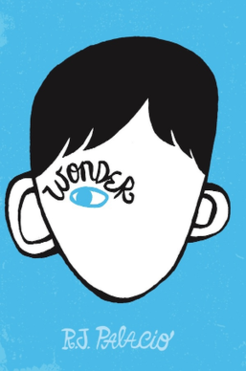
  1. Wonder by R.J. Palacio

What it’s about: 10-year-old Auggie Pullman has a facial disfigurement that makes him the target of bullying when he attends school for the first time.

Why we recommend it: “Wonder” is packaged as a children’s book but the situations presented are things that even grown-ups can relate to, such as the  anxieties that come with trying to fit in and the desire to be accepted for our differences.

Quotable quote: “We carry with us, as human beings, not just the capacity to be kind, but the very choice of kindness.”

  1. To Kill a Mockingbird by Harper Lee

What it’s about: An African-American man is wrongly accused of a crime, and his Caucasian neighbor steps up to defend him despite opposition from all fronts

Why we recommend it: The themes and lessons of this book are as important today as they were when the story was first published in 1960. We need to be reminded that despite increasing awareness and belonging to a “woke” generation, racial and class discrimination continue to affect many people around the world today.  

Quotable quote: “You never really understand a person until you consider things from his point of view.”
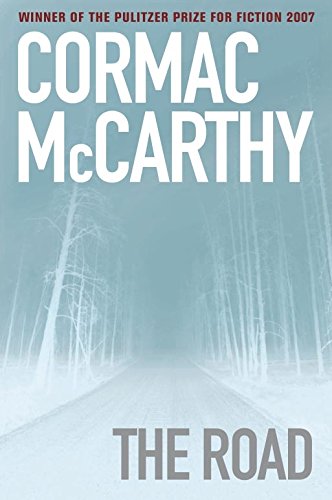
  1. The Road by Cormac McCarthy

What it’s about: A father and son travel on foot across a post-apocalyptic land and in the process encounter a variety of people — some good, many bad. 

Why we recommend it: At first glance, killing, stealing, and committing acts of unspeakable cruelty seem to be the only ways one can survive in a cruel world. But the father constantly reminds his son to “carry the fire” — to act with kindness, compassion, and decency no matter how terrible things are. 

Quotable quote: “All things of grace and beauty such that one holds them to one’s heart have a common provenance in pain. Their birth in grief and ashes.”

  1. The Kite Runner by Khaled Hosseini

What it’s about: This is the first Afghan novel written in English. The main character, Amir, seeks atonement for betraying a friend. 

Why we recommend it: Amir spends much of the novel plagued by guilt, and it is only through empathy that he finds redemption and self-forgiveness.

Quotable quote: “Not a word passes between us, not because we have nothing to say, but because we don’t have to say anything.”
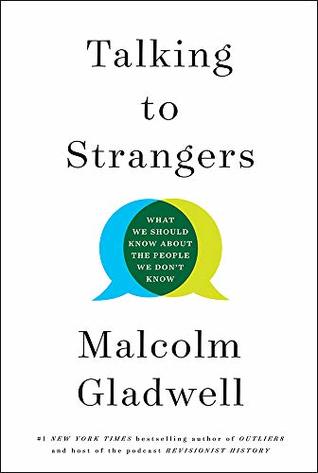
  1. Talking to Strangers: What We Should Know About The People We Don’t Know by Malcolm Gladwell

What it’s about: Studies the miscommunication, interactions, and assumptions people make when dealing with those that they don’t know. 

Why we recommend it: How many times have we avoided talking to people who think and act differently from us, resulting in conflicts or misunderstanding? By using real-life examples, Gladwell teaches us how we can bridge this divide and avoid failure of communication.
Quotable quotes: “The first set of mistakes we make with strangers…has to do with our inability to make sense of the stranger as an individual.”

Do you have your own book recommendations? Share them in the comments below!

— Written by Jaclyn Lutanco-Chua of MindNation

Categories
Get Inspired Mental Health 101 Self Help

6 Habits That Build Mental Resilience

Learn ways to cultivate your mental strength so that you can cope with stress better

If you encounter a personal failure or setback, are you able to pick yourself up and adapt to the circumstances? Or do you find yourself completely overwhelmed and unable to deal with the challenge?

Your answer will reveal how much mental resilience you have — defined as the ability to mentally or emotionally cope with a crisis or return to pre-crisis status quickly.

“Resilience is not tenacity,” clarifies Cat Triviño, Chief Marketing Officer of MindNation. “More importantly, resilience is not about bouncing back and going back to our normal selves. It is about moving forward and becoming better versions of who we are.”

Go back to the question in the first paragraph; if you answered in the latter category, don’t worry. There are strategies you can adopt so that you build better mental resilience and become better equipped to cope with stress and other challenges

  1. Take care of yourself. Self-care is an essential strategy for building resilience and helps to keep your mind and body healthy enough to deal with difficult situations as they arise. Taking care of yourself means paying attention to your own needs and feelings, and engaging in activities that bring you joy and relaxation. Examples include: 
  1. “Listen to what your body needs, whether that’s extra time to breathe or a little stretch in the morning,” advises Cat. 
  2. “Get some sun. Only if you can and only if it’s safe, open the window and bring in that vitamin D,” she adds.
  3. Meditate. “Don’t stress about how you’re not doing it right the first few times,” Cat assures. “The simple act of breathing, grounding, and of being aware of our surroundings can make us less anxious and bring us back to what we need to address.”

2. Control your exposure to anxiety-provoking situations. This includes limiting your news instake. “Personally, I only follow one Telegram group to get all my COVID related news; for others I only rely on trusted news sites but even so I limit that intake,” shares Car. “We don’t need that much all the information; all we need is to be informed well enough for our peace of mind, and then we cut off and go about our day.

3. Make connections. “Social distancing does not mean emotional distancing,” Cat reminds. “Please do keep connected, and as much as possible, call. Hearing someone else’s voice, especially someone we love, can give us the instant calm that we need.”

4. Be thankful. When something bad happens, always remember that things could be worse. “Be grateful for anything and everything good. Starting or ending your day with a grateful mindset will only set us up to see things in a better light,” cays Cat. 

5. Ask — even if you won’t receive. Many of us are afraid to ask –for help, questions, or anything — because we fear hearing the word “No,” looking inadequate, or coming across as difficult. “But constantly avoiding rejection will not make us resilient,” counters Cat. Instead of staying away from the “No’s,” get your mind used to the feeling of being rebuffed to build your resilience threshold. “Start with small things like asking for your deliveries to be brought up to your unit, or requesting for a discount in the market. You may get rejected for various and legitimate reasons, but the point is to get used to hearing no!” she advises. “Once you realize that rejection is not debilitating, you build inner strength and become confident enough to ask for bigger things.”

6. Cultivate positive self-talk. “The next time you face challenges or adversities, identify how you’re describing them and see if you can reframe the words in a more positive way,” instructs Cat.

A. Instead of: “ I feel like a failure for not being able to lead my team through this pandemic.”

Say: “Being a leader during this pandemic is an obstacle, but not one I will face alone.” 


B. Instead of: “Working from home is horrible.”

Say: “Working from home is challenging.”

C. Instead of: “I asked for a promotion, and got rejected.”

Say: “I asked for a promotion, and got redirected.”

Just like other traits, resilience is something that can be learned and developed. All it takes is an awareness of the bad thoughts and actions that you may be doing, learning about the good ones, and having the discipline to enact them when the need arises.

But if the situation continues to be difficult for you and you are finding it hard to cope, always seek the help of a professional. A good place to start will be MindNation’s chat helpline on FB Messenger, available 24/7. The service is free, completely confidential, and the staff is trained to ease your anxieties.

— Written by Jaclyn Lutanco-Chua of MindNation

Categories
Featured Get Inspired

Partnership Announcement: MindNation & Workbean

Mental health awareness and support in the workplace is about to get an even bigger boost

Back in the day, job seekers would choose which companies to work for based simply on what was available or how much financial compensation could be gained.
But as the demand for more multi-hyphenated, digitally-skilled workers rose, employees who fit the bill started to become more selective in which company they would join. The workplace culture became a dominant factor in decision-making — top candidates now want to work in environments that suit their personalities and capabilities, and whose policies allow them to be creative and empowering. In the same vein, companies found out that if they placed emphasis on camaraderie, inclusivity, and nurture, they can attract great talent. 


“People are spending more time at work than they do at home,” says Kassandra Monzon, CEO of Workbean, soon to be Asia’s largest directory of company cultures. “And with the current COVID-19 pandemic amplifying whatever stresses or anxieties they may already be experiencing, employers have the responsibility to support and care for the mental well-being of their staff because they are the ones spending so much time together.”


This is why it is important for companies to have a workplace culture that is supportive of mental health. “Most mental health risks in the workplace relate to interactions between the people, the organizational environment and culture, and the availability of support for employees to carry out their day-to-day tasks,” says Kana Takahashi, CEO of MindNation. “So a way to achieve a healthy workplace is through the development of company-wide mental health programs and policies that protect the health, safety and well-being of all.

With this partnership, MindNation and Workbean hope to increase awareness about the importance of having a workplace culture that supports mental health, as well as provide a platform for job seekers looking to find a workplace that cares for their well-being. In addition, Workbean-affiliated companies that have existing mental health programs and policies in place but want to know how to more effectively implement them can reach out to MindNation for guidance. 
“When a workplace culture is inclusive and supportive, people will be more free to express their mental health concerns and seek help when needed,” says Kana. 
For more information, click on www.mindation.com and www.workbean.co

— Written by Jac of MindNation