
Categories
Employee Wellness

Ways To Reduce Unconscious Bias In The Workplace

In a previous article, we shared some general ways you can build a more supportive, accepting, and respectful workplace. Today, we dive deeper into how you can address unconscious bias in your business and foster a more diverse and inclusive company.

There are many types of unconscious bias (over 19), but here are the four key ones and how you can avoid them:

  1. Gender bias. This is the tendency to prefer one gender over another. Examples include:
  1.  Providing more resources and opportunities to one gender (typically men) over another;
  2. Reviewing an employee of one gender differently from another gender — even when the evaluations are purely merit-based; and 
  3. Rewarding an employee of one gender differently from another gender in the form of promotions, raises or other merit-based rewards.

“Communication is key. Avoid sweeping generalisations and do your research on different cultures. A gesture or custom that you’re indifferent to might offend someone from a different cultural background, and vice versa.”

Salma Sakr, MindNation Chief Growth Officer

A major result of gender bias is the creation of the “glass ceiling,” a metaphor for the evident but intangible hierarchical impediment that prevents women (and even minorities) from achieving elevated professional success. If you want to break this glass ceiling, here are some ways you can avoid gender bias at work: 

  • Set gender-neutral recruitment standards. Do this by defining the ideal candidate profile ahead of time and evaluating all candidates against those standards. 
  • Create diversity goals. Set qualitative gender diversity goals to create a more gender-balanced team. Support and provide resources for women to take on leadership roles. 

2. Ageism. This is seterotyping or discrimination  against individuals or groups on the basis of their age. This can also include ignoring a junior’s ideas because they are considered “too young,” or assuming someone should behave in certain ways because of their age. 

Preventing ageism involves combatting age-related stereotypes as well as engaging older team members in the workplace. Here are some ways to do that:

  • Don’t make assumptions based on age: For example, don’t automatically presume that older workers don’t know how to use technology or aren’t open to learning new skills. Provide equal learning opportunities for everyone. 
  • Foster cross-generational collaboration: Create two-way mentorship programs where a senior team member is paired with a new hire. This kind of collaboration facilitates communication between team members of different stages, which can help break down misconceptions about age. 

3. Cultural bias.  Cultural biases are assumptions, stereotypes, and belief systems about a different culture, based on our own limited experience of that world. In the workplace can create misunderstandings, biased treatment and barriers to career advancement; if you are manager who believes that all South Asians are good in software programming but who like to make a fuss over nothing, for example, you might never give your team members from India the opportunity to speak their mind, causing them to eventually leave the company due to lack of opportunities.

Here are some ways you can be sensitive to individual backgrounds and beliefs when in a professional environment:

  • Notice the little things. Someone from a different cultural background might behave in a way that you interpret as rude, shy, or standoffish, but that could simply be the way you interpret it. You need to think deeper, and really acknowledge that what you call ‘truth’ is actually just accumulated information from your own cultural background.
  • Communication is key. Avoid sweeping generalisations and do your research on different cultures. A gesture or custom that you’re indifferent to might offend someone from a different cultural background, and vice versa.
  • Be flexible. We all operate in different ways and have different views of life – even within the same sub-cultures. In a professional environment, always respect others’ customs, such as national holidays, dietary requirements and political attitudes. If in doubt, talk about something else!
  • Be yourself! We’re all human at the end of the day, and you’ll often find that smiling and offering a friendly face are universally recognised behaviours, wherever you’re from!

4. Race/ethnicity bias. This is any discrimination against any individual on the basis of their skin color, or racial or ethnic origin. It can take many forms, such as:

  1. Direct discrimination: not hiring or promoting someone based solely on their race
  2. Indirect discrimination: happens when a rule or policy set by an employer places people from certain racial, ethnic or national groups at a disadvantage.
  3. Racial harassment: includes any unwanted conduct related to an employee’s race, especially when it violates their dignity or creates an offensive environment.
  4. Victimization. when someone is treated badsly because they complained about discrimination or helped someone who has been the victim of discrimination.

Leaders can put a stop racial discrimination at work by:

  • Creating channels where employees feel safe speaking up about racial issues. It’s important for managers to seek input from missing voices to help obtain different ideas for a diverse point of view.
  • Actively communicating their stance on racial discrimination and what won’t be tolerated along with the consequences for violation. Racism, in any form, should never be overlooked, excused or tolerated, regardless of someone’s rank or title.
  • Spreading awareness by providing resources to educate individuals about the culture of racism and the history of different races. Most individuals are unaware of racial injustice and the comments they unconsciously make towards their BIPOC (Black, Indigenous, and People of Color) colleagues.

Companies can actively reduce bias through training along with embedding processes, policies, and expectations that help create a culture rooted in diversity and inclusion. Ultimately, it’s management’s responsibility to demonstrate their commitment to diversity and inclusion and the value it brings to the company as well as holding others accountable. 

MindNation holds webinars to help organizations reduce unconscious bias in the workplace so that team members become happier, healthier, and more productive. Email [email protected] to schedule a session now!

Categories
Fitness Get Inspired

James Michael Lafferty Of Fine Hygienic Holding: 4 Rules For A Positive And Energetic Life

Jim Lafferty is not just the CEO of Fine Hygienic Holding  (FHH), a wellness company that makes personal care and hygienic products. He is also an athlete, Olympic coach, philanthropist, speaker, and corporate trainer — all on top of being a devoted family man to his wife and five children. 

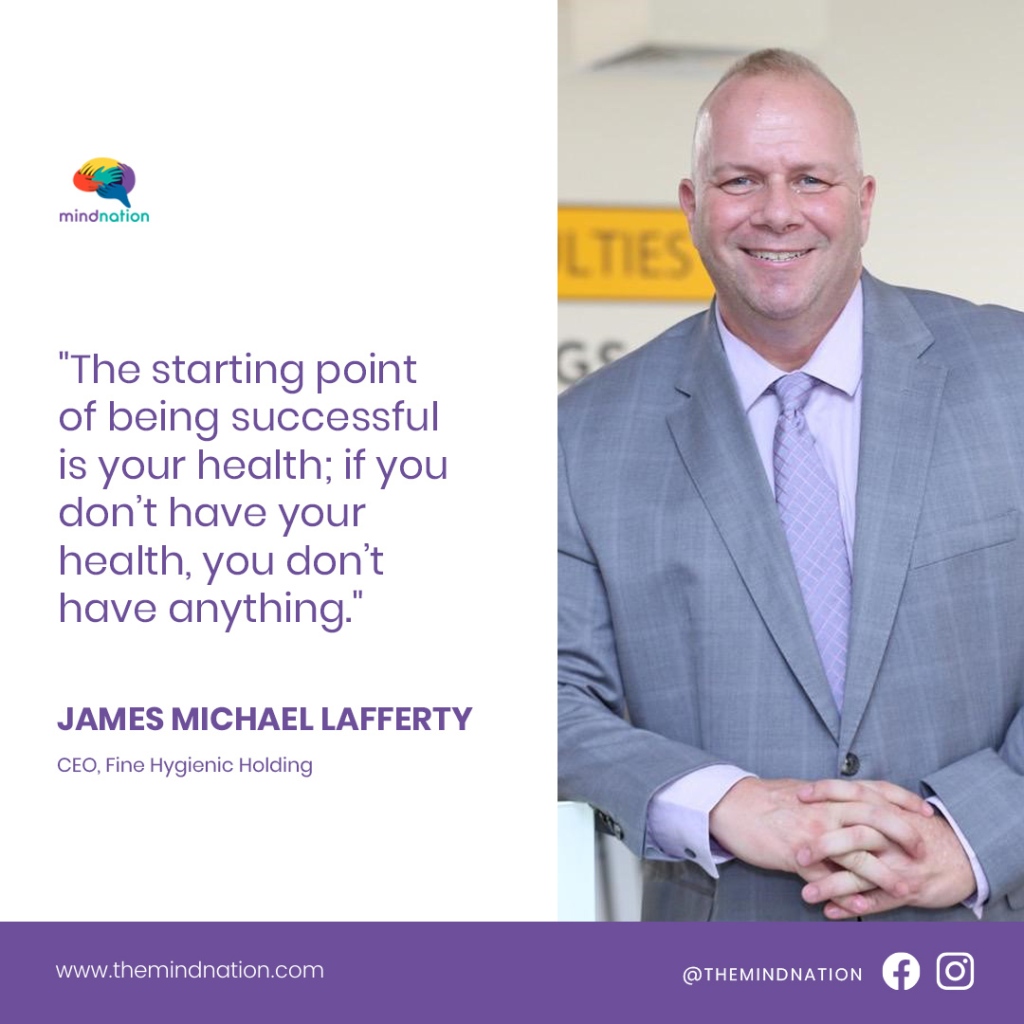
He began his career as a fitness trainer for Procter & Gamble employees in 1983 before moving up the ranks and becoming the company’s CEO, eventually going on to hold top positions at other Fortune 500 companies. Throughout his journey, health and wellness has been his priority, not just for himself but also for his team. “The starting point of being successful is your health; if you don’t have your health, you don’t have anything,” he points out. 

Apart from exercising regularly and watching his diet, here are Jim’s strategies for living a life full of energy and positivity:

“We take on many roles in life — for instance, I am not only a businessman, a coach, and an athlete, I am also a father, a husband, a brother, a nephew, so on and so forth. I believe that at maximum, we can only do five roles well.”

Jim Lafferty, CEO of Fine Hygienic Holding  (FHH)
  1. Acknowledge that you can’t do everything. “We take on many roles in life — for instance, I am not only a businessman, a coach, and an athlete, I am also a father, a husband, a brother, a nephew, so on and so forth,” Jim enumerates. “But I believe that at maximum, we can only do five roles well. And my five roles are to be the best husband, father, philanthropist-coach, athlete, and CEO out there. Everything else — such as being a brother and a nephew — is not a priority for me, and my family understands that.”

This is why Jim is very clear about what he says “no” and “yes” to. “I get offers to sit on other boards all the time, but I turn them down because they will take up too much time from what I really want to do,” he explains. “At the end of the day, I am clear on what legacy I want to leave behind, and that is to be a good father and contribute to society in the best way possible.”

  1. Cope with setbacks by employing perspective. When asked to name the biggest challenge he has ever encountered and what he did to cope, Jim says: “I don’t stress out over setbacks very easily because I always try to keep things in perspective.” 

As an example, he relates the story of a female employee who was five months pregnant with twins when she caught a severe case of COVID-19 and had to be hospitalized. To protect both the mother and babies’ health, doctors did an emergency c-section and delivered the babies prematurely. Unfortunately, all three passed away not long after. “What can I possibly be going through now that’s even close to what the husband and father are going through?” he points out. “I get upset, yes, but are those bad news really that earth-shattering? If you widen your perspective and learn what other people in the world are going through, you realize that more often than not, you have nothing to complain about.” 

  1. Prioritize employee well-being. When Jim came on board as CEO of FHH, one of the first things he did was to align the company’s values with his own. “We are a wellness company and wellness starts at home; and home for us is our employees,” he shares. To start with, he spearheaded the construction of a world class, state-of-the-art fitness center at the company’s headquarters in Dubai, and initiated company-wide fitness challenges like push-up competitions to encourage employees to take care of their physical health.

When the COVID-19 pandemic struck, the company partnered with MindNation to launch an Employee Assistance Program that includes 24/7 teletherapy support from qualified psychologists and WellBeing Coaches to all Fine employees and their immediate family members so that they can cope with the mental health challenges brought about by social isolation and other worries. “We try to protect our employees as much as we can, physically and mentally, because you cannot have good health without either one,” Jim explains.  

Finally, Jim has taken it upon himself to make the company more diverse and inclusive. “When I arrived at the company, the management team was 100 percent comprised of men, and they only came from two countries,” he relates. “I met each and every one of them, and those who were not performing well were let go in the most graceful and dignified way possible.” To fill up the five vacancies that resulted from this reorganization, Jim talked to headhunters and imposed one rule — that only female applicants be considered. “Everyone was surprised, but I told them there are talented women all over the city, don’t tell me we can’t find any,” he points out. 

All five roles did get filled up by women, and today FHH boasts of women comprising 38% of leadership roles in the company — unprecedented in the Arab world. “I’ve seen a lot of progress on acceptance of women as leaders but it’s an uphill battle and it’s going to take time,” Jim admits. “But if we want to be responsible members of society, we have to participate in the changes that society has to go through.”

  1. Celebrate the journey, not the destination. When it comes to long-term goals, Jim is not a believer of deadlines and timelines. For Jim, it’s about seeing his children progressing happily in their lives and the organization growing and becoming better. “But I don’t tell myself ‘Oh, I have to do this or see these results by the end of the year,’” he shares. “Instead, I ask myself, ‘Am I closer to the goal today than I was yesterday?’ And if the answer is ‘yes,’ then I already feel accomplished. You can’t measure life by a stopwatch.” 

Happier and healthier employees are productive employees. Partner with MindNation to provide your team with a well-being that is holistic, data-driven, and customized for your needs. Email [email protected] to know more. 

Categories
Relationships

Not A Love Story: 4 Ways To Move On After Being Ghosted

“Ghosting” refers to abruptly cutting off contact with someone without giving that person any warning or explanation for doing so — the offender essentially “vanishes” into thin air, as if they were a ghost. 

While the term is recent, the practice is not. “In the 1990s, Filipinos called it nang-indyan (not showing up for a date),” explains psychologist Riyan Protuguez. “In English, we borrowed from the military and called it someone ‘going AWOL’ (Absence Without Leave) or ‘going MIA’ (Missing In Action).” And if you’ve ever been on the receiving end of ghosting, you are not alone — a study of 1,300 people published in the Journal of Social and Personal Relationships in 2018 revealed that a quarter of the participants had been ghosted by a partner.

According to Riyan, ghosting can have a negative psychological impact on the person being ghosted. People who have been left hanging by a romantic interest or partner will tend to blame themselves, i.e. “What did I do wrong?” or engage in self-doubt, i.e.“Am I not good enough?” As a result, their self-esteem suffers, which can lead to a host of other mental health concerns. It’s even worse if the one who is ghosting engages in love bombing first (i.e. overwhelming their partner with loving words, actions, and behavior) — before disappearing, leaving the other person bewildered and anxious.

“Ghosting” refers to abruptly cutting off contact with someone without giving that person any warning or explanation for doing so — the offender essentially “vanishes” into thin air, as if they were a ghost.”

Why do some people choose to ghost?

There are several reasons a person ghosts another, but the most common ones are:

  1. It’s a form of experiment. “Some millennial daters like to experiment,” Riyan shares. “They deliberately cut off contact to check how into them the other person really is.” In short, it’s a convoluted form of playing hard-to-get.
  2. They are emotionally unavailable. “People who ghost do not know how to handle the difficult situation of turning someone down or ending a relationship,” says Riyan. “They don’t know how to communicate their feelings, so they just withdraw.” 

How to move on after being ghosted

Being ghosted often triggers painful emotions, and while it can take some time to work through the pain, it is possible to move on. Here are some tips:

  1. It’s not you, it’s them. Don’t blame or question yourself. “Ghosting is committed by people who are emotionally immature and who have their own issues, so it is never your fault,” Riyan assures.
  2. Explore self-care activities to divert your attention. Spend time with trusted friends and loved ones, write in your journal, exercise, or watch your favorite tv show.
  3. Set boundaries. Delete their number from your contact list, unfriend and unfollow them on social media, and throw away or donate the gifts you received from them. If they try to woo you back with love bombing  — and people who ghost usually do — “Always remember that you don’t deserve someone who treats you this way,” Riyan reminds.
  4. Lastly, don’t be afraid to try again. One bad experience should not stop you from finding the one that is right for you.

How to avoid ghosting others

If you ever find yourself in a position where it seems easier to just disappear than to engage in a difficult conversation, always put yourself in the other person’s shoes. “Do your best to treat others with kindness and honesty,” Riyan suggests. “Your words may hurt, but it’s better than disappearing without an explanation.:”

Some ways you can turn someone down gently:

  • “It was nice meeting you but I just didn’t feel the connection.”
  • “I am going through some personal stuff right now, and it’s best I deal with it on my own.”
  • “I know we have been talking for awhile now, but I don’t feel a spark anymore, I hope you understand.”
  • “I’m sorry but I don’t see this going any further, I respect you and hope we can still remain friendly.” 

Reeling from being ghosted? MindNation psychologists are available 24/7 for teletherapy sessions if you need to process the complex feelings you may have after being left hanging by a romantic interest. They can also give you further coping strategies to make sure you come out the other side stronger and more confident than before. Book a session now through https://bit.ly/mn-chat

Categories
How To

5 Ways To Effectively Communicate With A Loved One

Do you have difficulty telling your partner you are frustrated at them? Do a friend’s annoying habits trigger you, but you choose to stay silent to keep the peace? 

This is where knowing the difference between constructive and destructive criticism comes in. 

“It’s important to relay feedback to a loved one even when it’s negative because we want to help our loved ones to become better versions of themselves,” says MindNation psychologist Jessa Mae Rojas. “Additionally, when we are able to go through difficult communications with our partners unscathed, the relationship becomes stronger.” 

This does not mean you have to call them out about every little annoyance; some things are better left unsaid. “As long as what you are saying helps the person improve and does not make them question their self-worth or self-confidence, then that is constructive criticism,” Jessa says. “Everything else is just nitpicking.” 

Ready to have the constructively critical conversation? Here are some do’s and don’ts for relaying feedback to your loved one:

“It’s important to relay feedback to a loved one even when it’s negative because we want to help our loved ones to become better versions of themselves.”

Jessa Mae Rojas, MindNation Psychologist

DO:

  1. Time it right. Don’t do it when they are tired after a long day, or if YOU are tired after a long day. And especially do not get into the conversation when you are angry because you might end up saying something destructive instead. If tempers are high, step out of the room for awhile, take deep breaths, or do activities to distract you until you calm down. 
  2. Focus on specific behaviors, not on your partner’s whole personality. Don’t just say, “You’re just no fun.” Get specific instead by saying, “I’ve noticed that you don’t seem to enjoy online parties with my friends. Can you tell me why so I can understand better?”
  1. Give your partner a chance to explain or offer feedback. You have had your chance to speak, now it’s to sit back and listen. Remember that you are having a dialogue, not a monologue. 

DON’T

  1. Diagnose your loved one. “I think you have mental health issues,” or “Wow, your childhood really messed with your brain” will only deviate the conversation  from the main issue. 
  2. Make “You” statements. If you say, “You are impossible to talk to and you just don’t listen,” your partner will justifiably feel defensive. “I sometimes find it difficult to talk with you,” is a much more positive way to broach the subject.

If despite your best efforts your criticism is received in a negative light, don’t fan the flames by responding angrily. Instead, seek to understand why your loved one is acting this way. “Have a heart to heart talk; ask them ‘How would you want me to talk to you about this next time? Would you rather I write it down or send you a text message first, instead of talking to you about it directly?’” Jessa suggests. “These can help pave the way for more productive conversations in the future.”

If you and your partner are having difficulty communicating with each other, MindNation psychologists and WellBeing Coaches are available for teletherapy sessions 24/7 to help you build a stronger and lasting relationship. Message https://bit.ly/mn-chat to book a session now! 

Categories
Featured

Darlyn Ty-Nilo Of Belle De Jour: 7 Strategies For Designing Your Best Life

In 2006, Darlyn Ty-Nilo created the Belle de Jour (BDJ) Power Planners with the initial goal of helping Filipino women plan their days better. What started out as a passion project has now grown into a movement with over 9,000 members (known as “Bellas”) who swear by BDJ parent company Viviamo Inc.’s advocacy of empowering Filipinas to live their best lives. Viviamo Inc. does this not only through artful planners and journals, but also through campaigns and activities that engage with their community. 

For her work and efforts, Darlyn was awarded the Mansmith Young Market Masters Awardee for Entrepreneurship in 2010, became one of the youngest Agora Awardees for Entrepreneurship in 2012, and was named one of the Outstanding ASEAN Women Entrepreneurs in 2017. More recently last June 2020, she was honored as one of the 100 Most Influential Filipino Women on Linked In.

“So get to know yourself, fall in love with yourself; and when you make mistakes, don’t be afraid to fall out of love with yourself. Then rediscover what else you can do. It’s all part of the process, and when you trust in the process, everything else will fall into place.”

Darlyn Ty-Nilo, Viviamo Inc.’s President and Managing Director

Darlyn reflects on her life and career and shares her X tips for designing a life that is successful and fulfilling:

  1. Follow your “true choice.” “My first job right out of college was a failure,” Darlyn shares. Despite graduating with high marks and winning national marketing competitions in college and putting in extra hours with the multi-national company she was working for, she was not regularized after the probationary period of her employment. “I realized I failed because what I was doing was not what I really wanted; instead, I only did things to please society’s expectations of me,” she explains. “I would be told things like ‘You should accept the best job offer out there even if you don’t like it because to do otherwise would show you are ungrateful.’ Or I would hear that I had to take the accounting board exams because my studies would just go to waste if I didn’t. But all these comments stem from a mindset that opportunity only comes once; what if the truth is that the opportunity that is knocking on your door is merely testing you to find out what is really in your heart?”

So when Darlyn decided to go into the business of making and designing planners, she made sure to allot pages where people could write down their goals. “I wanted people to start their year asking themselves what kind of life they would want to have, because designing your best life starts with knowing what kind of life you want,” she declares. 

  1. Know that the path to success is never linear. It’s okay to fail, it’s okay to pause and reflect if you’re feeling stuck or confused, and it’s absolutely okay to change your mind if things are no longer working out. “It doesn’t matter whether you change your mind after three months or three years,” Darlyn assures. “What’s important is to keep on writing about it, because the act of writing down your goals and dreams provides clarity, and clarity will always give you power.”
  2.  Another way to create clarity — set routines. “I’m a big believer in routines,” Darlyn confesses. “This is because when you create structures to your day and life, you’re anchored on your goals and don’t get lost. It’s like you’re trying to walk a straight line; if there’s no line on the ground to begin with, how can you achieve that goal?”

With Darlyn, her overarching goals are to run her business effectively and spend quality time with her family, so she makes sure she plans her day in a way that ensures she has the time and energy to devote herself to both.

  1. Included in that routine — making time for self-care. “In the past few months, I was not allotting time for fun at all,” Darlyn shares. “At night when we were supposed to be resting, my husband and I would watch webinars or workshops, or I would read books related to business or self-improvement because I had to keep thinking of ways to keep the business running during the pandemic. Then a friend reminded me that I needed more play time, and I remembered the saying that ‘You cannot give what you don’t have.’ How can I expect my business and family to thrive and be happy if I myself was always tired and stressed?”

So today, Darlyn makes it a point to spend a few hours a day reading fiction books instead of business tomes, and has switched her caffeine-laden mornings with more nutritious smoothies. “I gave myself permission to rest and take care of myself,” she says. “Even on days that are extra-busy and my downtime is only 10 minutes long, I make sure the entire time is about me and my needs, not about my work or the family. “ 

  1. Set clear expectations with those around you — even with the ones you love. Like everyone else who owns a smartphone, Darlyn is a member of multiple chat groups at work so she can properly align and coordinate specific projects with the right people. When the pandemic happened and she and her husband found themselves together at home all the time, she knew she needed to implement a similar system to keep track of their conversations and achieve their goals in a more efficient way. “Before the pandemic, we had space from each other and it was clear who took care of what what,” she explains. “But when the lockdown caused us to be together all the time, lines became blurred because we were now getting involved in each other’s lives and responsibilities.”

Her solution: she also created chat groups for her and her husband on specific topics — food, finances, learning, family, and matters related to just the two of them. “This way, everything is documented and expectations are clearer about who will do what,” she shares. “This leads to less conflict and friction.” 

  1. Take care of your mental health. “I started seeing a psychologist in 2013,” Darlyn shares. “I am such a believer in professional help that before I married my husband, I made him see my psychologist as well so he can work out any issues that he may have. Now, we also schedule sessions before every major milestone in our lives — like before I would give birth, for example, just so we can check-in and process our emotions before these upheavals.” 

While Darlyn has many friends that she can turn to for support, she firmly believes that mental health professionals are better at helping her understand her issues and remediate problems. “Friends are biased, no matter how hard they try to control it; it’s human nature,” she points out. “On the other hand, psychologists are trained to improve our lives. Part of designing your best life is taking care of your mental health, and one of the best ways you do that is to seek the help of a professional.”

Her belief in the importance of mental health led her to partner with MindNation this year. Every last Wednesday of the month, BDJ and MindNation hold monthly live streams on Facebook to raise awareness about issues related to mental health and well-being.

“I really in believe MindNation’s vision of making mental health more accessible to all,” she adds. “The goal of our partnership is to start the conversation on mental health, erase the stigma, and make sure that people have a better understanding of mental health concerns.”

  1. Never stop improving. “I believe that we are sent here to Earth to find what will make us happy and to become the best versions of ourselves,” Darlyn says. “So get to know yourself, fall in love with yourself; and when you make mistakes, don’t be afraid to fall out of love with yourself. Then rediscover what else you can do. It’s all part of the process, and when you trust in the process, everything else will fall into place.”

Partner with MindNation to build happier, healthier, and more productive individuals. Email [email protected] for more information.  

Categories
Employee Wellness Get Inspired

Seeing Success: 7 Steps To Developing a Growth Mindset At Work

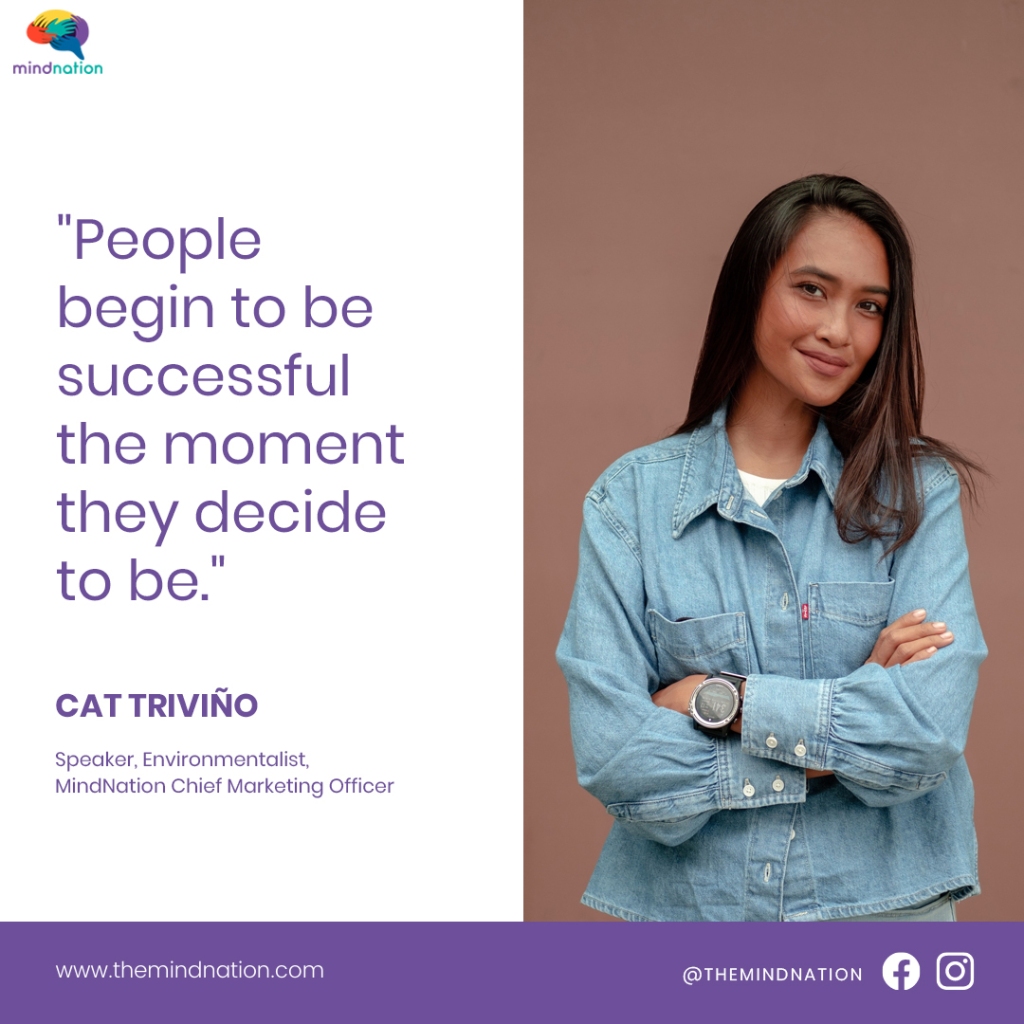
A growth mindset is the belief that a person can continue to learn and become more intelligent with effort, and that failure is an opportunity to grow. People begin to be successful the moment they decide to be. 

In contrast, someone who has a fixed mindset believes that they are born with a certain amount of talent and intelligence that cannot be improved no matter how much effort they put forth, and that failure is the limit of their abilities. 

In addition, someone with a growth mindset sees mistakes as a learning opportunity and openly accepts criticism because they believe it will help them grow. Someone with a fixed mindset often gives up and takes criticism personally. 

Out of these two mindsets that we manifest at a very young age springs a great deal of our behavior, how we see setbacks, and how we see our relationship with success and failure, from both a personal and professional context. Ultimately, it sets the stage for our capacity to be happy — do we ascribe to a fixed mindset where we think that we are born this way and there’s nothing that we can change? Or do we want to have a growth mindset where we feel that we are capable and worthy of success if we put our heart to it?

“Many people assume that there are only two possibilities when you do something — you either succeed or fail. What they don’t understand is that failure and success are on the same track; not only that, the road to success is paved with many failures.”

Cat Triviño, MindNation Head of Communications and Content

Here are some ways we can cultivate a growth mindset:

  1. Build transportable skills. This is defined as a specific set of skills that don’t belong to a particular niche, industry or job; rather, they are general skills that can be transported between jobs, departments, and industries (hence the name). Examples include learning how to solve problems, your ability to be mentally resilient, learning how to communicate in times of difficulty, getting things done within the timelines, and also your capacity to take risks. Building these skills early and keeping them sharp and fresh constantly keeps you grounded and builds your overall ability to keep going and exploring new things.
  2. Cultivate meaningful experiences. These are situations that take us out of our comfort zone and force us to adapt. Think of them as vitamins or antibodies that boost our immune system and help us withstand career change and adversity. Being able to be resilient in times of crisis is an example of  a  meaningful experience; when we see our hardships and things beyond our control as something we can learn from, they take out that fear of failure.
  3. Invest in enduring relationships. Great relationships can make you stronger and your impact bigger. Surround yourself with people who are good influences so that you will be motivated to become someone unique and indispensable. That being said, when it comes to relationships in the workplace, you will need one of each of the following:
  1. Community of experts — These are people you look up to, who can help you come up with better answers. After all, you can’t always be the smartest person in the room.
  2. Critical colleagues — These are people who constantly give you feedback not because they just want to criticize, but because they want you to be better.
  3.  Champions — Find mentors and truth-sayers who are on your side. They will tell you when you’re wrong, so you grow as a person.
  1. Anchor on your “why.” Inspiring ourselves to move forward and motivating others starts with us being clear on where we’re heading. So think about your purpose in life. What is your cause? What do you believe in? Do you want to challenge the status quo? Do things differently? Then from your “why,” allow yourself to create the structure, the “how.” How do you make your “whys” realized, what specific actions will you take? The result of knowing the “why” and the “how” is the “what” — what is your purpose? What can you get out of this?
  2. Reframe success and failure. Many people assume that there are only two possibilities when you do something — you either succeed or fail. What they don’t understand is that failure and success are on the same track; not only that, the road to success is paved with many failures. So it is important to understand that challenges or setbacks are assets. Failure forces us to learn and grow. Everytime we hit rock bottom, we should recognize it, honor it, respect it, and understand that this will only make us more skilled and better
  3. Trust time and the process. When we fail, it’s not because we didn’t try hard enough; sometimes it’s because the  universe is telling us that it may not yet be the proper time.
  4. Make self-care a habit. Self-care is what makes us feel good about ourselves and what we do. When we constantly reward ourselves with adequate self-care, we will develop a healthier growth mindset as well, because we will want to be able to give the world the best of us, not what’s left of us. 

A lot of what influences and fuels our careers and our lives are our purpose and mindset. Being able to know our whys and having enough motivation to be able to constantly see failures as growth creates not only so much bigger opportunities for ourselves, it also creates inspiration for others.

MindNation has a repertoire of webinars to train your team on how to build a growth mindset, have a purposeful career, and have happier, healthier, and more productive lives. Message us at [email protected] to know more!

Categories
Featured

Kana Takahashi Of MindNation: Building A World Where Mental Health Is Valued, Accepted, And Supported

In 2014, Kana Takahashi was a bright-eyed pre-med student taking up Psychology at one of the Philippines’ top universities when one of her professors started talking to the class about mental health. “Back then, I didn’t know much about mental health,” she explains. “So when I heard my teacher talking about it, I got really curious.”

This curiosity led her to join the Youth For Mental Health Coalition — the only mental health organization in the Philippines at that time — and it was here that Kana became aware about the state of mental health in the country and the stigma faced by people with mental health concerns. Up until 2018, she immersed herself in advocacy work, learning not only about mental health but also about other causes like feminism and human rights.  From attending seminars, she was soon conducting them herself; additionally, she became involved in groups that pushed for laws like the Safe Spaces Act (which increases protection against sexual harassment, among others), the bill legalizing divorce (which is still currently being deliberated in Congress), and the Philippine Comprehensive Mental Health Law (which was signed into law last June 2018).

Along the way,  Kana started to reconsider her plans of becoming a doctor. “I started to ask myself why I wanted to become a doctor, and the answer I came up with was that I wanted to help people. And I realized that what I wanted was to help people now, not after four to five years of medical school.” With that in mind, Kana decided to just look for work that could sustain her financially and at the same time continue her advocacy work with the organizations she was currently affiliated with.

“I started to ask myself why I wanted to become a doctor, and the answer I came up with was that I wanted to help people. And I realized that what I wanted was to help people now, not after four to five years of medical school.”

Kana Takahashi, MindNation Co-Founder and CEO

The birth of MindNation

Along with some friends, Kana co-founded MindNation in January 2020, with the initial goal of providing mental health services for organizations, as mandated by the Philippine Mental Health Law. The company started with just four people (including Kana) and one psychologist.

But in March 2020, just three months after the company launched, the World Health Organization declared COVID-19 a pandemic. Many businesses coped with lockdown measures by cutting down on expenses — including putting all talks with MindNation on the back burner.

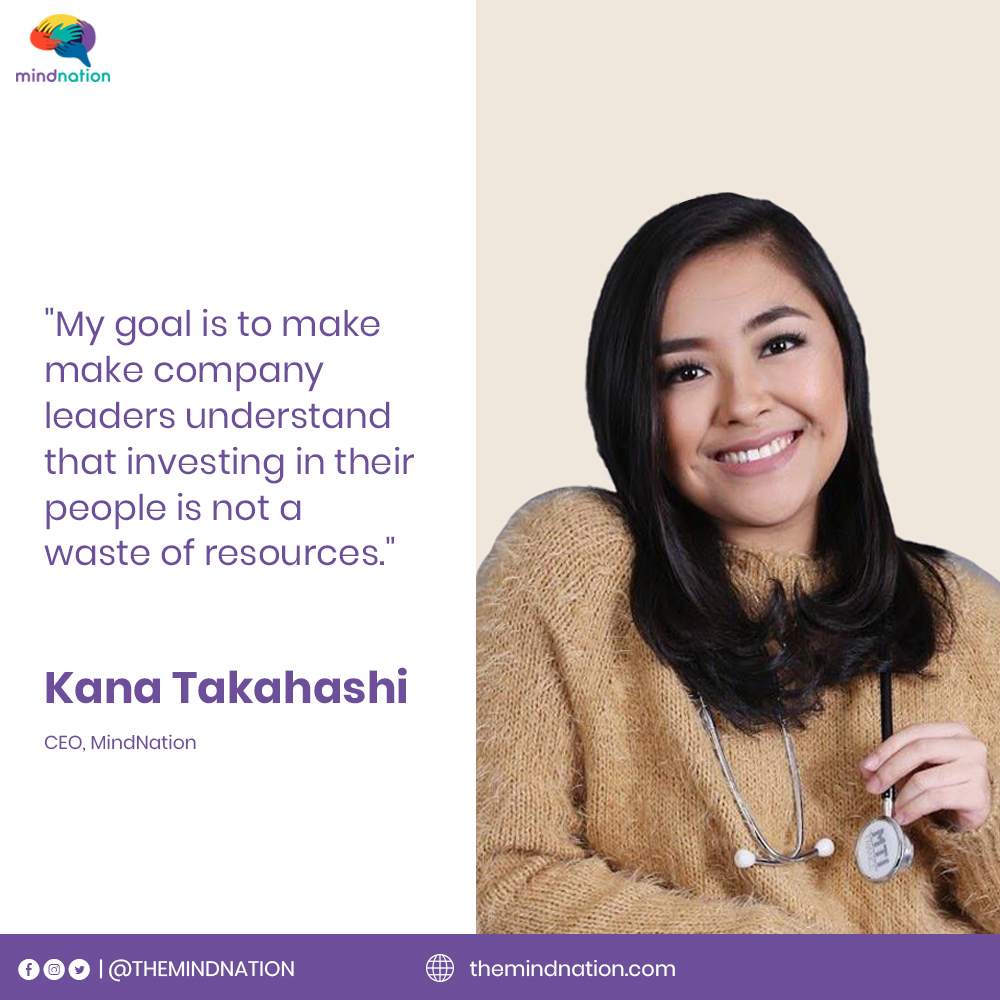
A CEO of any other start-up would have wrung their hands and panicked, but Kana was unfazed. “I didn’t get worried because I knew that what we were doing had value,” she says. “It was just a matter of making companies understand that — especially with the pandemic — investing in people is not a waste of resources.  Before the pandemic, all that companies wanted to see were numbers — ‘How can the mental health program that you are offering me boost my revenue?’ ‘What’s the ROI?’  But because of the pandemic, we were able to shift their mindset from ‘How can this benefit my business?’ to ‘How are my employees doing?’

Going above and beyond

And while other companies looked for ways to tighten their belts during the pandemic, MindNation did the opposite — they started offering their teletherapy services for FREE to the sectors most affected by COVID-19, from Philippine-based employees and students, to retrenched employees, medical frontliners, and even to members of lesbian, gay, bisexual, transgender, and queer (LGBTQ+ community). 

“We partnered with amazing mental health advocates like Senator Risa Hontiveros, as well as LGBTQ+ organizations, and women’s organizations to offer these pro bono services,” Kana points out.  “The fact that many non-government organizations were willing to work with a business like us — which is very rare — is proof that they saw the value in what we were doing,” Kana says.

Growing strong

Today, MindNation has a team of 50 employees and 20 psychologists, some of whom are located in other parts of the world. The company is now partners with over 40 organizations across industries, has expanded into Middle East North Africa (MENA), and is currently looking to grow more in other parts of the world.  In addition, they have gone beyond offering their services solely to organizations; individuals with mental health and well-being struggles can now also avail of the company’s 24/7 teletherapy sessions.

“MindNation’s vision is to build a world where mental health is valued, accepted, and supported,” Kana explains. “And we can only do that by making mental health care accessible to all.”

Best assets

Kana attributes the company’s growth and success to its team. “Every successful company has great people, people who go to work not just to work but to actually make a positive impact,” she says. “That’s what I‘m really proud of. In MindNation, we don’t work to feed the pockets of certain people, we do it because we’re working on life changing things.”

When it comes to supporting mental health in the workplace, the company walks the talk and has made the mental health programs that it offers to its client-partners available to employees as well. MindNation team members have access to 24/7 teletherapy sessions with psychologists and WellBeing Coaches and mental health leaves with pay. “The culture inside is also great, we can talk to each other about work and personal matters while maintaining a good working dynamic,” Kana shares. 

Looking ahead

Kana is looking forward to taking up post-graduate studies related to mental health so that she can grow the company more and support more employees. “Personally, I want to be able to help as many people as possible, even in little ways, whatever help looks like for them,” she affirms. 

Partner with MindNation to build happier, healthier, and more productive employees. Message us on https://bit.ly/mn-chat or email [email protected].

Categories
Featured Self Help

7 Solutions For Time Management Issues


If your team is struggling with productivity, MindNation has a repertoire of virtual webinars to help employees with time management, manage stress, and avoid burnout. Book these talks for your team by emailing [email protected].

When you are better at planning your day, prioritizing work tasks, and eliminating distractions, you can achieve your goals and be less impacted by stress or burnout. Whether you’re a student, stay-at-home-parent, or working in a company, time management is an essential skill to have.

Here are some things you can do to manage your time better:

“By learning the art of saying a tactful “no” to others, you’ll protect your time budget and improve your focus on your most valuable activities.”

Salma Sakr, MindNation Chief Growth Officer
  1. Avoid multitasking. Many people believe that multitasking makes them productive, but all that shifting back and forth between tasks isn’t actually that efficient because each time you do it, it takes your brain more time to refocus. So try to complete one project or task at a time before moving to the next one; your brain will thank you for it. 
  1. Merge different email accounts into one inbox. According to a 2019 report by management consulting company McKinsey & Co., the average professional spends 28% of the work day reading and email. Get this time back by making a few changes to your email settings and having all incoming email delivered to just one inbox.
  2. Treat your calendar as your time budget. Time isn’t money, but it does behave like money; it must be budgeted because when it’s gone, it’s gone. So when you schedule things into your calendar, think of it the same way you would think about withdrawing money from a bank account. Everyone has a weekly limit of 168 hours; try your best to live within this time budget and never overdraw.
  3. Avoid having back-to-back-to-back appointments. Leave space between your appointments for unexpected interruptions, to take a moment to relax, or to prepare for the next meeting.
  4. Say “No” more often than you say “Yes.” By learning the art of saying a tactful “no” to others, you’ll protect your time budget and improve your focus on your most valuable activities.
  5. Procrastinate properly. When a new idea comes into your head, ask yourself, “Do I need to do this now, or can I do it later?” Appropriate procrastination can help you, because you’re still going to complete those ideas, just at a later date. Don’t limit your calendar to what can be done today or within a week; instead, think in terms of months or even years.
  6. Identify your Most Valuable Activities (MVAs). These are the top two activities that you excel at, the ones that would cost you the most per hour to pay someone else to do. All the other activities that you do during work time other than those two MVAs are your less valuable activities, or LVAs.

In order to achieve maximum results during the limited amount of work time you have each week, prioritize your MVAs in your calendar and delegate LVAs to your team or your colleagues when possible. By leaving less room for options, you minimize the temptation to multitask and improve your overall focus. The result: more disposable time, and you reach your goals faster.

Time will always fill the space you give it, so use it wisely. 

By Salma Sakr, MindNation Chief Growth Officer

Categories
Employee Wellness

Stop Idolizing Overwork: 7 Things You Can Do To Overcome Hustle Culture

Are you constantly on the go? Do you devote 110% of yourself towards your work or other responsibilities? Do you feel guilty for putting your feet up, taking a day off, or even taking a nap? Is your mantra “I’ll rest when I’m dead?”

If you answered “Yes” (or even a firm “Maybe”), you are part of the hustle culture, also known as “Burnout Culture,” “Toxic Productivity,” or “Workaholism.” “Hustle culture is this mindset that we have to work hard to be considered productive and exemplary, and that if we don’t, we are useless and worthless,” explains yoga and mindfulness facilitator, educator, and licensed psychologist Ria Tirazona

While working hard is important, the hustle culture practice takes it to another level. “Working hard means you devote your time and energy to something that’s important to you, but you’re still able to take care of yourself,” Ria points out. “On the other hand, hustle culture is telling yourself ‘I’ll rest when I’m dead.’”

“Rest is not the enemy, and slowing down is not wrong. You need to change the attitude that not producing any output means we are not worthy. Hustle culture can be changed, and the change has to start with you.” 

Ria Tirazona, Psychologist and Mindfulness Facilitator


Who is impacted 


Hustle culture is not just practiced by executives and employees; students are branded “mediocre” or “lazy” when they do not pull all-nighters, while stay-at-home parents are shamed for everything from not preparing Instagram-worthy food to raising paragons. 

Even worse, we are oftentimes our own worst judges. “As a teacher, I constantly feel the need to study more, to take another course, to get another certificate,” Risa shares. “Before, I did it as part of continuing my education to improve my skills; but now it’s like I need to collect more proof that I am competent.”

“We have become consumed by this need to have more, to produce more, to be more. And if we choose to do the opposite, which is taking it slow or easy, we are negatively judged,” she adds.

How it came about

The rise of hustle culture can be attributed to advances in technology — everything is so accessible now that the line between yourself and your job has blurred. “Before the advent of email and instant messaging, we had to wait until the next day to get the memo for the tasks that needed to be done. Now, we get emails at two o’ clock in the morning,” Ria points out.

Ironically, while the COVID-19 pandemic has amplified hustle culture, it has also shed light on its negative effects.

“On one hand, because the lines between work and home are blurred, companies expect that employees can produce more output because they’re ‘just at home,’” Ria explains. “And if you’re an employee in a company that’s struggling to make it, of course you’re going to hustle to keep your job.”

But to some degree, the lockdowns have also caused people to start becoming more aware of the negative effects of hustle culture — burnout, stress, anxiety, and poor physical health. “Because life is harder now, there is a growing number of people who are starting to say ‘No, I can’t do this,’” Ria shares. “More and more groups now are also highlighting the importance of mental health and well-being, which was not really talked about pre-pandemic.”

How to cancel hustle culture

If you want to stop toxic productivity and take care of yourself better, here are some things you can do:

  1. Ask yourself — “What is my ‘rest narrative?’” “If your mindset towards rest is that it’s bad and it’s laziness, then you will continue to overwork because you don’t want to be called ‘bad’ or ‘lazy,’” Ria says. “But if you believe that rest is a healthy way for you to care for your well-being and a space to connect with what is important, then your attitude will change.”
  2. The second question to ask yourself — “Is hustling really worth it?” Refusing to hustle when everyone else in your organization is doing it can be scary — it can cost you goodwill with team members, a promotion, or even your job. “But as much as we want to go with the flow, there’s also a lot of value in going against the flow,” Ria advises. “You cannot keep going with a system that will cost you your physical and mental health, your relationships with loved ones, or even your life. So maybe it’s time you stand up for what’s important to you — money, prestige, or your health?”
  3. Set and enforce boundaries. France recently passed a law making it illegal to send work messages after office hours. If you live in a country that does not have this law, take it upon yourself to decide when to stop working, and don’t be afraid to communicate this to others. “We also have to give people the benefit of the doubt — sometimes they’re not even aware that they are causing you to overwork,” Ria explains. “So we need to take it upon ourselves to advocate for change.”

A tactful way would be to reply to an after-work email with “Thank you for this email, I’ll respond to it in the morning/on Monday.” After a few times, your colleagues will know not to do it again. 

However, do know that not everything you ask for will be granted. There will be times when you will need to work longer or harder — to meet a deadline or take care of a work emergency, for example — so you should also be flexible when needed. Just be sure these are exceptions, and not the norm. 

  1. Make rest and self-care a lifestyle. “Rest should be a part of your everyday experience, not a special occasion,” Ria says. “So don’t wait until you’re sick or burned out to rest, which is what the hustle culture emphasizes. Slowing down is good because in that little place of pause, you actually become more productive because you’ve cleared the clutter from your mind.”
  2. Specifically, take a nap. If there is one thing that Ria advises people who want to stop overworking, it’s to take an afternoon snooze. “Naps have been proven to boost brain health, reduce fatigue, and improve our well-being,” she says.
  1. Know your “flow.” Note that resting is not the same as being unwilling to push yourself further. “We all want to be the best versions of ourselves; but part of that is knowing our capacities and when we’re starting to lose that capacity,” Ria explains. 

Psychologists call this the “flow,” a state of mind in which you become fully immersed in an activity, your whole being is involved, and you’re using your skills to the utmost. It is also a dynamic and ever-changing state. “Sometimes you’re at your peak and you’re challenged, other times you need to recover,” she says.  “So go ahead and challenge yourself, but be aware of signs when you need to take a break.”

  1. Follow the rhythms of nature. “Two forces exist in the universe. Yin is a passive, negative force, while yang is an active, positive force,” Ria teaches. “And these forces exist everywhere in the world, even inside us. So there will be times when we are more active, which is yang; and there will also be times when we need to slow down, which is yin.” Both need to be balanced so we achieve better well-being. 

Another way to look at our energy is to compare it to the cycles of the moon. “You can be at a phase when you’re creating something new, when you’re working hard, and you’re producing a lot,” she says. “But there’s also that phase of emptying out and recovering, so that you have something to draw from again.”

“Rest is not the enemy, and slowing down is not wrong,” Ria concludes. “You need to change the attitude that not producing any output means we are not worthy. Hustle culture can be changed, and the change has to start with you.” 

If you are experiencing burnout, stress, or anxiety as a result of hustle culture, MindNation’s psychologists and WellBeing Coaches are available 24/7 for teletherapy sessions. Book a session now https://bit.ly/mn-chat

Do you feel that your organization exhibits toxic productivity? Partner with us to build happier, healthier, and more productive teams. Message us at [email protected] to know more about our services. 

Categories
Self Help

7 Reasons To Invest In Therapy

Cost and time are two of the common barriers to therapy. You probably consider it an added (maybe even unnecessary) cost, and you wonder if you even have the time to squeeze in a session every two weeks on top of all the things you need to do. But just like you have no qualms visiting and paying for a doctor to treat a physical ailment, neither should you hesitate seeing a mental health professional for your mental health concerns. Below are the five reasons therapy is a worthy investment: 

“Therapists are trained to listen to you and help you out of your situation; and because they are essentially strangers, they can provide a safe and unbiased environment where you can be honest. “

Kevin Quibranza, MindNation
  1. Therapy can help you organize your feelings, thoughts, and experiences so you can get a better understanding of yourself. 

When you spend enough time with a therapist, you will be able to know yourself better and ultimately control some aspects of your life which you thought were not possible. A good example of this are people who have anger management issues. By talking to a therapist, they are able to understand the past traumas that shaped their present condition, allowing them to finally manage that condition.

  1. Therapy can help you have more fulfilling relationships. This includes with family, partners, and colleagues.

Your mental health defines how you view life. If you are in a state of depression for example, and leave it untreated, you may start believing that life is bleak and relationships are useless so you start pushing people away. But if you have a healthy state of mind, good relationships will always follow.

  1. Therapy can help you achieve your goals, stay focused, and hold yourself accountable. 

The ultimate goal of therapy is to remove roadblocks — whether innate or situational — so you can achieve your life goals. This is why we advise people to see a psychologist or Wellbeing Coach even if they do not have problems yet, so they can take preventative measures and arm themselves with certain life skills (i.e. communication skills) to make them cope with unexpected situations better.

  1. Therapy can help improve your mood and quality of life.

Therapy can give you opportunities which you never thought possible due to limiting beliefs such as self-esteem issues and faulty thinking. These are normal and are experienced by everyone, so it always helps to have a third party expert who can help us get rid of our own perceived limits and provide us with a different perspective.

  1. You are more likely to have better health and wellbeing.

We all have days when we are burnt out or struggling, and on those days, our bodies do not feel as well as they should — we have problems sleeping, feel extra tired, or even experience headaches or back pains. There is a direct correlation with how your mind is at the moment and how your body feels. This is why at MindNation, we always advocate holistic health — take care of BOTH your mind and body, as well as the other dimensions of well-being (i.e. emotional, cultural, and spiritual).

  1. Therapy provides emotional relief that you might otherwise not be able to find.

There’s nothing wrong with talking to friends or family — if you just need quick advice or a listening ear, that’s okay. But sometimes, we need more than a shoulder to cry on. There are situations that our family members or friends may not be equipped to handle, or they aren’t willing to handle it since they also have their own problems.

Therapists are trained to listen to you and help you out of your situation; and because they are essentially strangers, they can provide a safe and unbiased environment where you can be honest with your thoughts and feelings and not worry about being judged or shamed.

  1. Therapy is the “mental and emotional health education” that you never got at school.

Mental health education in our country still has a long way to go, as evidenced by the stigma towards those mental health concerns. By going to therapy and asking questions, you learn about your condition, ease your anxieties, and receive treatment that is rooted in facts and science instead of myths or conjecture.

I have personally seen what happens to people who do not take care of their mental health because they do not want to spend additional time or money to address their concerns — their conditions worsen and they end up spending even more time and money to treat them.
Therapy is a valuable tool that can help you to solve problems, set and achieve goals, improve your communication skills, teach you new ways to track your emotions, and keep your stress levels in check. It can help you to build the life, career, and relationship that you want. By looking at therapy as an investment, you ensure a better future for yourself and those around you. 

MindNation psychologists and WellBeing Coaches are available 24/7 for teletherapy sessions. Book a session now through bit.ly/mn-chat.

– Written by Kevin Quibranza, MindNation